
3rd phase of major renewal works on the Brussels - French border high-speed line
posted on 15th Aug 2026 13:44
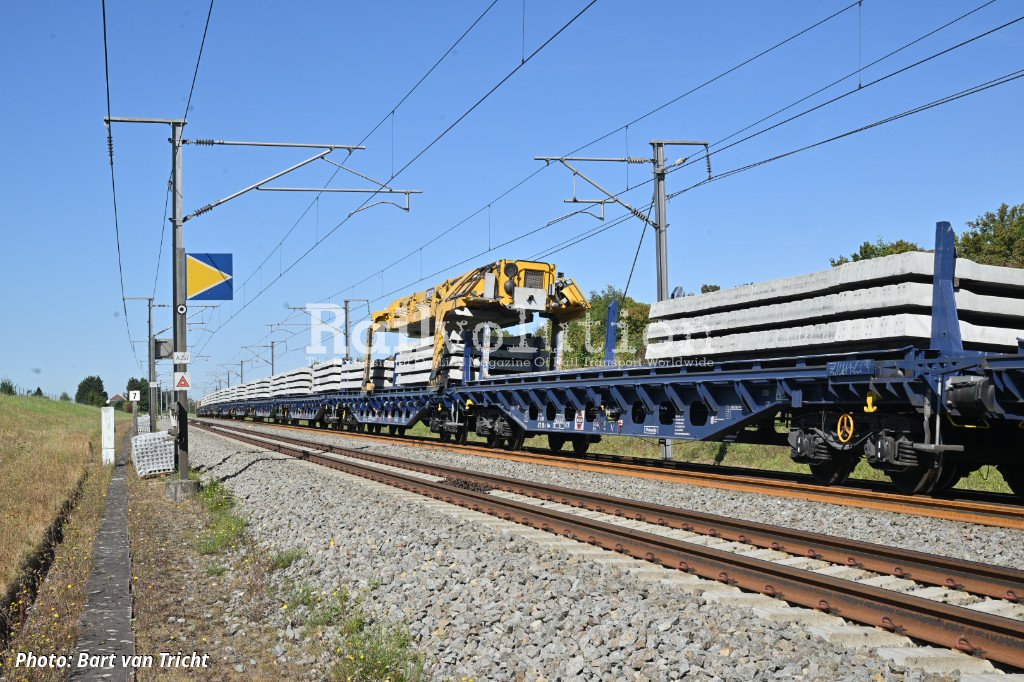
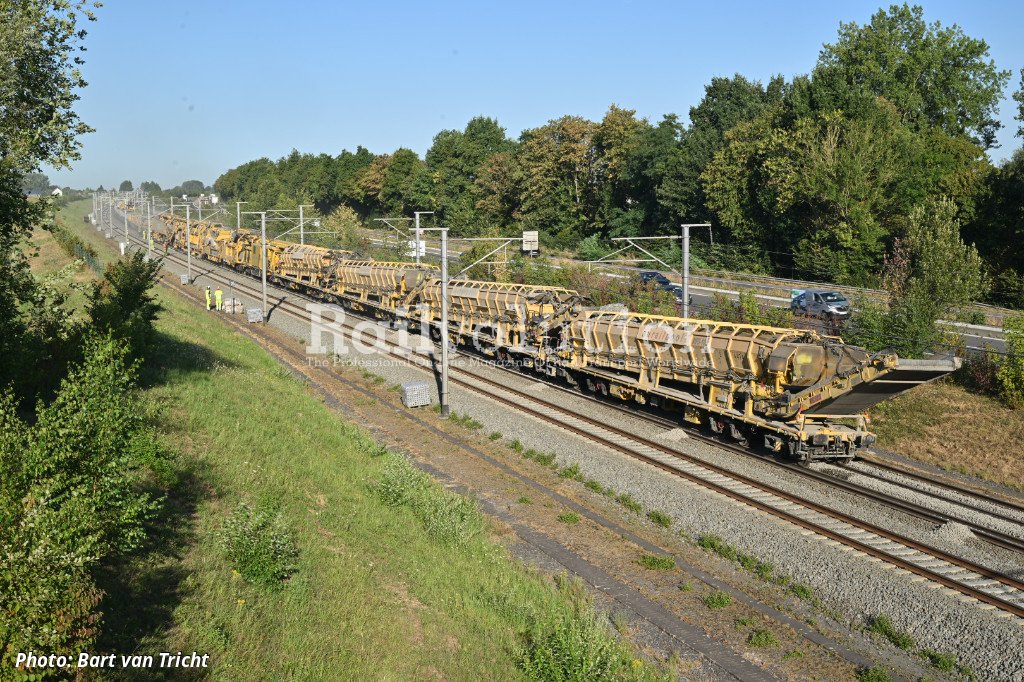
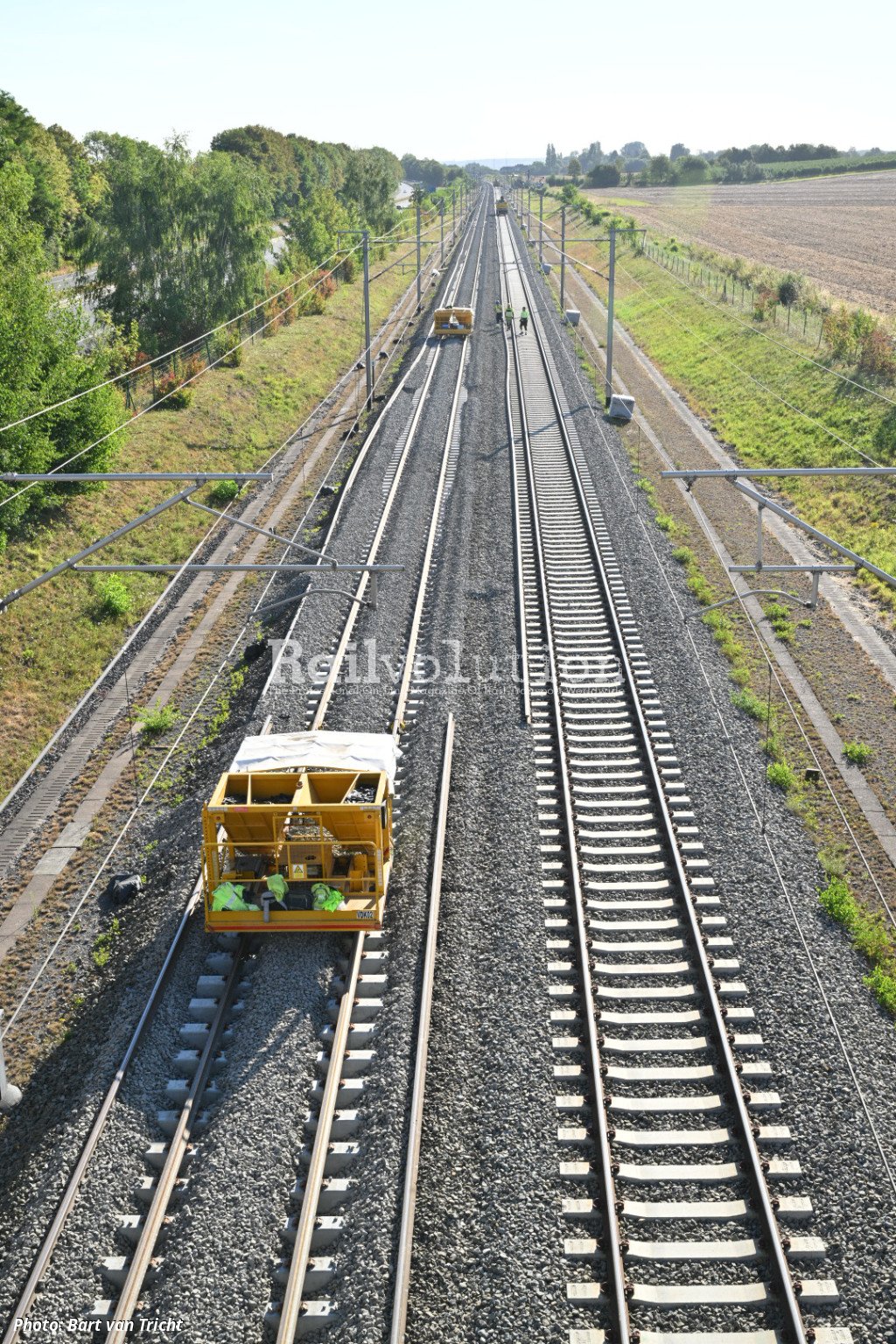
This summer, Infrabel is continuing its major renewal works on the high-speed line between Brussels and the French border (HSL1). From 6 to 23 August, Infrabel’s technical teams and its project partners will replace, among other things, the rails, concrete sleepers and ballast between Halle and Silly. A special 700 m long track renewal train will be deployed for this purpose. This is the third phase of these large-scale works, which started in summer 2024. SNCB will operate an adjusted train service for passengers during these 18 days.
Works on the Brussels - French border HSL spread over approximately ten years
HSL1 was commissioned in 1997, making it the oldest high-speed line in Belgium. Around one hundred trains travel along this route between Belgium and France every day at speeds of up to 300 km/h, carrying passengers to the United Kingdom, the Netherlands and Germany. It is therefore crucial to ensure that this heavily used rail infrastructure, which is of major importance to the competitiveness of rail transport in Europe, remains fully operational at all times. To achieve this, Infrabel launched major renewal works in summer 2024 to replace the various components of the rail infrastructure that are reaching the end of their service life. The works will be spread over a period of approximately ten years (2024 - 2035).
From Thursday morning 6 August to Sunday evening 23 August 2026, traffic in both directions will be suspended between Halle and Silly. On this 19.2 km section, Infrabel’s technical teams and its project partners will completely renew one track. This involves installing no fewer than 38.5 km of rails, 32,150 sleepers and 6,750 tonnes of ballast. Through these works, Infrabel is anticipating future needs in order to avoid having to reduce the speed on this strategic rail corridor for international rail traffic. To minimise the impact of the works on rail passengers, teams will work around the clock, 24/7, in shifts for 18 days and nights.
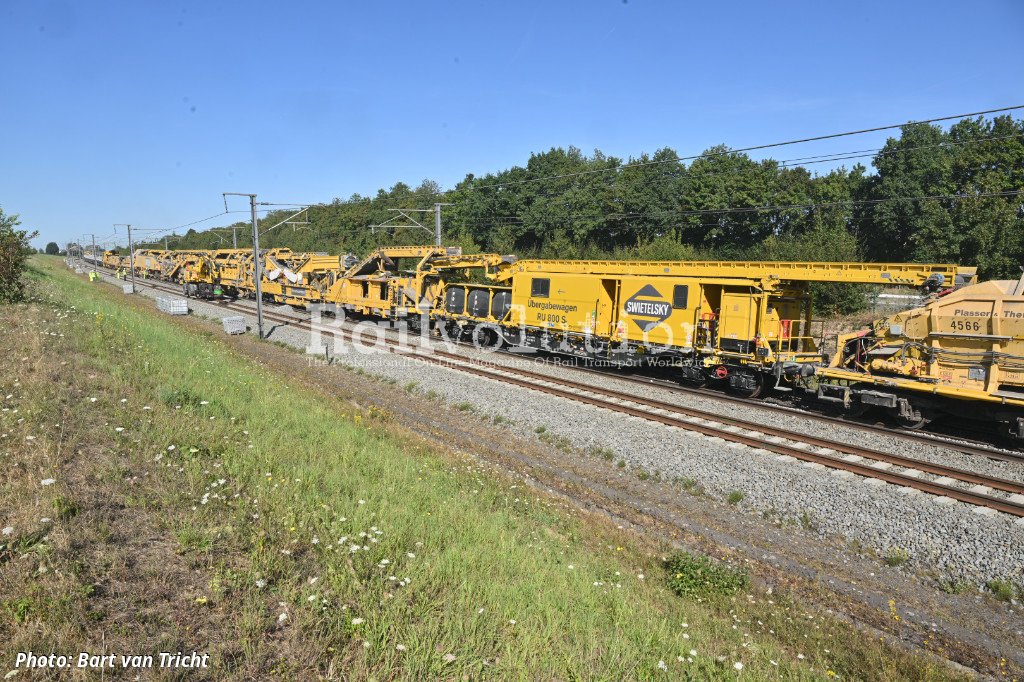
To carry out these large-scale works, Infrabel can rely on a very special machine: an Austrian work train, 700 m long and weighing 1,600 t, which travels across Europe to carry out major rail renewal projects. This is only the fourth time that this train has been used on the Belgian network.
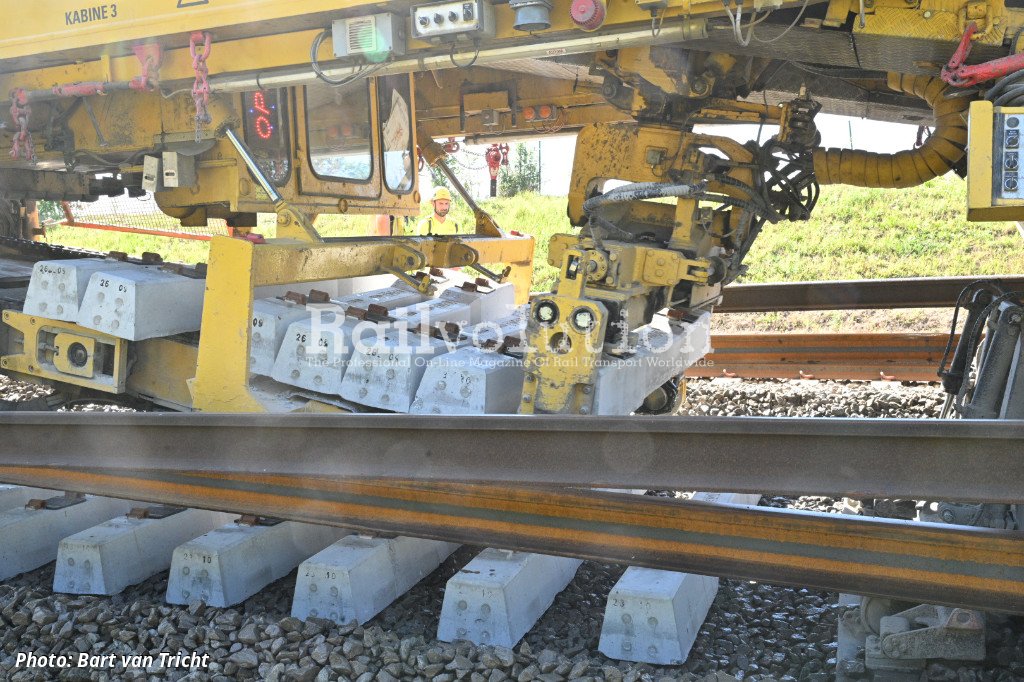
This “Swietelsky” train is equipped in the middle with a 200 m long renewal unit. It spreads the rails apart, lifts the sleepers and vacuums up the ballast, which is then screened. In one continuous operation, the train levels and prepares the ground so that new sleepers can be laid and the cleaned ballast redistributed. The rails are then put back into place.
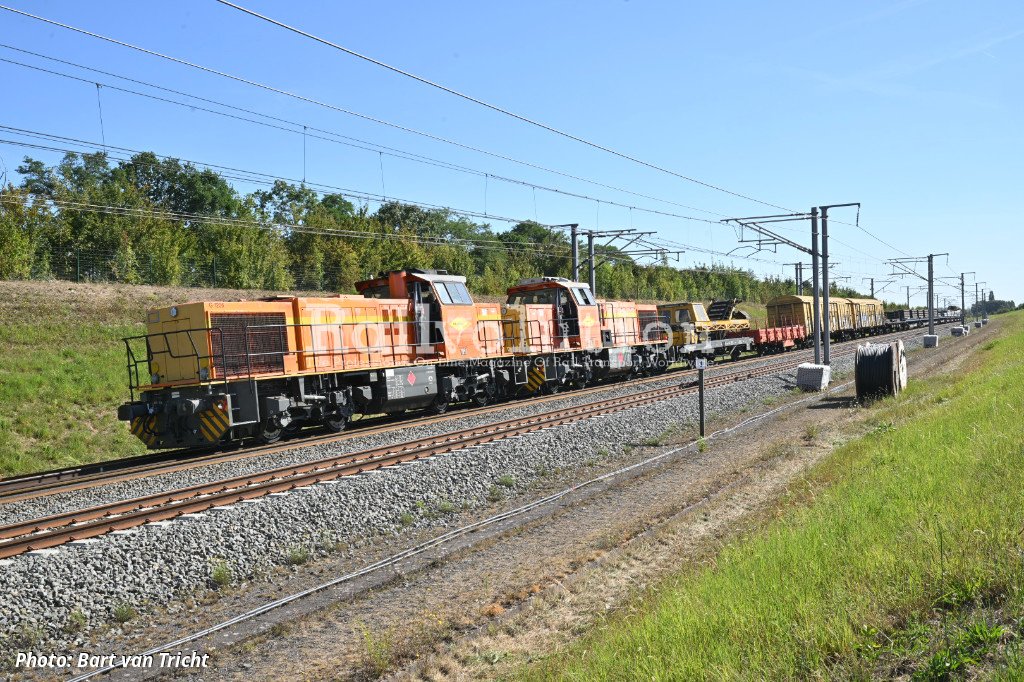
No fewer than 70 technicians operate the train, which can renew as much as 180 m of track per hour, or 2.1 km of track per day, and works for a maximum of 12 hours per day. The remaining time is used for the train’s essential daily maintenance, as well as unloading the old sleepers and loading the new ones. In total, approximately 140 people, six construction cranes, five locomotives and various pieces of construction equipment will be working across the entire site. Organising the entire logistics chain efficiently represents a major challenge.
In addition, there is an advantage of this railway closure to carry out as many other works as possible (= work bundling). These include maintenance works on the section that has been taken out of service, as well as signalling renewal. In the Halle area, four sets of points will be renewed, and the metal bridge over the Charleroi Canal will receive a new coat of paint.
Adjusted train service for passengers
As a result of these works, from Thursday 6 August to Sunday 23 August, high-speed trains will be diverted via alternative routes using the conventional network. Journey times will therefore be extended by approximately 15 minutes. There will also be changes to domestic train services.
The total budget for these works amounts to 310 million EUR, as provided for in Infrabel’s Multiannual Investment Plan, which was approved by the federal government in December 2022.Given Belgium’s location within the European rail network, with Brussels-Midi as a major hub, this project is of strategic importance. In addition, the Leuven–Liège HSL is also being renewed in stages: the first two phases of the works took place earlier this summer (and in 2025); further renewal works on HSL2 will take place between 2028 and 2031.
Belgium’s high-speed rail network:
- HSL1 “Halle - French border”, officially commissioned in 1997 (74 km), passengers can travel from Brussels to Paris in 1 h 26 and to London in 2 h 01,
- HSL2 “Leuven - Liège”, officially commissioned in 2002 (64 km),
- HSL3 “Liège - German border”, officially commissioned in 2009 (36.5 km), passengers can travel from Brussels to Köln in 1 h 50,
- HSL4 “Antwerp - Dutch border”, officially commissioned in 2009 (36 km), passengers can travel from Brussels to Amsterdam in 1 h 52.
