

Future Cambron-Casteau (Pairi Daiza) station
posted on 23rd Nov 2026 16:42
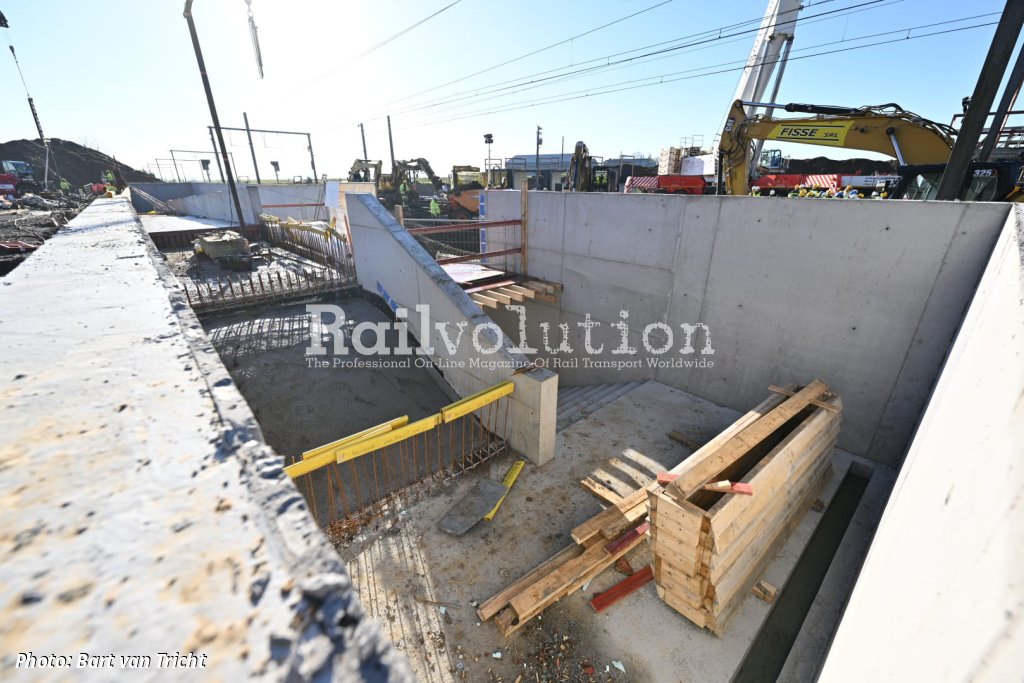
In mid-November 2026, Infrabel installed the underpass elements for the future Cambron-Casteau station. The station redevelopment project, carried out jointly by Infrabel, SNCB, and Pairi Daiza, aims to facilitate access to the Garden of the Worlds by train and provide a sustainable answer to mobility challenges. Railway works began in August 2026 and the new station is scheduled to enter service in 2028.
At present, visitors and employees travelling to Pairi Daiza by train still have to walk 1.2 km between Cambron-Casteau station (on the Ath-Jurbise line) and the park entrance. Infrabel and SNCB have developed a solution to help Pairi Daiza address mobility challenges and encourage greater use of rail transport through a complete redevelopment of the station.
The platforms will be relocated 320 m towards Jurbise and extended to accommodate more passengers. The future Platform A (park side) will be lengthened from 250 to 271 m, while the future Platform B will increase from 250 to 256 m. The platforms will be connected by an underpass equipped with stairs and ramps accessible to persons with reduced mobility.
Pairi Daiza, for its part, will build a second entrance entirely at its own expense, directly connected to the future station. Designed to handle large visitor flows, this entrance will be immediately visible from passing trains and will provide visitors with a first immersion into the worlds of Pairi Daiza, making rail access even more attractive.
To improve local connectivity, a safe cycling and pedestrian access route, as well as a right-of-way accessible to people with reduced mobility, will be created from Rue du Berceau for the benefit of local residents. In addition, the level crossing at the current Cambron-Casteau station will remain open.
Works from 2026 to 2028
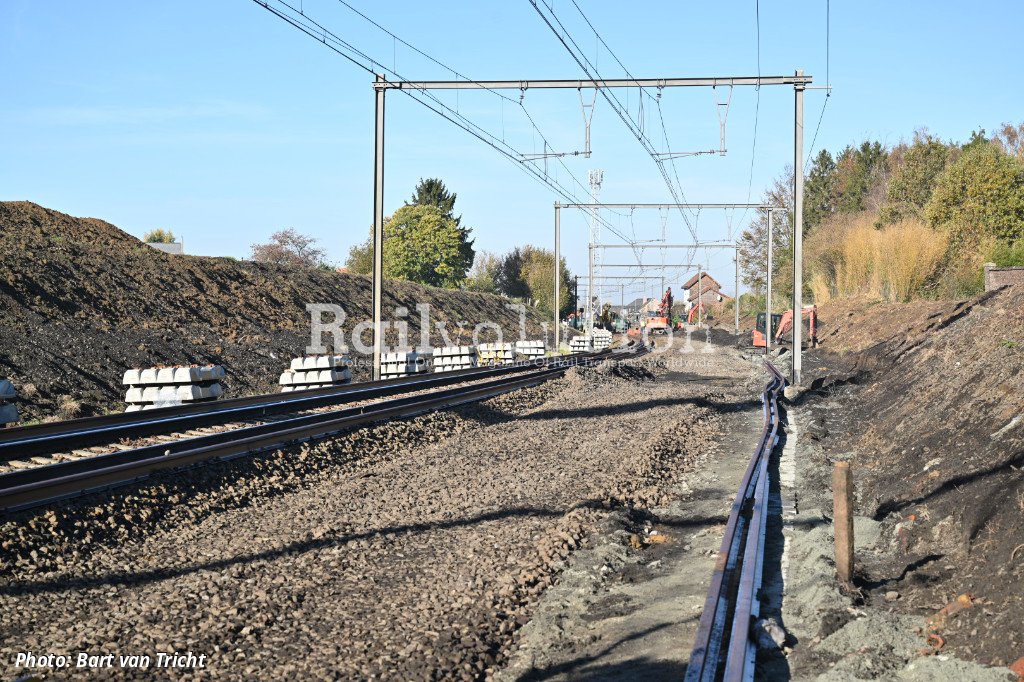
The project began in August 2026 with the construction of the concrete structure of the underpass on the Platform A side (Pairi Daiza side), including stairs, ramps for people with reduced mobility, and a technical room. At the beginning of November, Infrabel demolished the Platform 1 side and renewed the railway formation. Since 9 November, all passengers have been invited to board trains on weekdays from Platform 2. Trains are operating alternately in both directions on a single track.
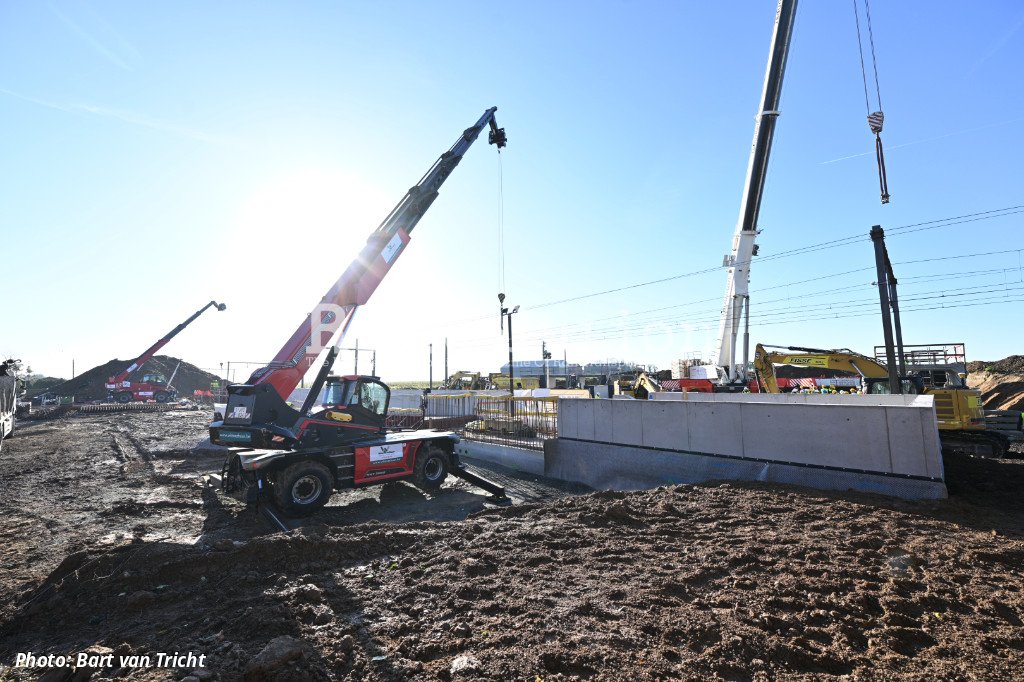
The weekend of 14 and 15 November marks a major milestone in the project with the installation of the underpass, measuring 3 metres wide and 2.5 metres high. The structure consists of reinforced concrete sections, each 3 metres long, which were installed using a lifting crane. Works will continue until the end of December with the construction of a new platform on the Platform 2 side, opposite the current Platform 1 platform, as well as the construction of the access ramp on the Platform 2 side of the underpass.
Early 2027 will be dedicated to laying the asphalt platform surface and installing passenger facilities such as shelters, benches, litter bins, lighting, and other equipment. Finishing works in and around the underpass, including wall and floor coverings and the installation of handrails, will continue until 2028 so that the underpass can be inaugurated simultaneously with the park’s second entrance.
The project is based on two complementary investments. The first concerns railway infrastructure, with a total budget of 4.8 million EUR: 2.6 million EUR invested by Infrabel for relocating the platforms and constructing the underpass, 1.8 million EUR funded by SNCB for station equipment, and 400,000 EUR contributed by Pairi Daiza.
The second concerns the construction of the second entrance to the Garden of the Worlds, which is being fully financed by Pairi Daiza with a budget of 10 million EUR. In total, Pairi Daiza will invest 10.4 million EUR in this project aimed at promoting rail access and improving mobility in the surrounding area.
Multiple benefits for passenger mobility and Wallonia
Used by nearly 1,800 passengers per week, Cambron-Casteau station is served by modern trains that are easily accessible, including for families with strollers. As early as 2018, SNCB doubled the weekend rail service at the station.
Today, one train per hour on the Quévy – Mons – Ath – Geraardsbergen local service stops at the station every Saturday, Sunday, and public holiday in both directions. During the summer holidays, this weekend service is reinforced by three direct return services from Brussels, scheduled to coincide with the park’s opening and closing hours. These trains, operating on the Brussels–Halle–Braine-le-Comte – Soignies – Cambron-Casteau route, allow visitors from across the country to reach the park more easily, either directly from Brussels, Halle, and Soignies, or from most Belgian cities with just one connection in Brussels.
On weekdays, 40 trains serve Cambron-Casteau station, providing one train per hour during off-peak periods and one train every thirty minutes during peak hours, depending on mobility demand along the Geraardsbergen – Ath – Cambron – Mons corridor.
The redevelopment of the station will increase passenger numbers and improve train occupancy by providing a more direct connection to Pairi Daiza. It will also enhance mobility in the area around the park, contributing to the implementation of the recommendations set out in the mobility plan established by the Walloon Region.
Pairi Daiza (known until 2009 as Paradisio or Parc Paradisio) is a zoological park located in Cambron-Casteau, in the province of Hainaut, Belgium. It opened its doors on 11 May 1994. The park is home to more than 7,000 animals representing over 800 species across an area of 80 hectares. The zoo is divided into thematic zones known as the “Worlds.” It is one of only eight European parks where giant pandas can be seen.
It is the most visited leisure park in Belgium, attracting more than 2.8 million visitors per year in 2025, only 3 % arrives by train at Cambron-Casteau. Works are underway to move the station some 320 m closer to the park, thanks to a new entrance that will be built, more visitors will arrive by train (10%), nowadays traffic jams happen in this region, due to the heavy visitor flux which arrive massively by car.
