

Exceptional impact in the Brussels North-South connection
posted on 8th Mar 2026 08:55
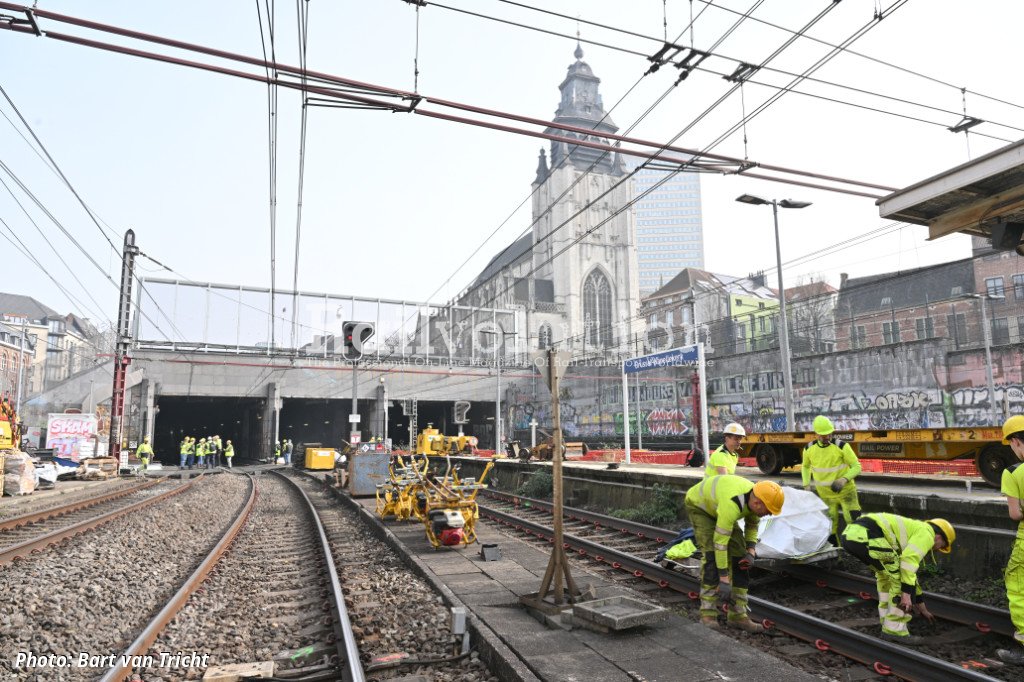
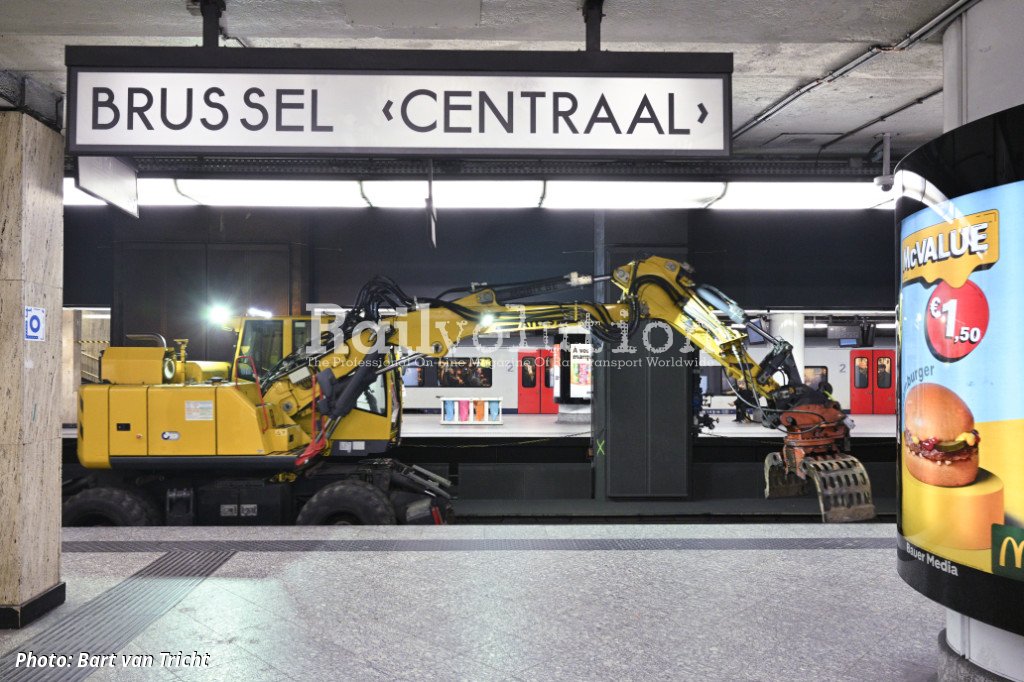
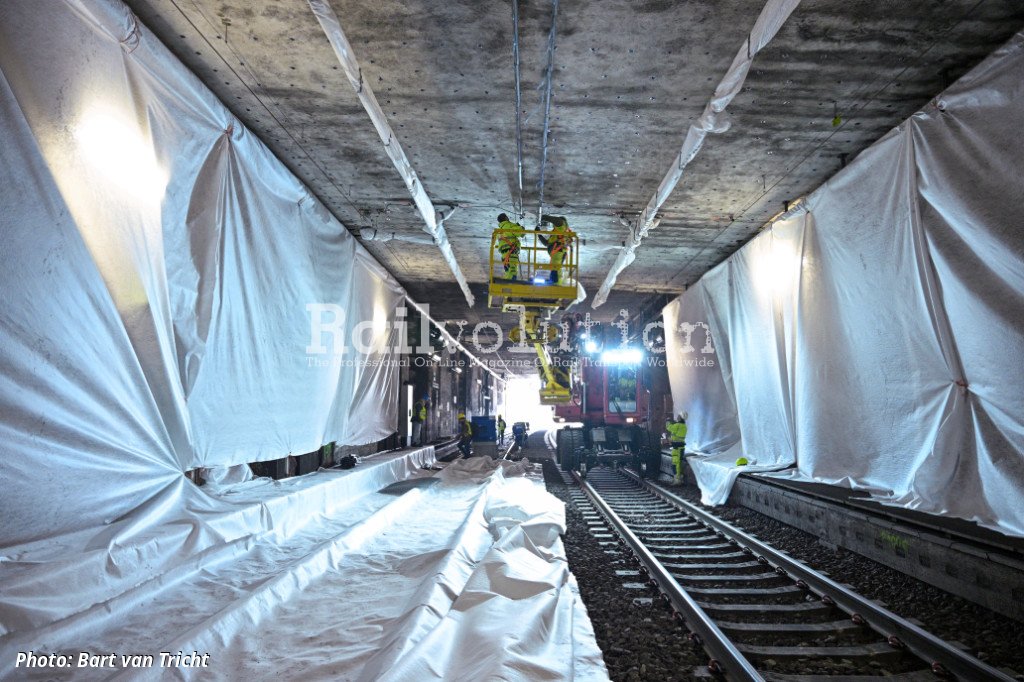
From Saturday morning 7 March until Sunday evening 8 March 2026, Infrabel caried out major renewal works on the railway infrastructure at Brussels-North station and in the North-South connection. Around 50 technicians and numerous heavy machines were working around the clock. As a result, four of the six tracks in the busiest railway junction in the country were out of service, meaning far fewer trains could operate. SNCB organised alternative transport options for rail passengers.
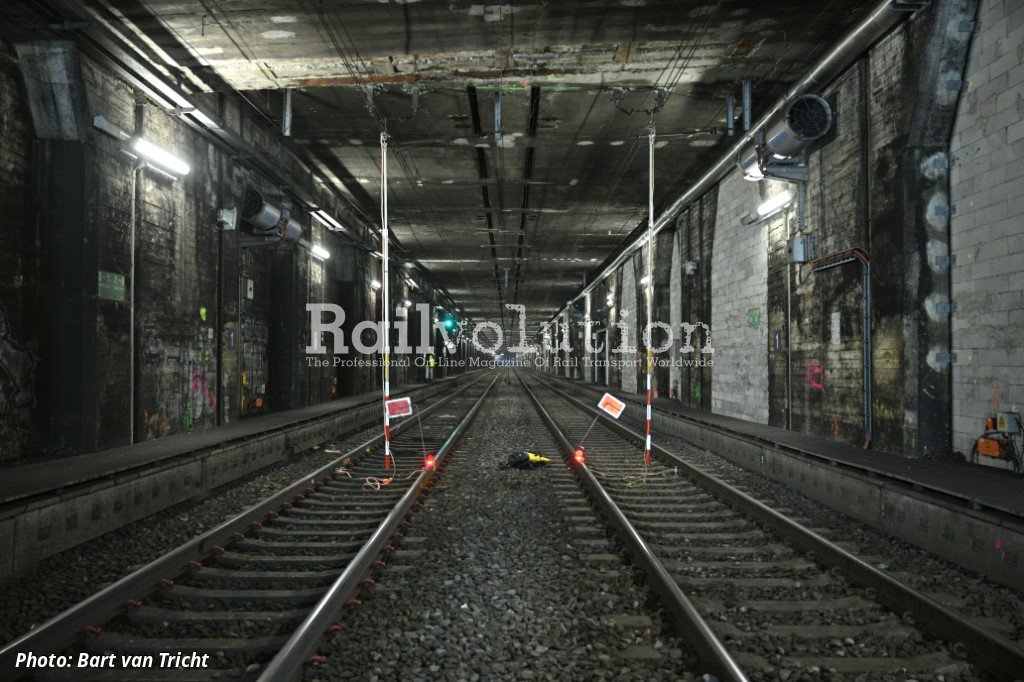
The North-South connection consists of three tunnel tubes, each containing two tracks. Exceptionally, two of these tubes (or four tracks) were out of service. Infrabel teams renewed more than 3 km of track in total and replaced components of the overhead lines on both sides of Brussels-North station, including towards Schaerbeek.
Around 50 technicians and various railway cranes, machines, and work trains were deployed day and night.
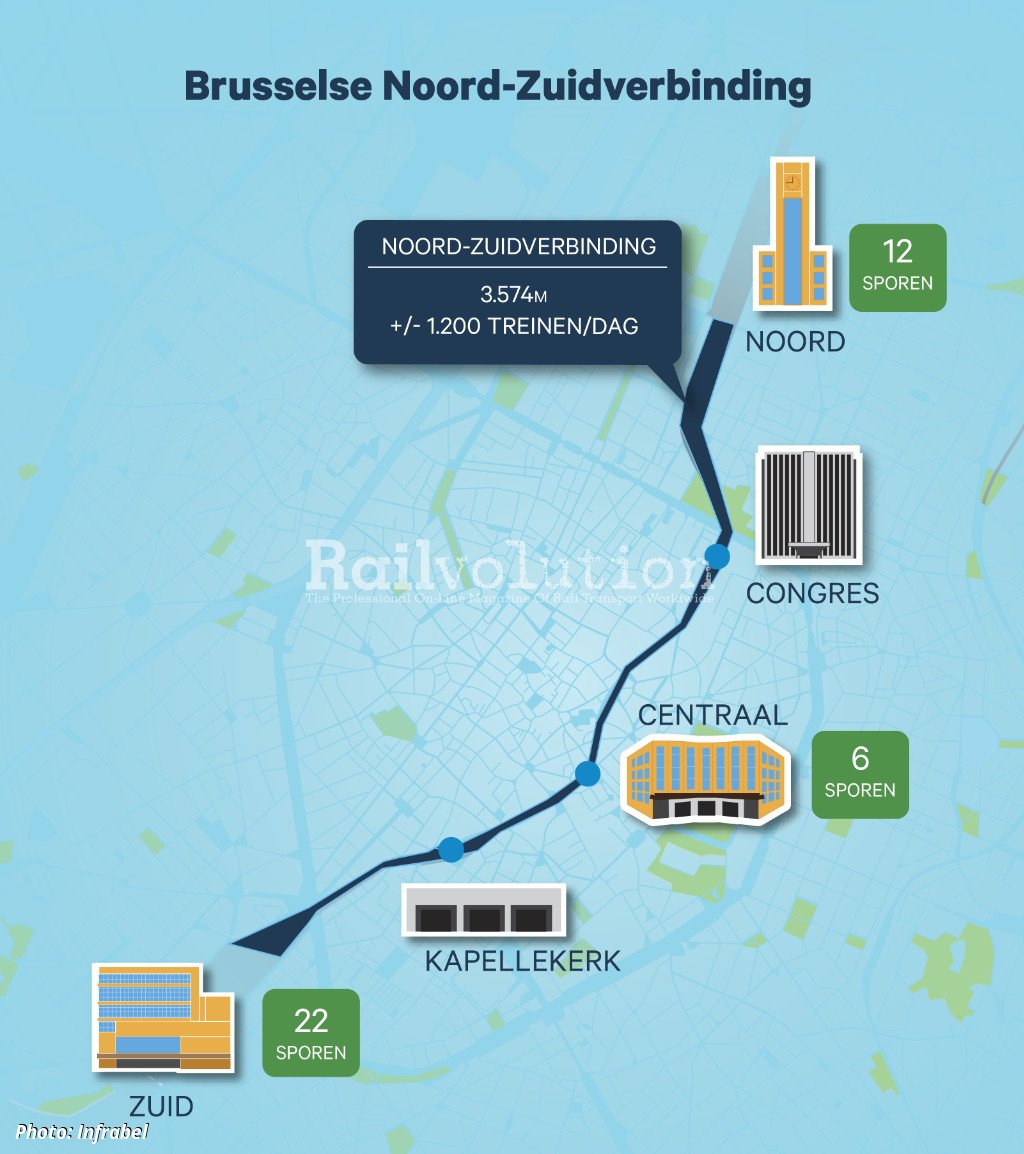
The Brussels North-South connection (NZV) opened in 1952 and is the beating heart of the Belgian railway network. The six tracks of the connection (3.6 km between Brussels-North and Brussels-South, including the 2 km tunnel) are used daily by around 1,200 national and international trains, 300 of which run during peak hours (7 - 9 and 16 - 18 h). On a weekday, an average of around 180 000 passengers take a train at one of the stations along the North–South connection.
The North–South connection is the busiest railway junction in Belgium and one of the busiest in Europe. Its construction also created new opportunities: it allows certain train services to run directly from north to south - for example, direct trains to the coast from Limburg/Leuven/Liège - without requiring passengers to switch to other modes of public transport (unlike in Paris, where many stations are terminus stations). The NZV also led to the construction of Brussels-Central station and improved services for rail users in the heart of the capital.
Given its strategic importance and the large number of trains passing through daily (84 % of trains in Brussels use the North-South connection), it is crucial that this infrastructure remains in optimal condition. From 2014 to 2019, Infrabel therefore completely modernised the North–South connection in terms of tracks, overhead lines, signalling, and safety installations (fire safety and evacuation for emergency services).
