

PESA-built HEMUs for Koleje Dolnośląskie
posted on 20th Nov 2026 17:11
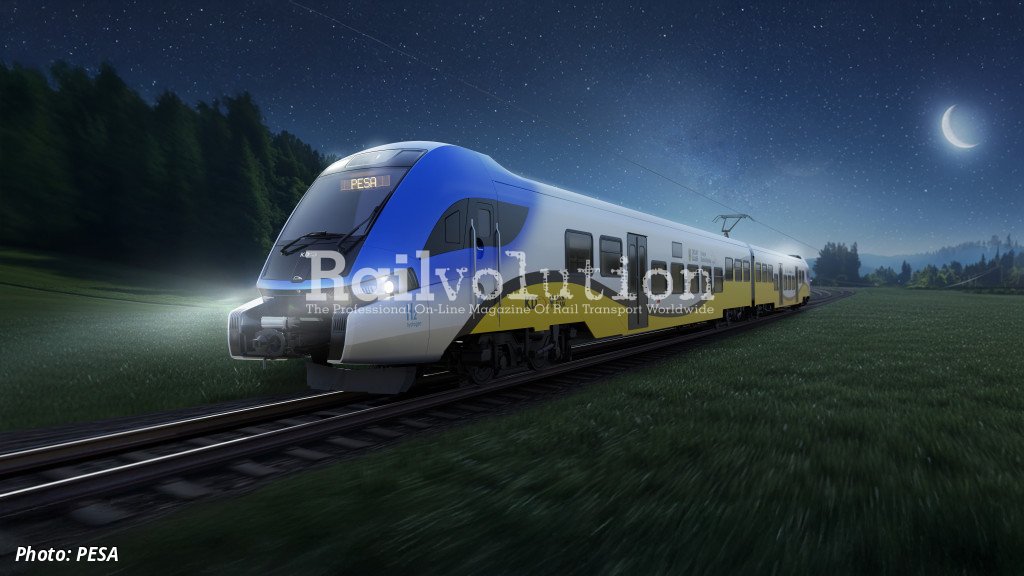
On 20 November 2026, PESA Bydgoszcz’s bid has been selected by Koleje Dolnośląskie as the most advantageous in the first-ever HEMU tender in the Polish railway sector. Within 30 months of signing the contract, the company will build two Type 55WE Hybrid Electric Multiple Units, which will combine three power sources: catenary, limited-range batteries, and a hydrogen fuel cell that acts as a range extender when needed. Where overhead lines exist, the train uses the cheapest electricity via its pantograph; upon entering non-electrified lines, it switches to battery power; and finally, when the route needs to be extended, it activates the hydrogen fuel cell, running quietly with zero local exhaust emissions.
The tender of Koleje Dolnośląskie focused on the development and delivery of zero-emission rolling stock capable of operating on both electrified and non-electrified lines. The innovation partnership model establishes close cooperation between the contracting authority and the manufacturer to create a solution that goes beyond standard market offerings.
For PESA, this project marks the next stage in the development of alternative propulsion systems using experience gained during the design, construction, and homologation of Poland’s first hydrogen locomotive, the SM42-6Dn, to the passenger market, building upon the new Elf 3.0 platform. Krzysztof Zdziarski, President of the Management Board of PESA Bydgoszcz, said: „The innovation partnership formula allows us to go the full distance from R&D and building two prototypes to the eventual production of up to 16 units, lowering operating costs on partially electrified lines.”
Under the terms of the tender, once formal procedures are completed, the selection becomes final, and the contract is signed, PESA Bydgoszcz will have 30 months to design, manufacture, and deliver two prototypes. This will be followed by a 12-month testing period under the technology partnership, during which the trains will undergo verification in daily passenger service on Lower Silesian lines. Upon the successful completion of the testing phase, the contracting authority will have the option to order up to 16 additional units.
Michał Rado, Deputy Marshal of the Lower Silesian Voivodeship, whose responsibilities include rail transport, said: “First, Lower Silesia was the first region to establish its own railway company from scratch. Later, we began revitalizing railway lines ourselves using the regional budget. Now it’s time for another milestone: starting in 2029, hydrogen-powered trains will run across our region.“
