

SNCB opened new maintenance hall in Ostend
posted on 2nd Feb 2026 05:32
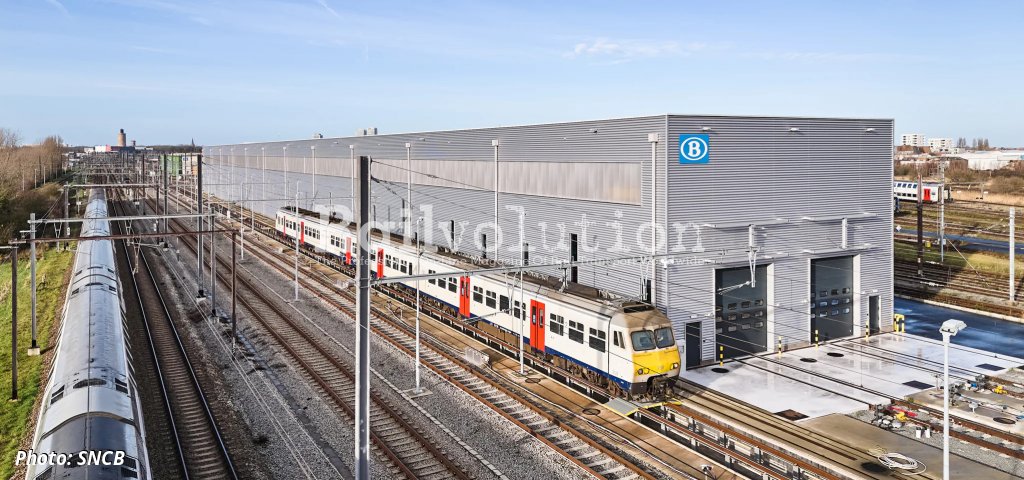
On 16 January 2026, SNCB has officially inaugurated a new maintenance hall at its traction workshop in Ostend. With this 47 million EUR investment, SNCB further modernizes its maintenance infrastructure, aiming to improve the availability and reliability of its rolling stock and enhance punctuality. The new hall in Ostend is already the fifth major maintenance hall SNCB has put into service in recent years, following Arlon, Hasselt, Kinkempois, and Melle. It fits within the operator's broader investment plan to thoroughly modernize its workshops.
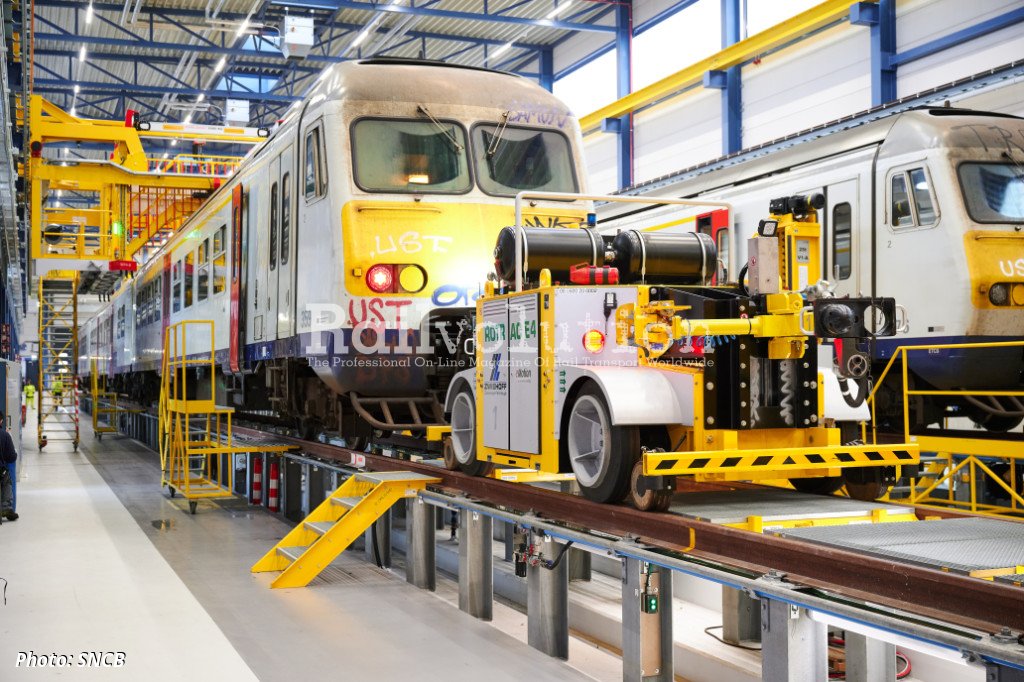
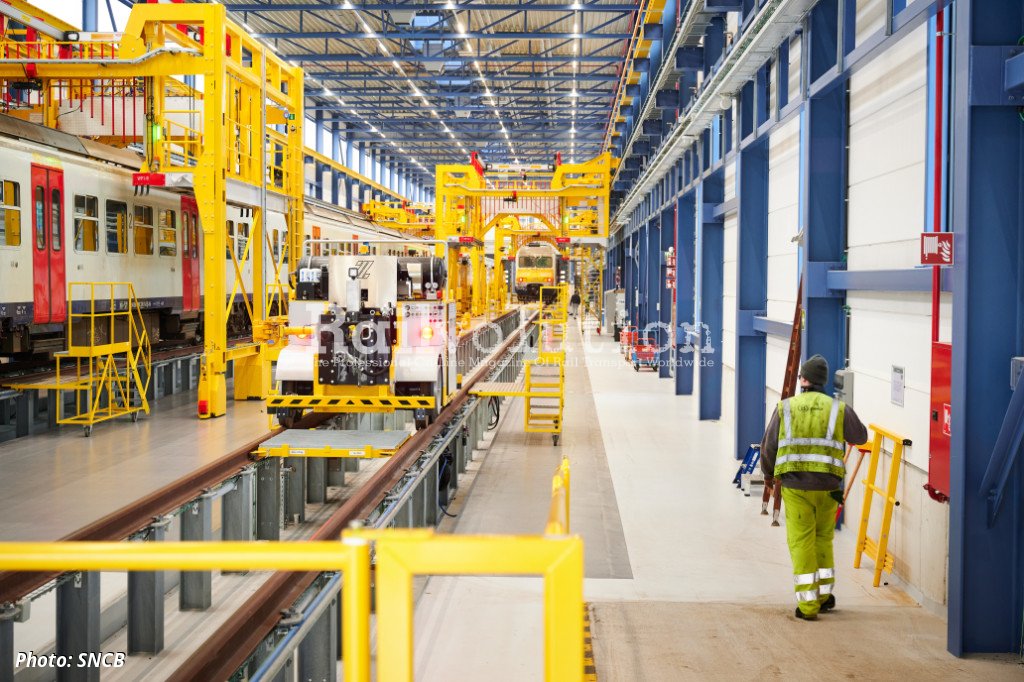
Construction of the hall began in 2020, and it was put into service at the end of 2025. The new hall is 200 m long, 18 m wide, and 13 m high, and contains two through tracks accessible from both sides. Thanks to its length, trains can be serviced in one piece without time‑consuming uncoupling, and up to four trains can be worked on simultaneously.
Additional upgrades include investments in cleaning platforms and a long outdoor inspection pit of 370 m next to the hall, allowing multiple work positions. This new maintenance pit is also equipped with a mobile pantograph platform, enabling staff to work on the train’s pantograph from above, saving time and making maintenance more efficient. Alongside the new hall, SNCB also invested in an industrial signaling system and new shunting equipment capable of moving trains.
A pit stop for trains
Thanks to this new infrastructure, Ostend can now operate according to the TIM principle (Timetable Integrated Maintenance). This approach can be compared to a pit stop: trains come in more frequently but for shorter maintenance sessions, better spread out during quieter periods in the timetable, allowing them to return to service more quickly. SNCB has been implementing this principle for some time.
Under this system, a train enters the workshop roughly every two weeks for about four hours of maintenance, making it available for passenger service much sooner. Technicians also work at night so that most trains are ready during the morning peak.
Sustainability and ergonomics were central to the design of the new hall. More than 900 solar panels have been installed, providing a capacity of 400 kW - equivalent to around 80 residential solar installations. The electricity generated and consumed on-site partially covers the workshop’s energy needs. This investment also contributes to SNCB’s ambition to quintuple its installed photovoltaic capacity by 2032. Rainwater is also maximally recovered.
A key role in West Flanders
The Ostend traction workshop currently employs around 250 staff and is responsible for the maintenance, repair, and cleaning of nearly 400 units and locomotives per month. The site therefore plays a crucial role in rail operations in West Flanders and beyond, and is an important pillar of regional employment.
Over the past five years, SNCB has hired more than 100 new employees in Ostend. In 2025, around ten new hires were made. In 2026, SNCB plans to recruit another ten employees, with most vacancies already published. Candidates in West Flanders can also apply for other roles, such as train conductor, train driver, and substation supervisor.
SNCB operates 11 workshops, supplemented by technical maintenance posts across the country. In the current 2023 - 2032 investment plan, 1.4 billion EUR is allocated to workshops and maintenance infrastructure, representing about 15 % of the total investment budget.
