

JR East introduced the design of E927 inspection train
posted on 5th Aug 2026 17:20
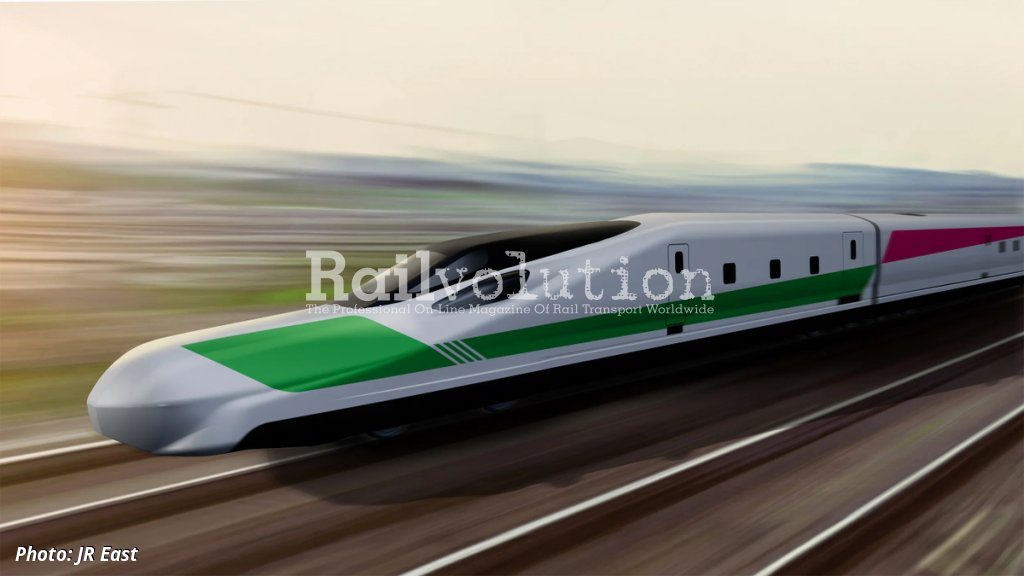
On 14 July 2026, JR East unveiled plans for a new E927 inspection train for the Shinkansen lines operated by the company. The seven-car E927 high-speed inspection train, which has a maximum service speed of 320 km/h, is based on Class E6 passenger mini-Shinkansen EMUs. These have a reduced loading gauge and shorter cars, enabling the train to inspect both Shinkansen high-speed lines (Tōhoku, Hokuriku, Jōetsu) and conventional mini-Shinkansen lines (Akita and Yamagata).
The train will be equipped with conventional measuring equipment as well as newly developed systems. The conventional equipment will include systems for signalling and overhead catenary inspection, including interaction with the panograph.
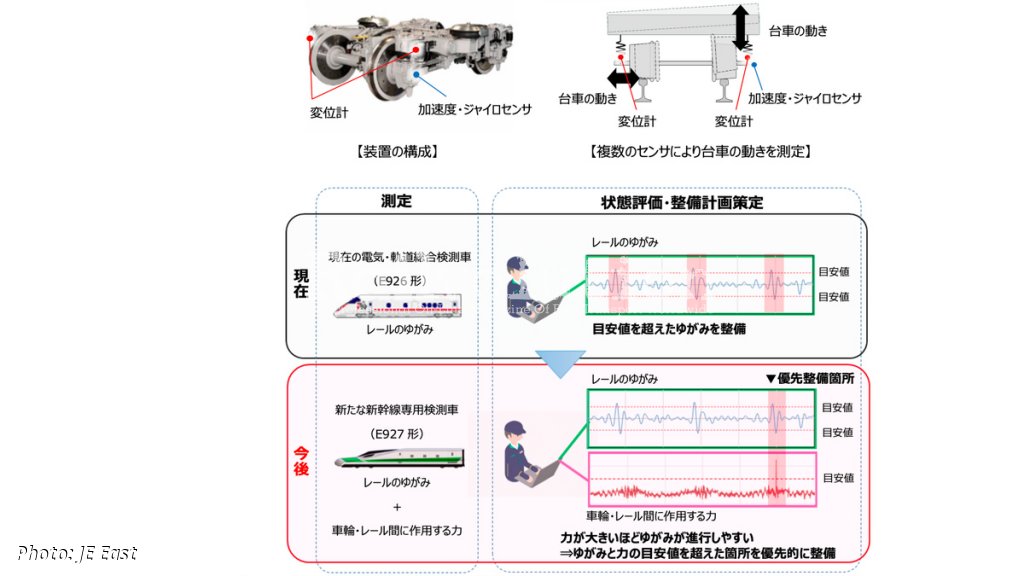
The new PQ Estimation System is a technology that estimates the forces acting between the wheel and the rail. This system estimates these forces by mounting multiple sensors on the bogie to measure its sway, tilt, and other movements. Incorporating this into the assessment of track condition provides greater clarity regarding maintenance locations and priorities. The goal is not only to measure track geometry distortions, but also to take into account the forces acting on the wheelsets, thus targeting maintenance on spots with the highest impact on axle riding quality. This will enable more effective preventive maintenance and improved safety levels.
The second innovative system will be the Shinkansen On-Board Imaging System (which is provisional name). This technology involves capturing high-resolution images continuously using 48 cameras installed at the front of the end cars, on the side of car 3 and on the ceiling. This provides a detailed record of the condition of the infrastructure and the environment along the route. This will further streamline inspections, such as comparing the current infrastructure conditions with previous data, and provide a more accurate understanding of the environment by identifying trees and other potential obstacles to train operations. Going forward, the focus will be on introducing automated assessment and extraction using AI technology for automated image analysis.
In future JR East also plans to utilise AI and digital transformation (DX) technologies to make high-speed transport services safer and more reliable, whilst developing the capability to carry out track inspections at speeds of up to 320 km/h. This will reduce the need for manual labour and enable remote, unmanned inspections.
JR East invited employees across the JR East Group to submit original design concepts for the E927 livery as part of the selection process. JR East and the UK-based design consultancy Tangerine selected a winning design from this internal design competition, and this livery will be refined during the upcoming train manufacturing phase. We are pleased to announce that the winning entries were selected from submissions by JR East Group employees.
SOAR, the name for the new train is derived from the Group Management Vision, 'Yūsho 2034', and was chosen to embody the meaning of 'soaring courageously'. Furthermore, the letter 'O' also represents the number '0' (zero), signifying JR East’s commitment to achieving the highest level of safety with zero accidents.
The E927 SOAR, which is planned to be inaugurated for measurement tasks by 2029, will replace the E926 East-i measuring train, which is based on Class E3 Mini Shinkansen, with a maximum service speed of 275 km/h.
It is an interesting development in the field of measuring trains on Japan’s Shinkansen network because JR Central and JR West are retiring their Class 923 measuring trains (known as Dr. Yellow) and replacing their measuring capabilities by installing the equipment to selected N700S passenger EMUs. JR Kyushu has never had a special measuring train and uses passenger trains for this task. On the other hand, JR East maintains a much higher variety of routes, including mini-shinkansen with a conventional loading gauge.
