
New SNCB distribution centre in Mechelen taking shape
posted on 15th May 2026 20:15
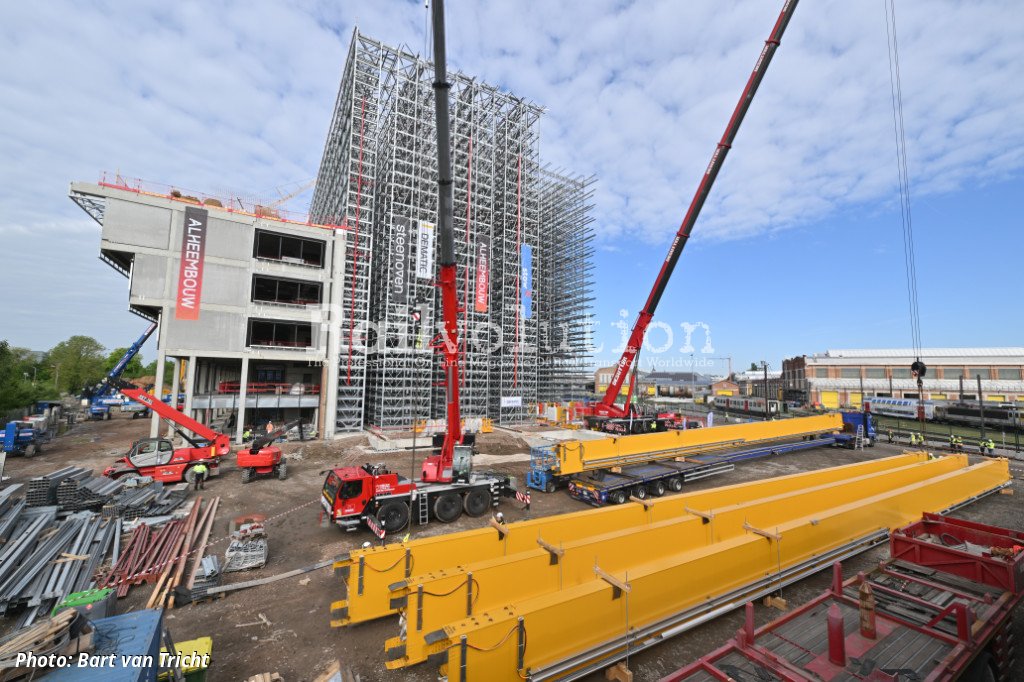
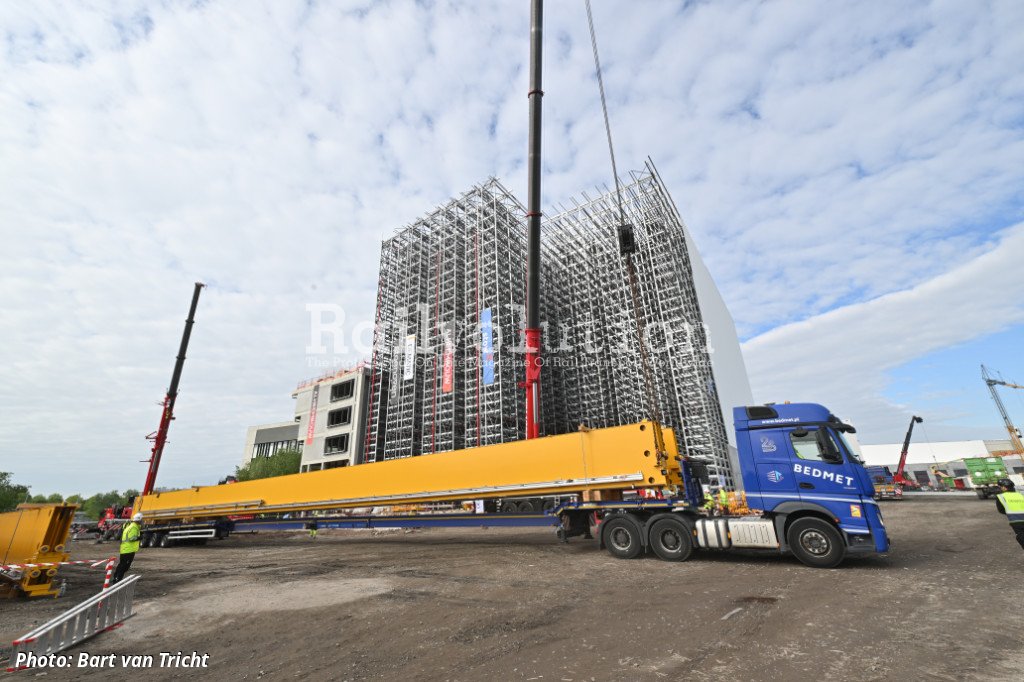
The construction of SNCB’s new distribution centre (DC) at the Central Workshop in Mechelen is clearly accelerating. The building project, which began at the end of 2024, will grow into the central logistics hub for the maintenance and modernisation of Belgium’s rolling stock by 2027.
A key project for the future of the railway
The Central Workshop in Mechelen, where around 1,200 people work, has historically been a crucial site for the Belgian rail network. Each year, approximately 450 carriages are modernised and more than 100,000 spare parts are repaired.
The new logistics centre is being built on this site and forms an essential part of SNCB’s modernisation efforts. From this new building, more than 50,000 different components - from small spare parts to heavy components weighing over a ton - will be managed and distributed daily to workshops across the country.
With this new logistics centre, SNCB is investing not only in its own operations but also in the future of sustainable mobility and employment in the region.
Impressive new infrastructure
Alheembouw, together with Steenoven, is responsible for the complete structural and technical execution of the high‑bay warehouse, logistics areas, office building and surrounding infrastructure. For automation and the racking system, SNCB is working with Dematic and Stow. The building was designed by B2Ai architects and Delafontaine architects, who jointly oversaw the entire architectural process.
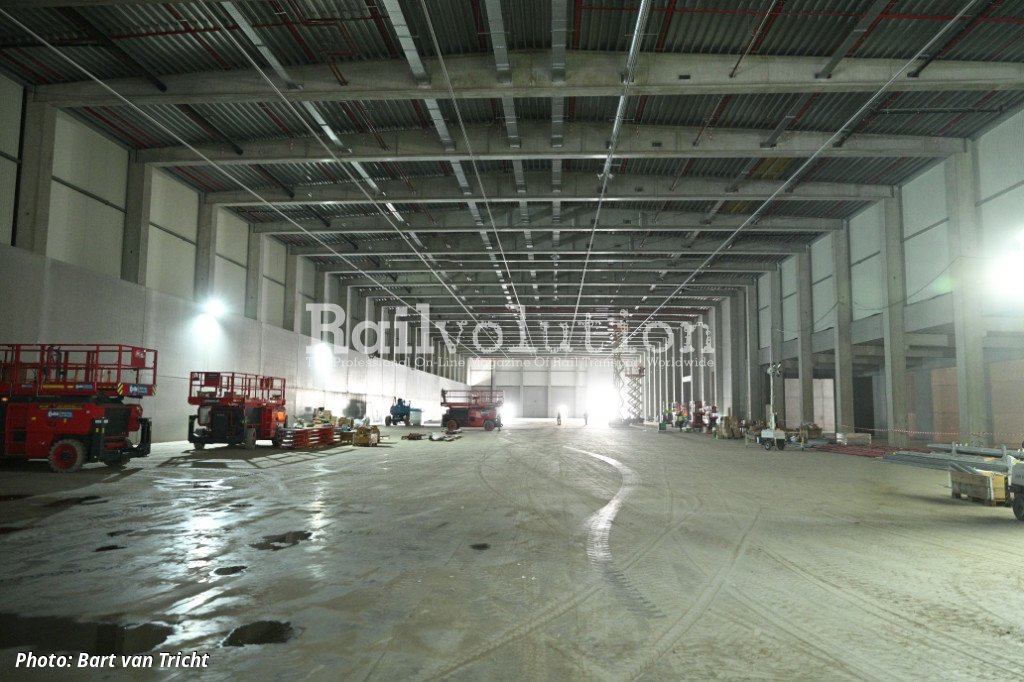
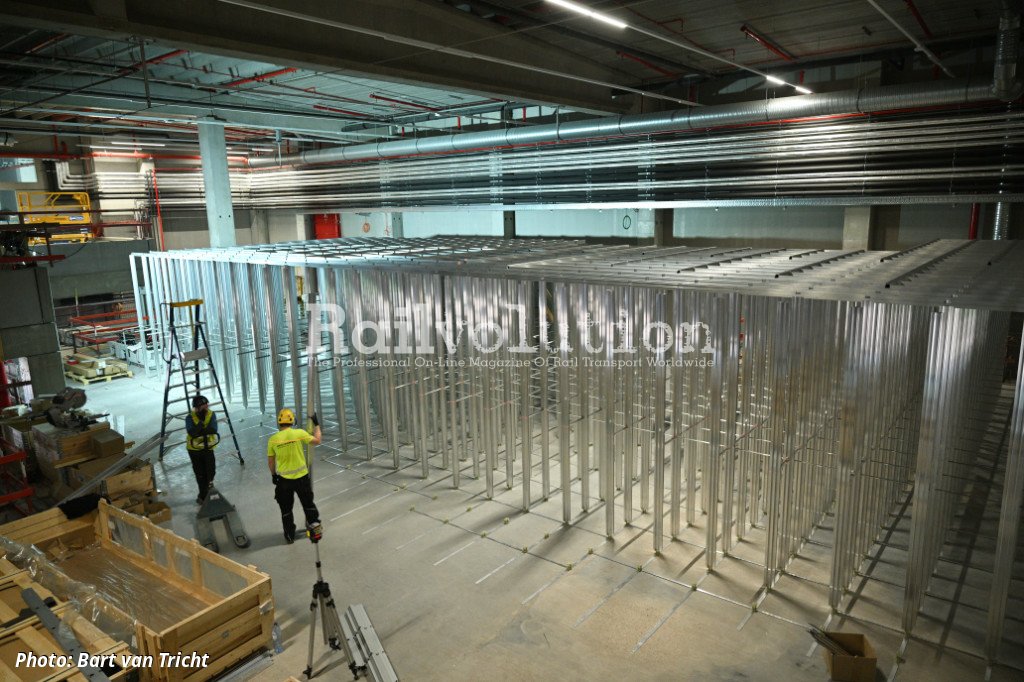
The project includes: a 45‑metre‑high automated high‑bay warehouse with a capacity of nearly 50,000 pallets, a low‑rise warehouse equipped with an advanced AutoStore system for more than 17,000 bins, a modern office building, and extensive site works such as a new access complex to the Central Workshop with a gatehouse, visitor parking and a green zone with a wadi.
With a total volume of 180,000 m³ and tens of thousands of square metres of floor space, it will become one of the most advanced logistics sites within the Belgian rail sector. The centre is expected to be operational in 2027, allowing the entire logistics operation to be transferred on time.
Innovative technological system
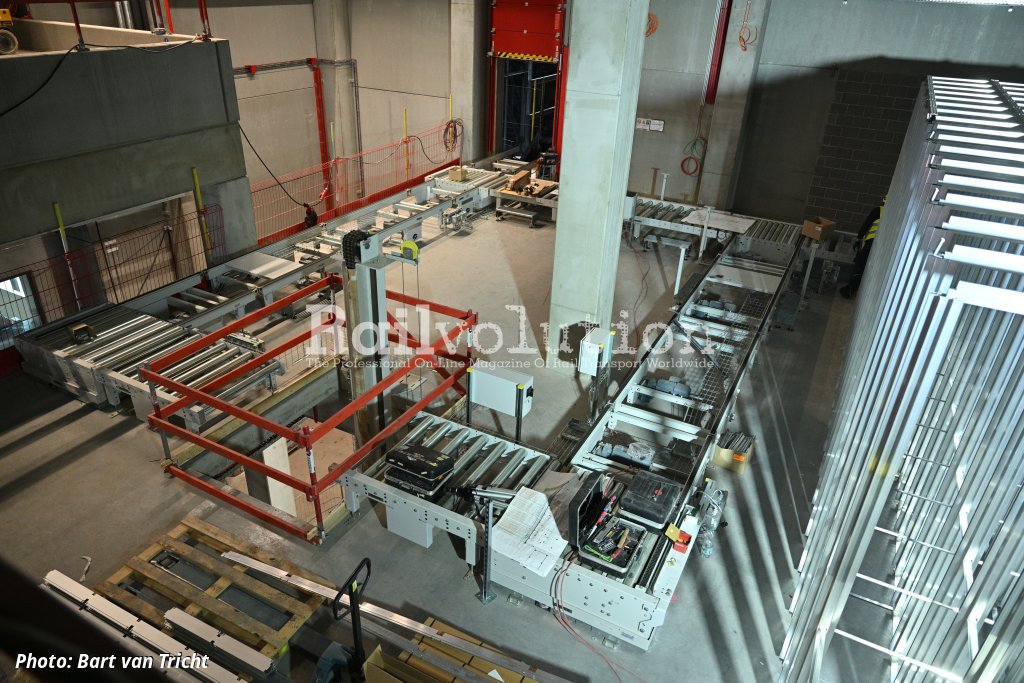
The NLC will use a technological showpiece: a fully automated bin warehouse powered by AutoStore robots, implemented by Dematic. These robots will retrieve spare parts from the warehouse and deliver them to the correct location. Thanks to this high‑density storage system, SNCB can store more inventory on a smaller surface. This reduces unnecessary space usage, internal movements and goods handling, while contributing to a safer working environment and greater operational flexibility.
The system accommodates more than 17,000 bins and features four workstations for inbound and outbound goods, supported by six robots. All technologies operate as one integrated whole via Dematic’s warehouse management system, ensuring smooth material flow, real‑time control and optimal performance throughout the warehouse.
In addition to the bin warehouse for small materials, an impressive automated high‑bay warehouse is being installed for the storage and picking of larger palletised products. Six cranes - each 45 m high and 120 m long - will provide fully automated storage for nearly 50,000 pallet positions in a double‑deep system. Three pick stations are directly connected to the high‑bay warehouse, enabling an extremely efficient picking process for spare parts, all within a compact building volume. This innovative system ensures faster delivery of components, allowing train sets to be repaired more quickly, ultimately resulting in better service.
Sustainable and ergonomic
Alongside innovation, the new logistics centre places strong emphasis on sustainability, featuring a geothermal heat pump, solar panels, improved insulation and LED lighting to reduce energy consumption. The project aims for a BREEAM Excellent certification, a high‑level sustainability label for buildings. The systems supplied by Dematic use the latest technologies, with minimal energy consumption as a key design criterion.
Ergonomic working conditions for the roughly 50 logistics employees will also improve significantly. Workstations are ergonomically designed, and thanks to the automated systems, heavy manual handling is kept to a minimum. Specific tools are provided for picking heavy components. Finally, automation contributes to a safer workplace with fewer risks.
The project is part of SNCB’s multi‑year investment plan, which focuses heavily on modernisation and efficiency. The total investment amounts to around 70 million EUR for SNCB. This investment aims to optimise logistics processes, enabling NMBS to respond more quickly and effectively to maintenance needs, ultimately resulting in more reliable and higher‑performing train services.
