

ÖBB Rail Cargo Group tested DAC in winter


posted on 14th Mar 2026 09:51
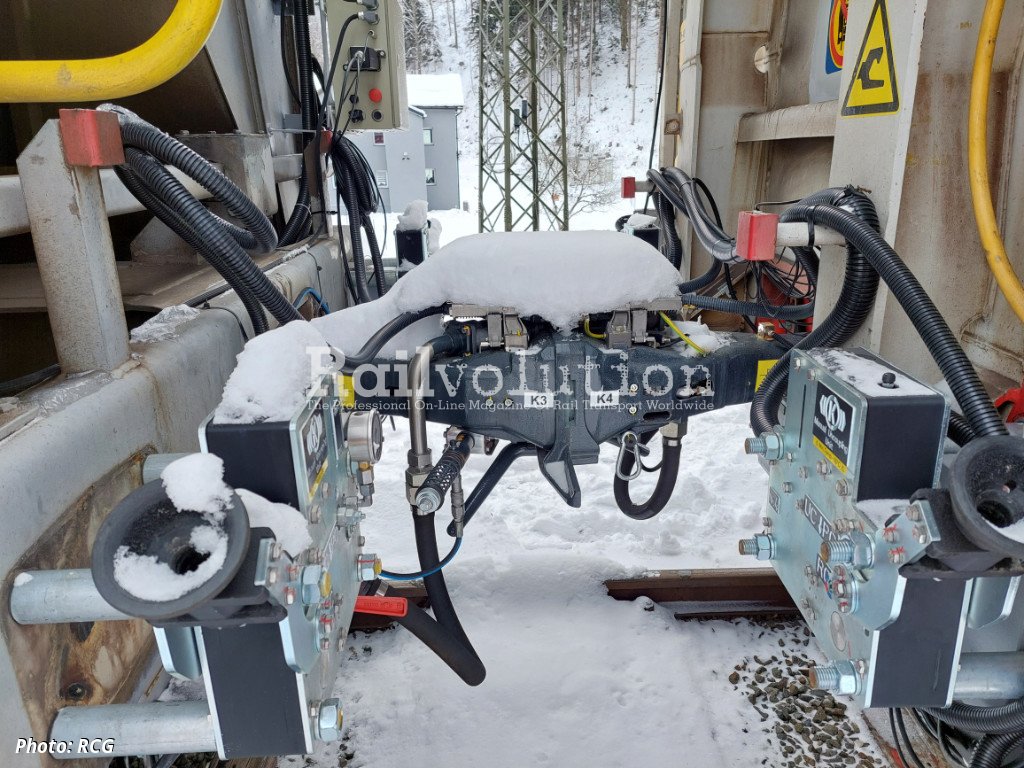
ÖBB Rail Cargo Group (RCG) is playing an active role in the development of the Digital Automatic Coupling with the DAC demo train used for winter tests in Austria under extreme conditions. After intensive technical preparations and the integration of coupling systems from different manufacturers, the DAC demo train was put into operation to test the interaction of mechanics, electrics and data transmission under real conditions and to check whether the systems work together across manufacturers. The aim is not only to make the automatic coupling mechanically and pneumatically reliable, but also to ensure digital data and energy transmission along the entire freight train.
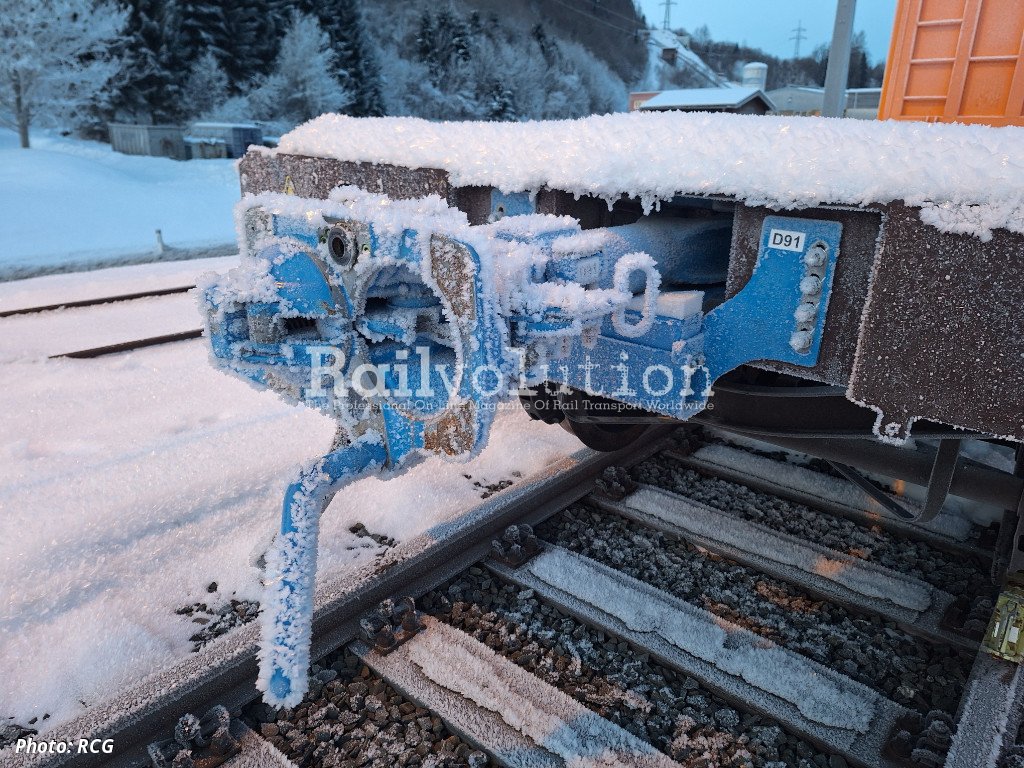
During a three-week test phase, the DAC demo train was deliberately exposed to extreme weather conditions. Temperatures of up to -15 degrees Celsius, freezing rain and fresh snow accompanied the tests at Schwarzach-St. Veit station in Salzburg's Pongau region. The focus was on repeated mechanical coupling operations, electrical uncoupling at the touch of a button and the functionality of the air and data connections – essential for safe braking and stable data transmission. Particular attention was paid to the possible effects of cold weather, snow and ice on lubricants, seals and electrical contacts.
In addition, the train was parked in Böckstein for ten days under realistic conditions to simulate longer idle periods typical in rail freight operations. Snow was deliberately allowed to penetrate all relevant components in order to identify potential weak points.
DAC demo train in detail
The DAC demonstrator train began its conversion work in September 2025 and is undergoing various tests. Specifically, the winter tests took place between 12 January and 27 February 2026. It will continue to undergo further testing until the end of 2026 operating on various routes within Austria. The winter tests were conducted on the Tauern line between Salzburg and Villach to ensure challenging conditions for testing the technology, achieving approximately 900 km.
There are six wagon types - Eanos, Talns, Shimmns, Sgnss, Habbiins, Faccns - in the ÖBB demo train, and two of the end wagons with a DAC on one end and a screw coupling on the other. On the rear end of the rake is a Class 1144 locomotive as a backup to move the train with the end wagons if the 1293 were not fully operational.
Vectron 1293 122 was equipped with the Voith DAC couplings by Siemens Mobility in Dessau in autumn 2025. The second locomotive is 1293 123, which was also ftted with DAC in Dessau, but with Knorr-Bremse's couplings. It has been in service on the demonstration train since the end of February and will be running in double traction with 1293 122 later this year.
Moreover, ÖBB are currently planning to fit also other vehicles with the DAC for the duration of the project, since the company is currently planning a demo train within the context of the European research project FP5 TRANS4M-R under the Europe's Rail Joint Undertaking, and this is currently being implemented. Within this project, which is scheduled to run until 2026, two locomotives and over 20 wagons have been equipped with DAC and its applications. Ideally, follow-up projects will further develop this technology, and these are currently being prepared, too.
Positive interim results
The aim of the initial tests with the demo train was to identify potential weak points at an early stage and remedy them consistently. The preliminary results of the winter tests are thoroughly positive: the systems tested demonstrated a high level of reliability and robustness, even under demanding winter conditions.
Bettina Castillo, CEO of ÖBB Rail Cargo Group, sees the tests as an important milestone: ‘The tests provide valuable insights for the further development of the technology and confirm that we are on the right track towards a Europe-wide standardised Digital Automatic Coupling. Each individual test series brings us a decisive step closer to a practical and robust solution for European rail freight transport. Close cooperation across Europe and joint implementation of this key technology are crucial to achieving success.’
ÖBB
Related news
- PJM's digital train features combine operational optimisation and future-ready system
- Green Cargo Will Test DACs
- Knorr-Bremse signs agreement to sell its Merak business
- Frecciarossa for tests in Austria
- Vectrons for Srbija voz
- Voith to supply couplings for the first DAC train in commercial freight transport within Germany
