

Seibu introduces Class L00 people mover
posted on 11th Mar 2026 11:40
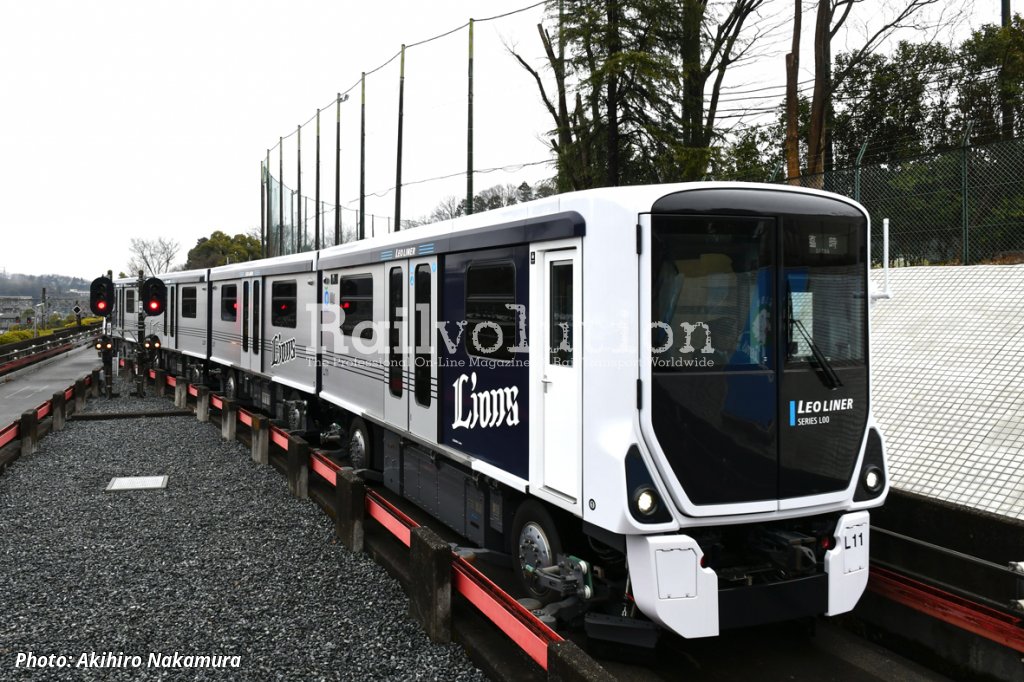
The private railway company Seibu Tetsudō (Seibu Railway) introduced a new type of man-operated people mover for the Seibu Yamaguchi Line. The official name of the line is the Leo Liner, named after Leo, the hero of the Japanese manga series Kimba the White Lion (Janguru Taitei in Japanese). Leo is also the mascot of the Saitama Seibu Lions baseball team. Hence the designation L00, which is read as Leo-kei in Japanese (kei means 'class' or 'series').
The line is located at the west outskirts of the Greater Tokyo urban area in the Saitama Prefecture, near Lake Tama. Its history began in 1950 when it opened as the 762 mm gauge amusement park railway. In 1952, it became a 3.7 km long local railway. To celebrate the 100th anniversary of the opening of Japanese railways in 1972, steam locomotives started operating. Initially, steam locomotives from the German company Orenstein & Koppel were used.
In 1984, the entire line was suspended and rebuilt as a rubber-tyred people mover. The 2.8 km electrified line with three stops was completed in 1985. It runs between Tamako and Seibukyjo-Mae stations, effectively interconnecting the Seibu Sayama and Seibu Tamako railway lines. Since 2021, the line has been supplied with electricity by solar power generation in order to reduce CO₂ emissions. The minimum curve radius on the line is 60 m, while the maximum gradient is 50 ‰. Vehicles are powered from a 750 V DC third rail, and the maximum speed is 50 km/h.
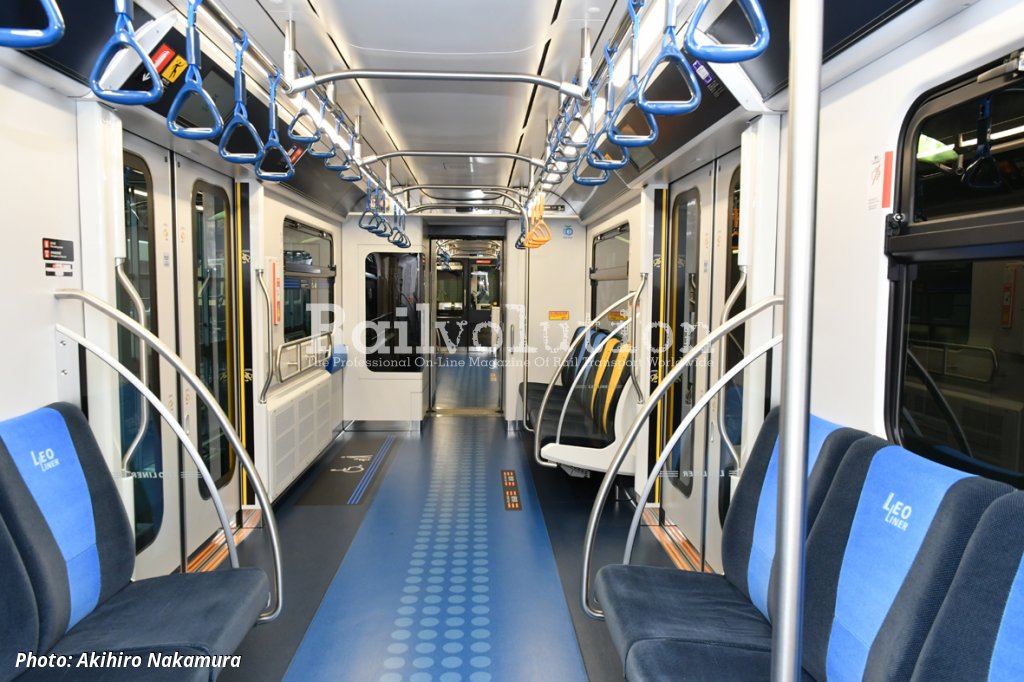
Seibu has ordered three Class L00 EMUs, which will gradually replace the Class 8500 fleet, dating back to 1985. The front ends of the new trains are designed to resemble lions. The seating arrangement has changed from bench seats to longitudinal seats to increase passenger numbers. Although the line is not extremely busy, the patronage increases dramatically at the end of baseball games or concerts held at the Belluna Dome baseball stadium.
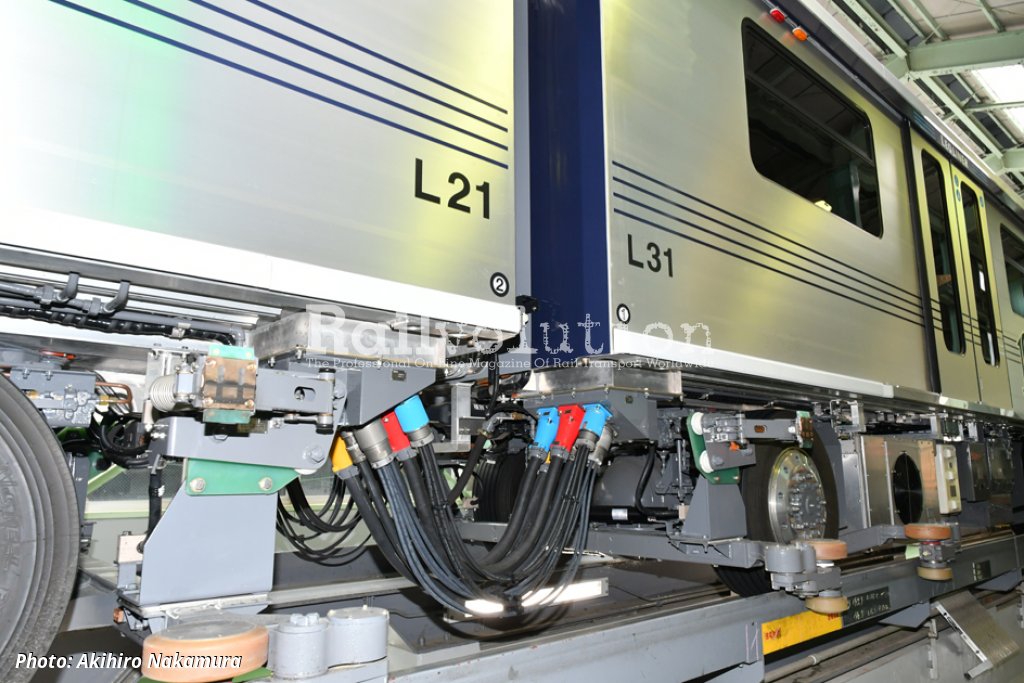
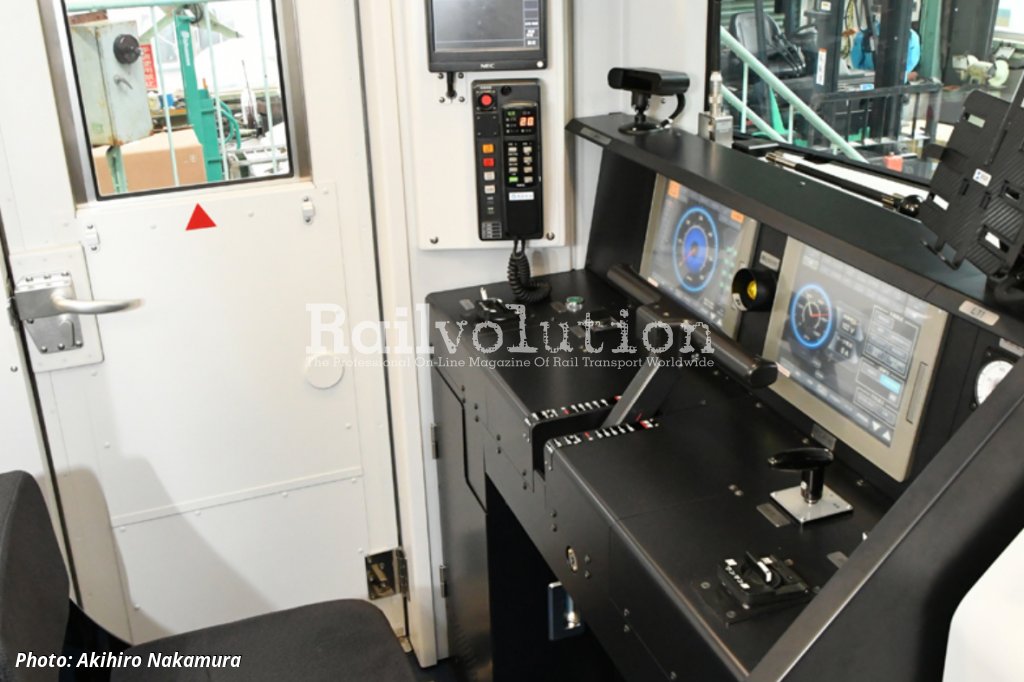
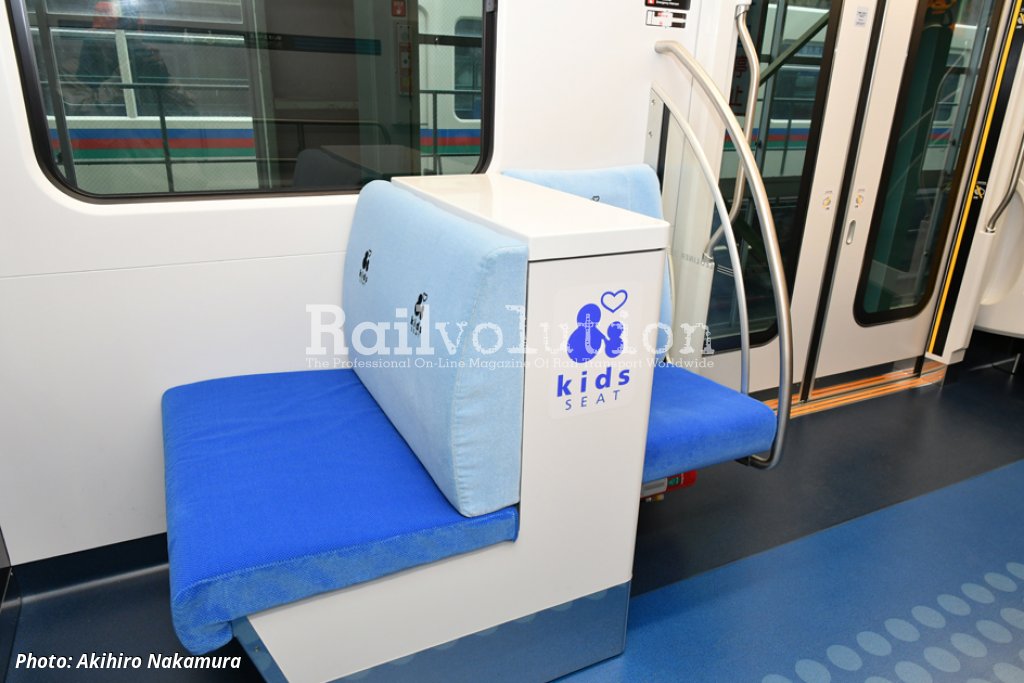
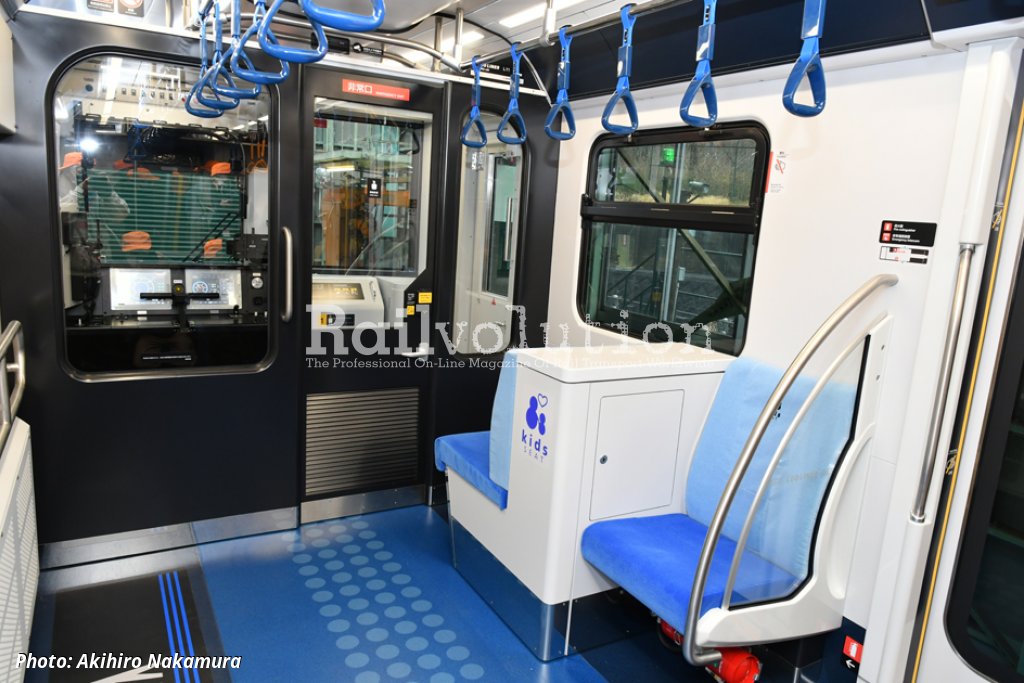
The HVAC has now a 30 % greater cooling capacity. Design changes of bogies has been adopted to improve reliability, maintainability as well to reduce lateral shaking. An interesting feature is the children's seats located at the front of the end cars behind the driver's cab, allowing children to enjoy the view from the front window. In addition, each vehicle has a multipurpose area for wheelchairs or prams. The capacity is 144 passengers.
The 34 m long four-car Class L00 EMUs, built by Mitsubishi Heavy Industries, consist of two intermediate powered cars and two non-powered end cars. The bodyshells are made of aluminium, the width is 2,420 mm, the car height is 3,340 mm above the TOR and the weight varies between 10.3 and 10.5 tonnes.
The gauge is 2,900 mm for the running wheels and 1,700 mm for the guiding wheels. There is a single steerable axle at each end of each car. The tyres have a diameter of 945 mm and are pressurised using nitrogen. The powered axles incorporate a 110 kW traction motor and the maximum speed is 60 km/h.
