

Tram washing for Zürcher Verkehrsverbund
posted on 4th Feb 2026 07:52
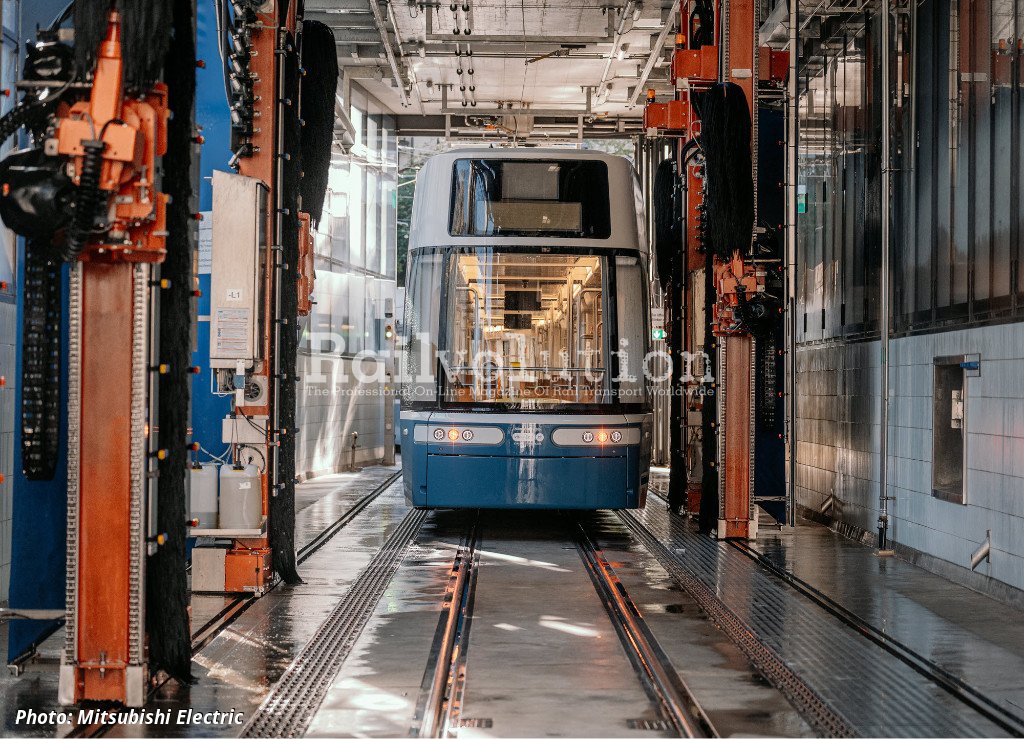
With the support of Mitsubishi Electric and the engineering firm ATINA, German machine manufacturer BHB Waschanlagen Vertriebs GmbH has built a new tram washing system, designed to help save resources for Zürich’s public transport operator, Zürcher Verkehrsverbund (ZVV).
The new tram washing system in Zürich's Oerlikon district is special in several ways. Instead of the usual two washing cars – which are designed to efficiently and effectively clean tram surfaces – four individually movable washing cars are used, which, thanks to automation technology from Mitsubishi Electric, enable particularly thorough cleaning results with short washing times and high energy efficiency.
For BHB, a Mitsubishi Electric customer and the mechanical engineering company that carried out the project, this challenging project also represents a milestone in its own digital transformation. It was the first time an innovative digital twin process was used in combination with simplified low-code programming. This made it possible to plan the complex system with significantly less effort and greatly reduce commissioning times. The 20-person machine manufacturing team was supported by ATINA, a Stuttgart-based engineering firm and experienced software specialist from Mitsubishi Electric's partner network.
Low-code programming and digital twins
BHB managing director Tobias Straub said: “Customer demands for flexible, networked and resource-efficiency systems are increasing, especially amid the skilled labor shortages. This means new digital concepts are required. Through Mitsubishi Electric and its Automation Network, we came into contact with the engineering firm ATINA, which has provided us with significant support in our digitalization efforts. This enabled us to use a digital twin and the new low-code programming solution for the first time in the Zürich project."
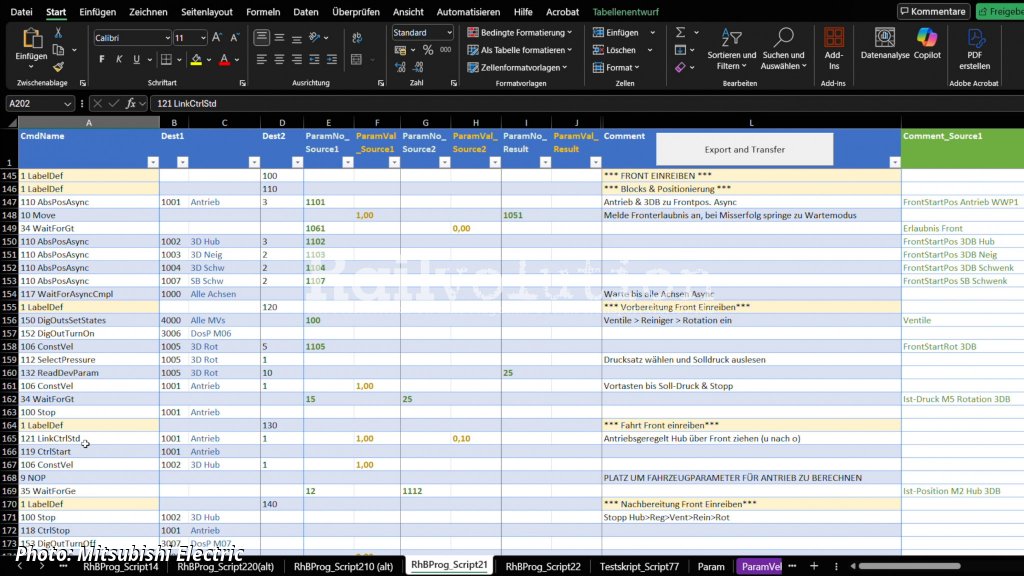
As a pure scripting language, ATINA's low-code programming eliminates the need for hard-coded, line-by-line programming. Washing programs can be easily parameterized using Excel spreadsheets, even without in-depth programming knowledge. This saves time, reduces sources of error, and facilitates subsequent revisions. With only 200 lines of text instead of 4,000, the programs are clearer and easier for service personnel to understand. The programs created in Excel can be transferred directly to the Mitsubishi control system via a simple CSV export.
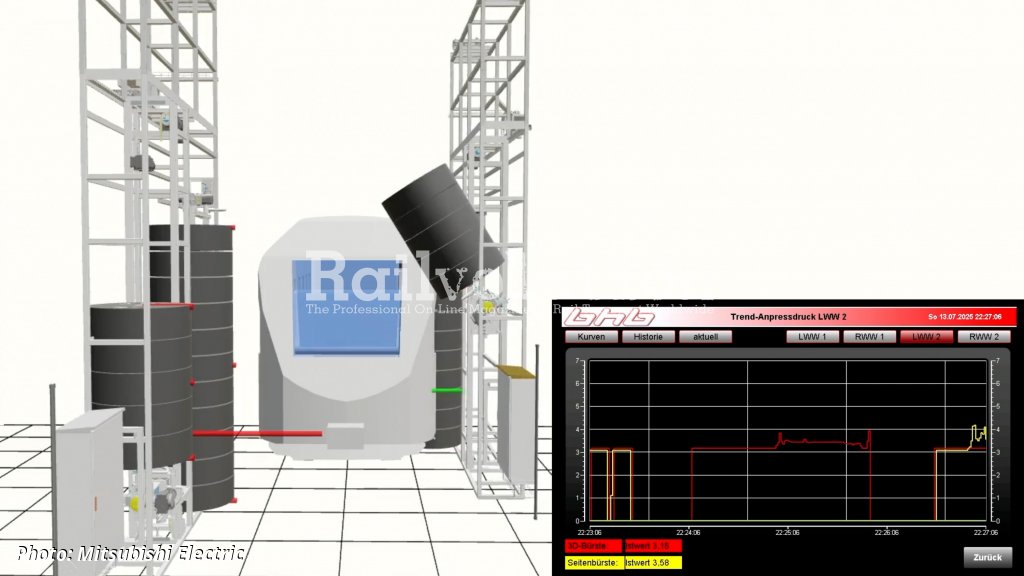
In addition to the script language, BHB used a digital twin for the first time for the Zurich project. All mechanical and electrical components of the washing system are stored there as fully functional 3D models and can be controlled by a real Mitsubishi Programmable Logic Controller (PLC). Since the programs can be tested very accurately at the desk, commissioning on site is greatly accelerated and virtually error-free – an enormous economic advantage for everyone involved, especially in more complex projects.
Innovation meets automation
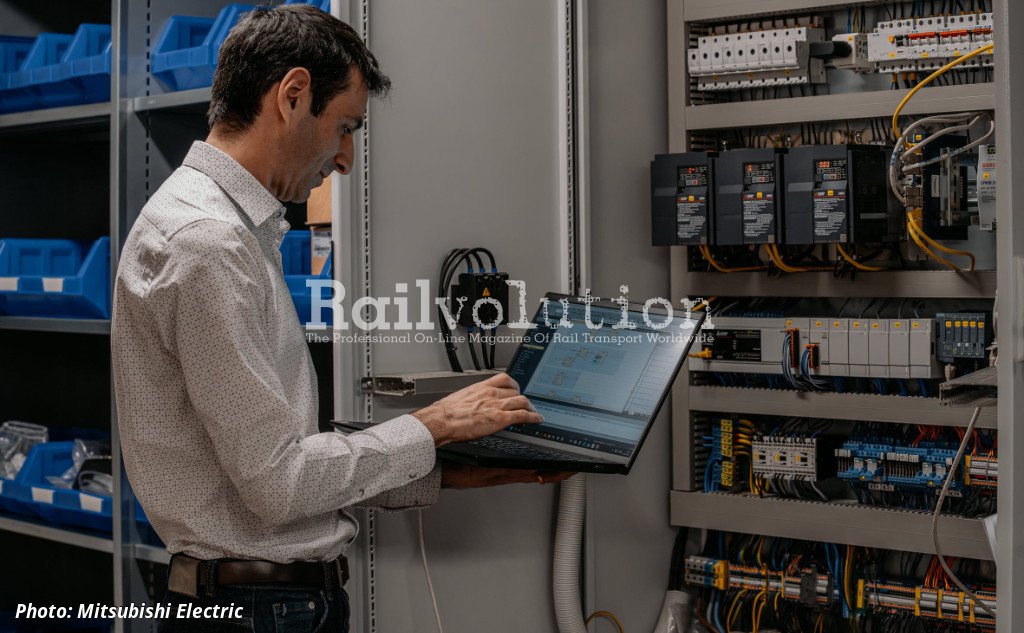
However, digital twins and low-code programming alone would not have been enough to meet high customer requirements. That is why the software innovations are based on Mitsubishi Electric's reliable hardware. At the heart of the control system is the compact MELSEC FX5U-64MR/DS PLC.
Additionally, Mitsubishi Electric drives ensure efficiency during operation. The FR-E800 series of frequency inverters enables flexible motor control, reducing energy and water consumption and contributing to economical and resource-efficient operation of the plant.
The BHB project serves as a model, particularly for medium-sized German machine builders. Thanks to close cooperation between partners who worked seamlessly together, the company successfully drove forward its digital transformation at the right time. BHB contributed its many years of experience in plant engineering, ATINA provided software expertise, and Mitsubishi Electric supplied robust automation components.
The result is a tram washing system that meets the growing demand for sustainability, quality, and efficiency while showing how medium-sized machine builders can remain competitive and attractive to skilled workers by using digital technologies.
