
20 years of Stadler in Hungary
posted on 5th Nov 2026 08:41
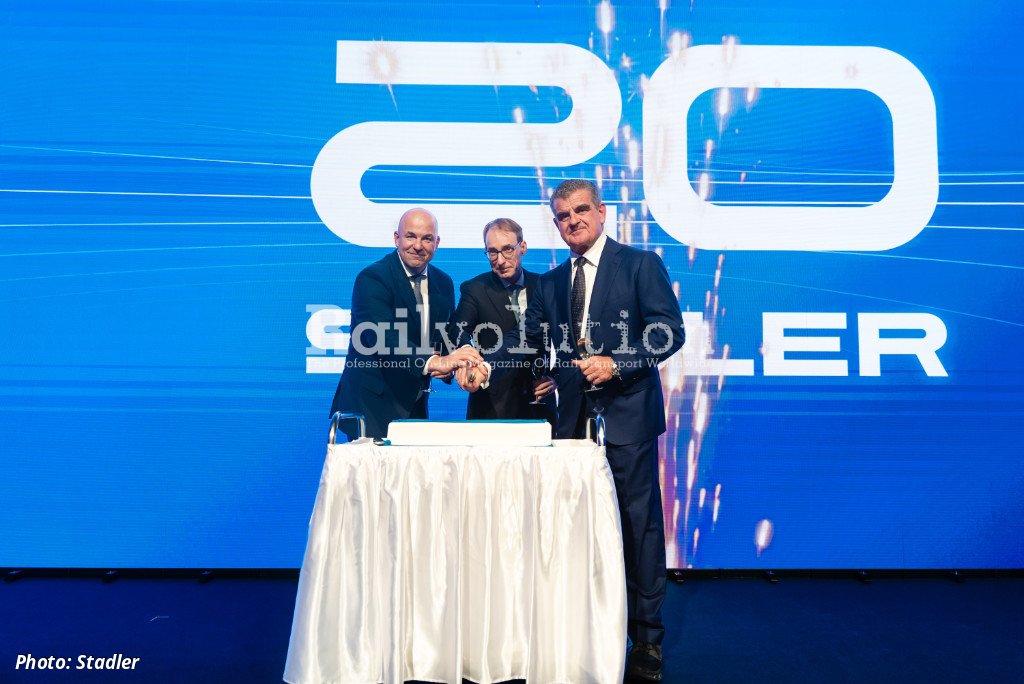
Twenty years ago, Stadler started its operations in Hungary. Over the past two decades, the company has not only become a key player in Hungarian passenger rail transport but has also contributed to the development of the domestic railway industry through significant industrial investments, job creation, and the transfer of expertise. Now, every second rail passenger in Hungary travels on a Stadler vehicle, while the company employs more than 1,000 people in the country.
Stadler secured its first order in Hungary in 2005, when it signed a contract with MÁV for the delivery of 30 FLIRT EMUs and an option for a further 30 vehicles. The partnership that continued with the opening of the first Stadler company in 2006 has since become one of the most successful railway modernization stories in Hungary. To date, Stadler has delivered a total of 195 vehicles to Hungarian railway operators, serving passengers reliably every day on the networks of MÁV and GYSEV.
Today, Stadler’s vehicles have become an integral part of railway transportation in Hungary. The fleets of MÁV and GYSEV currently comprise 143 FLIRT and 40 KISS units, as well as 12 CITYLINK tram-trains. Stadler trains run approximately 35 million km annually on the MÁV network, accounting for nearly one-third of the railway company’s total mileage. As a result, half of all MÁV passengers travel on Stadler-built vehicles, while the fleet has consistently maintained an outstanding availability rate of over 90 percent for many years.
From the very beginning, the Hungarian market has played an important role in the success story of Stadler’s FLIRT, which has since become a global bestseller. Around 3,000 units of the type have been sold worldwide, making it one of the most successful railway vehicles in its category. Domestic manufacturing has also significantly contributed to this success: of the approximately 6,000 bodyshells produced to date in Stadler’s plant in Szolnok, nearly 4,000 have been manufactured for FLIRTs, corresponding to around 1,000 four-car trainsets.
Over the past twenty years, Stadler has invested more than 200 million EUR in Hungary and has created more than 1,000 jobs. In 2007, the company opened its maintenance centre in Pusztaszabolcs, which, as the first service facility within the Stadler Group, laid the foundations for the company’s global service business with around 100 service locations in 25 countries.
The manufacturing plant established in Szolnok in 2009 has since become the Group’s largest aluminium welding facility. To date, around 6,000 car bodies of different vehicle types have been produced there. The bogie revision centre, also located in Szolnok, has grown into one of the Group’s most significant service sites, modernising nearly 1,000 bogies annually. Hungary is not merely a sales market for Stadler, but one of the Group’s most important manufacturing, maintenance, and knowledge centres.
Stadler’s journey in Hungary began in 2006 with just three employees. Since then, the development of the company and the Hungarian railway sector has been closely interconnected. Over the years, Stadler has established a strong manufacturing and service footprint in Hungary, creating high-quality employment opportunities and integrating the country into its international network as a key strategic location. Looking ahead, Stadler remains committed to further investing in its local facilities and workforce, reinforcing its long-term partnership with Hungary and contributing to the continued advancement of sustainable rail transport across the country.
