
InnoTrans 2026 report (9)
posted on 2nd Nov 2026 18:07
Even the press releases of Messe Berlin announced that “night trains are returning to InnoTrans, with several companies in Berlin showcasing what comfortable overnight travel could look like in the future. The focus is on privacy, more efficient use of available space, and new concepts for comfort.”
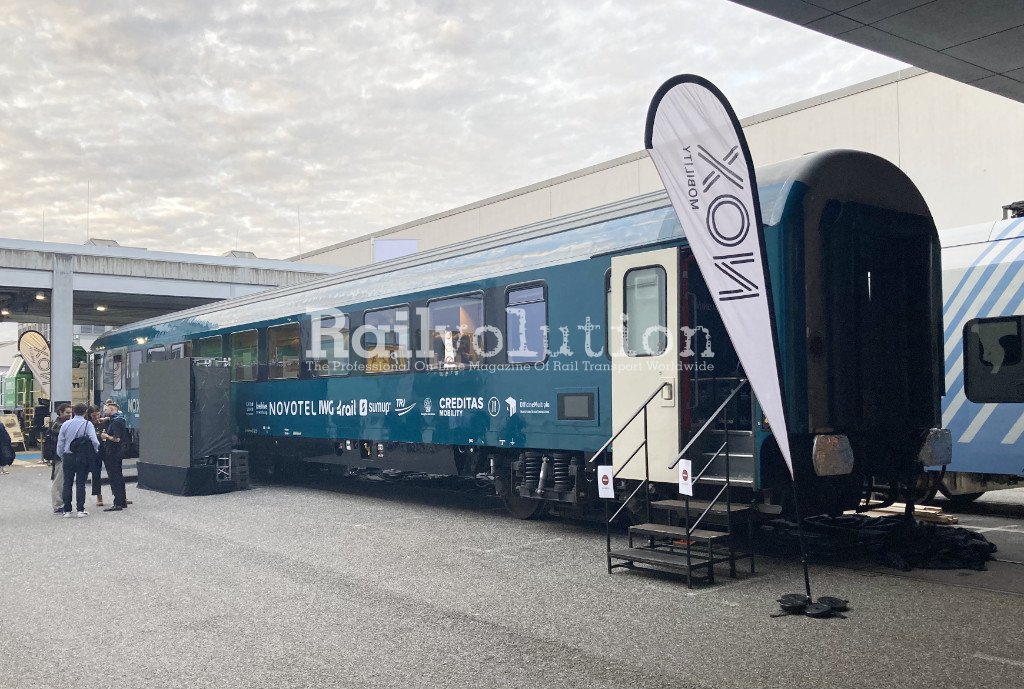
Let us begin with Nox Mobility - the furthest along of all the projects presented which unveiled a prototype based on a partially rebuilt RIC carriage D-W&L 61 80 20-95 202-3 Bpmz, featuring individual passenger compartments. Developer Thibault Constant received an award for this concept at the Railway Influencer Festival during InnoTrans 2024, and he returned to the trade fair this year as an exhibitor.
Berlin-based Nox Mobility was founded in 2025 by Janek Smalla, Thibault Constant, and Artur Hasselbach, driven by the vision that "travel should save time, not consume it." They envision a connected Europe where passengers feel at home on the train and can reach their destinations with ease. By 2035, they aim to connect 100 European cities, offering millions of travelers an experience that ensures they arrive at their destination feeling well-rested. In doing so, they hope to help reverse the negative trend seen between 2001 and 2019, during which the total number of night train services in Europe fell from approximately 1,200 per week to roughly 450.
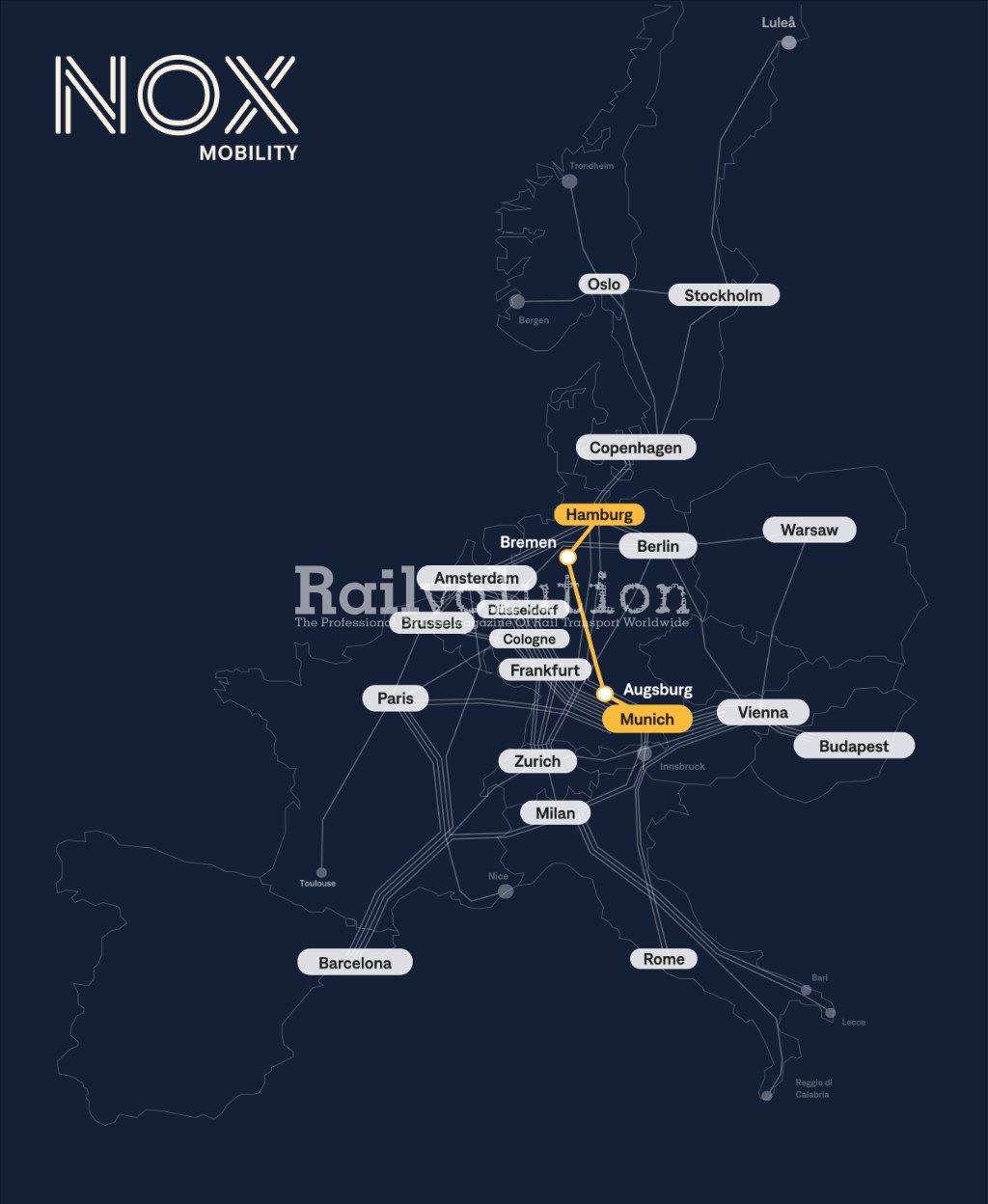
Western European countries form the core of the future Nox network, extending as far as Norway (Oslo), Sweden (Stockholm), and Spain (Barcelona). The Czech Republic is missing from the map, while neighboring countries such as Poland and Hungary are included. Nox explained us: „So far we are focusing on the DACH region for the first phase of Nox. We're not excluding Czech republic from our network, if the demand exists, we will consider it.“
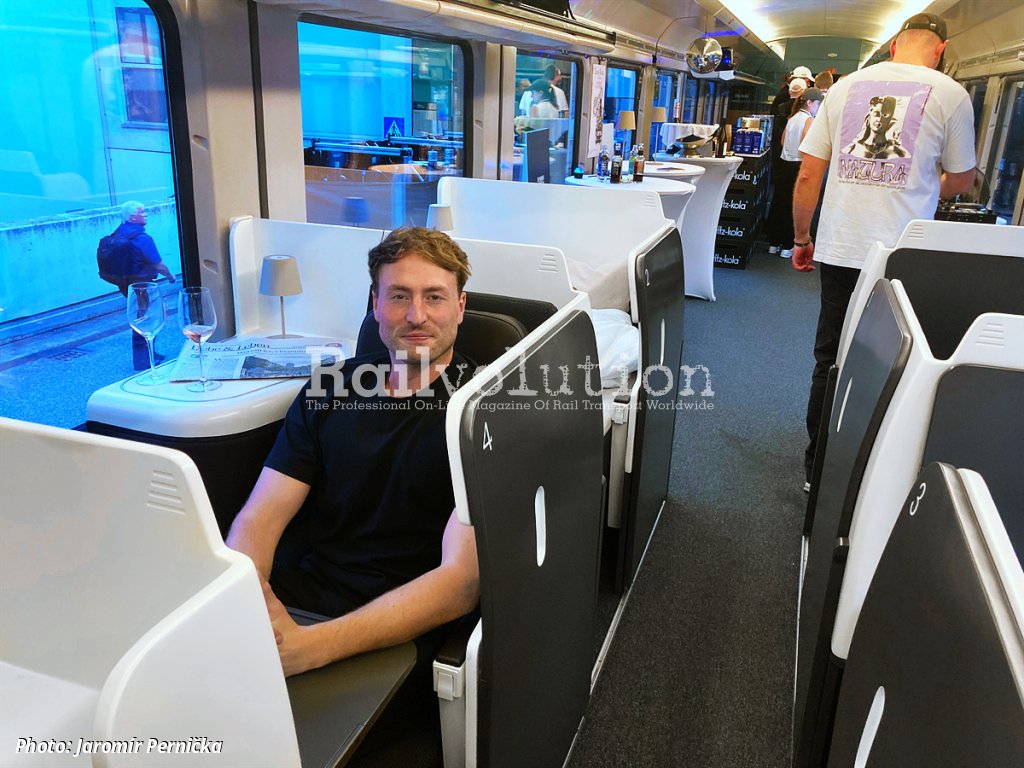
Janek Smalla (pictured in the photo) played a role in the launch of FlixTrain and is well aware of the challenges involved in entering the railway sector. Thibault Constant has taken over 400 night train journeys and built the largest community of night-train enthusiasts around the online platform "Simply Railway," which boasts over 600,000 followers, giving him deep insight into the pain points of overnight travel. Artur Hasselbach has spent a decade building and financing technology companies; a notable highlight of his career is the founding of orderbird in 2011, a company specializing in payment solutions, which was later acquired by the Italian firm Nexi for over 140 million EUR.
First train
This April, Nox Mobility secured 2 million EUR to develop a new generation of night trains. This pre-seed funding (initial capital) has enabled the Berlin-based start-up to expand its team, refurbish a prototype carriage, and prepare its first routes. At InnoTrans 2026, the company announced that on 23 March 2027 it will start its night trains, operating three times a week between Hamburg and München. This route was not chosen by chance; it is one of Germany’s busiest air corridors, recording over 1.2 million air passengers in 2024.
This marks the initial phase of Nox operations, designed to attract public attention to the new trains. Trains will depart from Hamburg Hbf at 21.22, arriving at München Hbf at 8.14. In the opposite direction, they will depart from München Hbf at 21.20 and arrive in Hamburg Hbf at 8.27. Along the route, Nox trains will also serve Bremen and Augsburg, cities that have historically been somewhat overlooked in both long-distance rail and air travel. One-way tickets for the full journey start at 65 EUR and can be purchased at noxmobility.com.
The Nox trains will have a maximum speed of 200 km/h and will be hauled by a Vectron provided by TRI Train Rental, a company based in Eckental-Eschenau (northeast of Nuremberg). As Mr. Smalla noted, the operational plan accounts for potential delays; consequently, the Nox network will have for a turnaround time at least two hours at end stations.
The interior arrangement
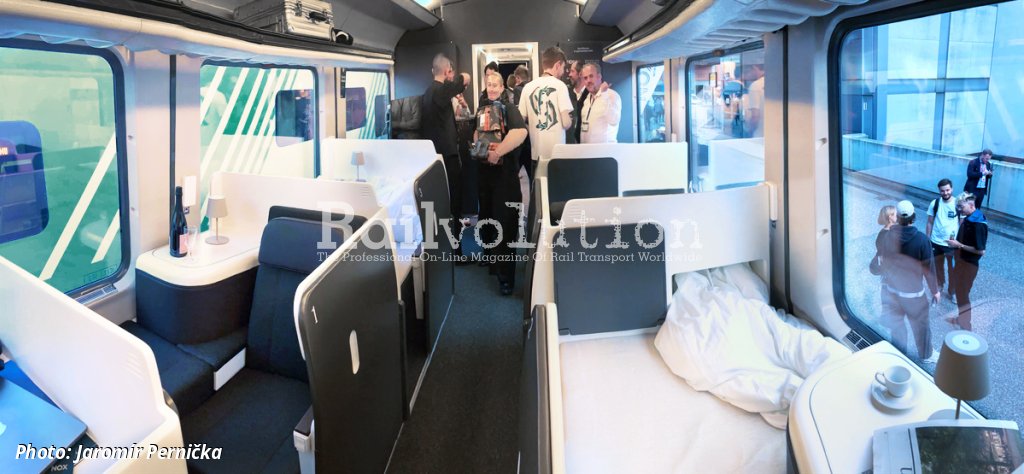
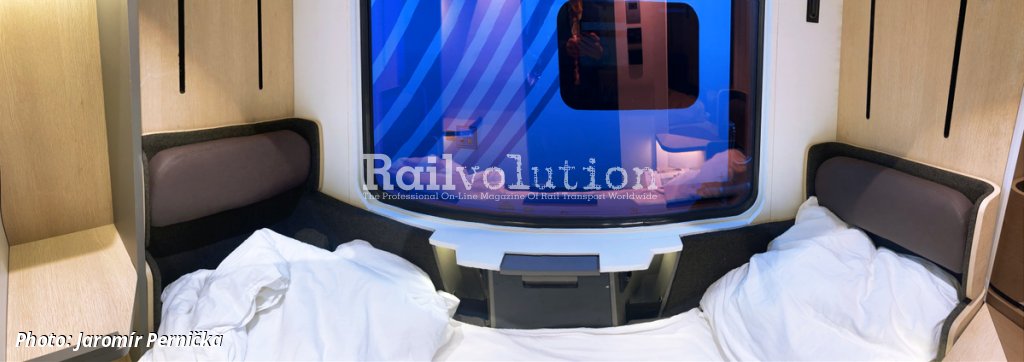
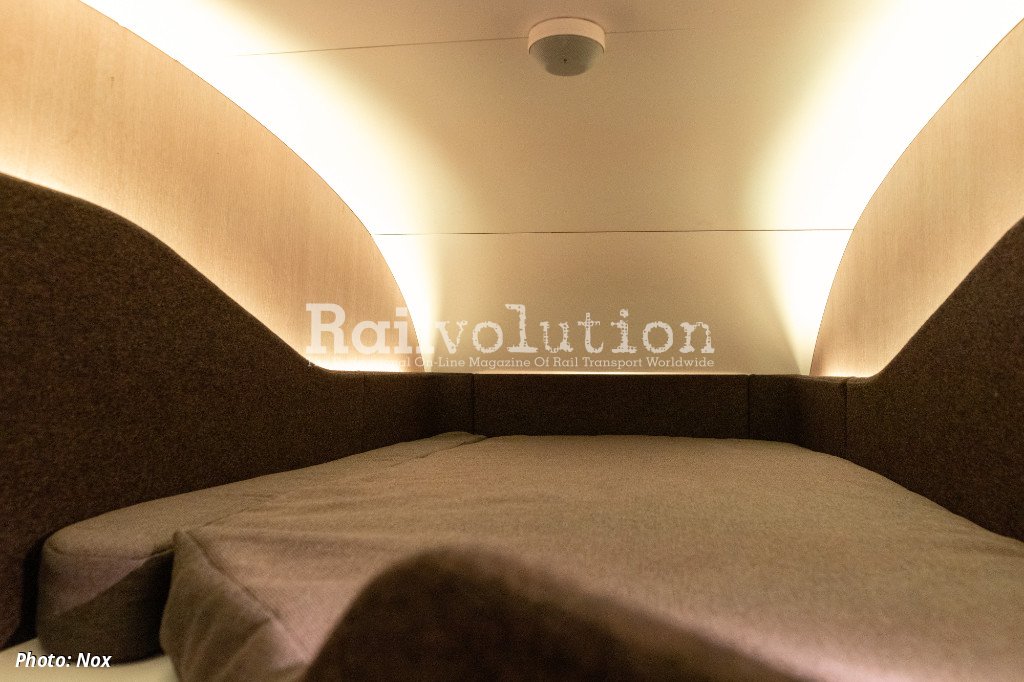
The carriages will feature four types of accommodation. One of these is the Nox Suite - an open-top, enclosed compartment that can serve as a workspace during the day and a place to rest at night. The backrest can be reclined to a horizontal position to form a 2 m bed, allowing the passenger to extend their legs into the adjacent suite, a box located to the right of Mr. Smalla. This box features a small lamp and functions as a side table. The aisle width is 55 cm. The cars, set to enter service from March 2027, will feature Nox Suite compartments (only these) and will have a capacity of up to 30 passengers.
From 2028 at the earliest, cars offering Single Loft, Double Loft, and Double Vista categories are expected to become available. The coaches won't be mixed. It will be either Nox Suites or Nox Rooms (not the two product inside one coach).
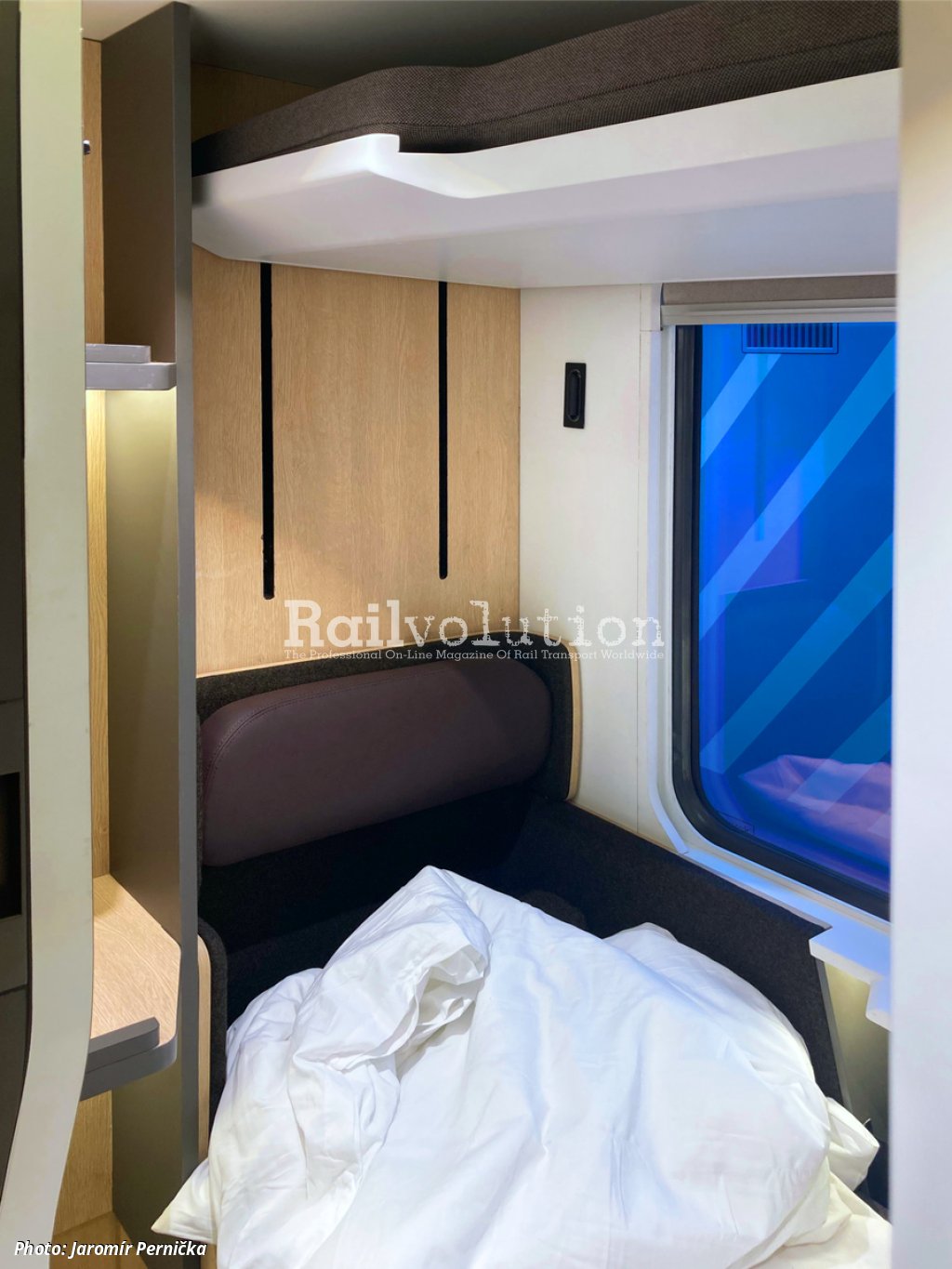
Double Vista is a compartment featuring two opposing seats on the lower level, which can be converted into a bed for the night. A second bed can be lowered from above. Thanks to their longitudinal orientation within the carriage, the beds are also 2 m long. Luggage storage options include shelves on the left, the space beneath the seats, and the overhead area above the aisle. One-way ticket prices are set to start at 149 EUR for an entire compartment.
The roof-level space will also be utilized by Single Loft and Double Loft compartments. In the single compartment, there is a seat on the lower level, while a 200 x 100 cm bed is located in a space above the corridor. The Double Loft compartment features two facing seats on the lower level, with a 200 x 170 cm bed situated in the upper space.
In both cases, the upper beds are oriented transversely, and passengers reach them via a ladder. As Mr. Palla confirmed in response to our observation, the layout is indeed best suited for younger travelers and, in particular, those of a smaller build (and not so obese). Ticket prices for a Single Loft compartment are set to start at 79 EUR, while the price for an entire Double Loft compartment will start at 149 EUR.
The question remains as to what the practical experience will be with Loft spaces located directly under the roof. Nox told us: "The Nox Rooms will be fully equipped with air-conditioning. We've developed a new air system that allows an effective air distribution throughout the sleeping area, whereas traditional trains tend to only blow cold air from one side. Additionally (because yes, sleeping below the roof can sometimes be hot), we will paint the top of our carriage white to better reflect the sun during the day."
Passenger service
A Class Bpmz demonstrator was completed shortly before InnoTrans. Five additional RIC carriages are to be rebuilt to form the first rake for the initial phase of operation. The total order comprises 50 carriages, and according to Nox’s plans, they are expected to roll out at a rate of two carriages per week in 2027.
The cars will be owned by Creditas Mobility and the holder will be the charter and leasing company W&L Eisenbahn, officially Westfälische Landes-Eisenbahn (WLE), based in Lippstadt (northeast of Dortmund).
For now, the Nox night train concept relies on cheap old RIC carriages. However, Mr. Palla states that they are capable of financing new cars in the future at a cost of approximately 3 million EUR each, and has not ruled out the potential use of non-powered multiple units. He is confident in the project’s success, citing not only the expertise and experience of the Nox founders but also his assessment that there is currently not excessive competition on the railways.
