

Stadler delivers hybrid locomotives to VIA Rail Canada
updated on 9th Aug 2026 08:18 posted on 30th Jul 2026 11:38
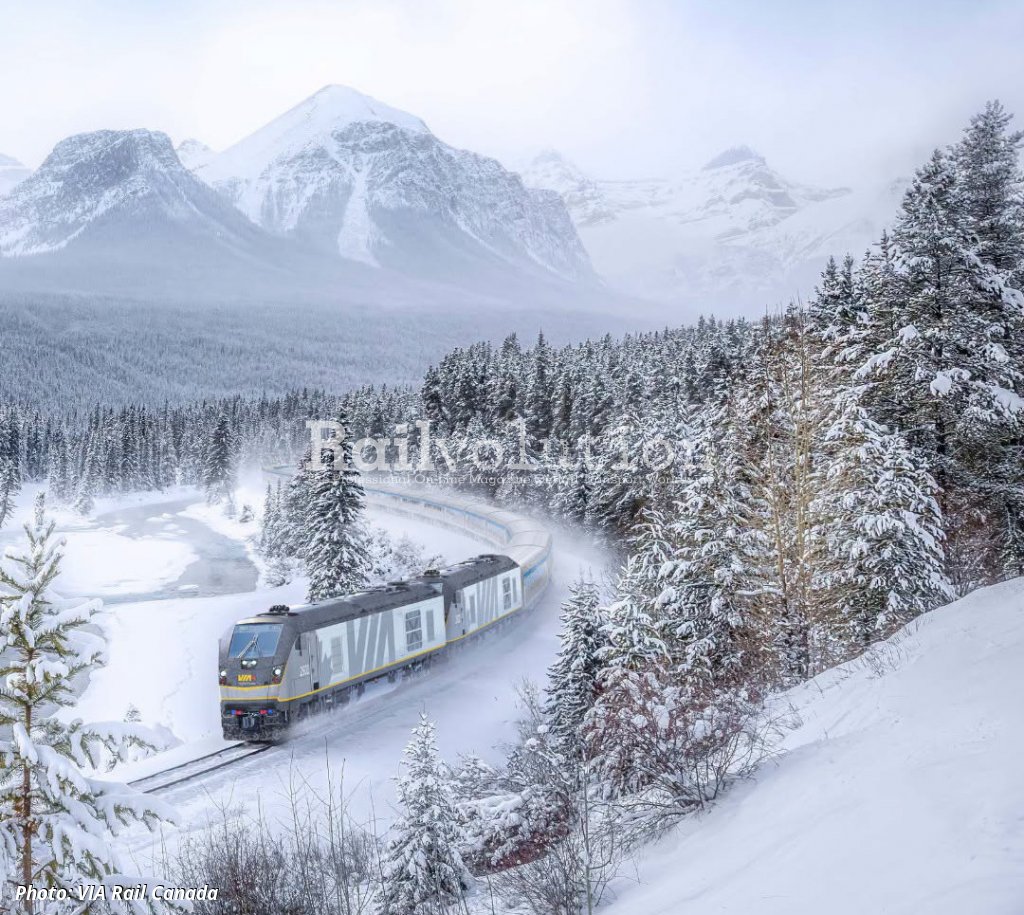
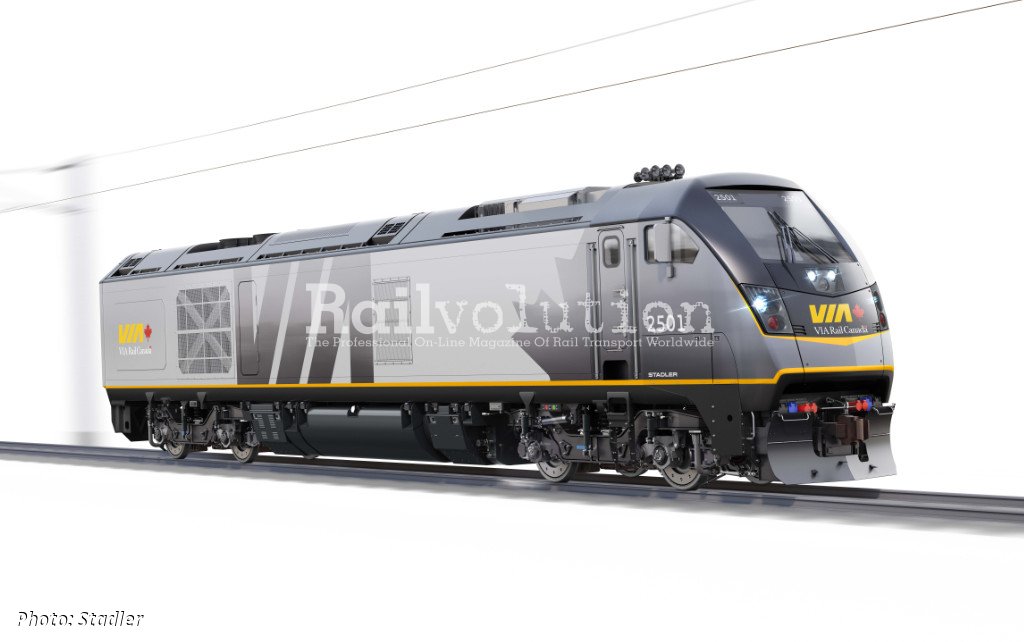
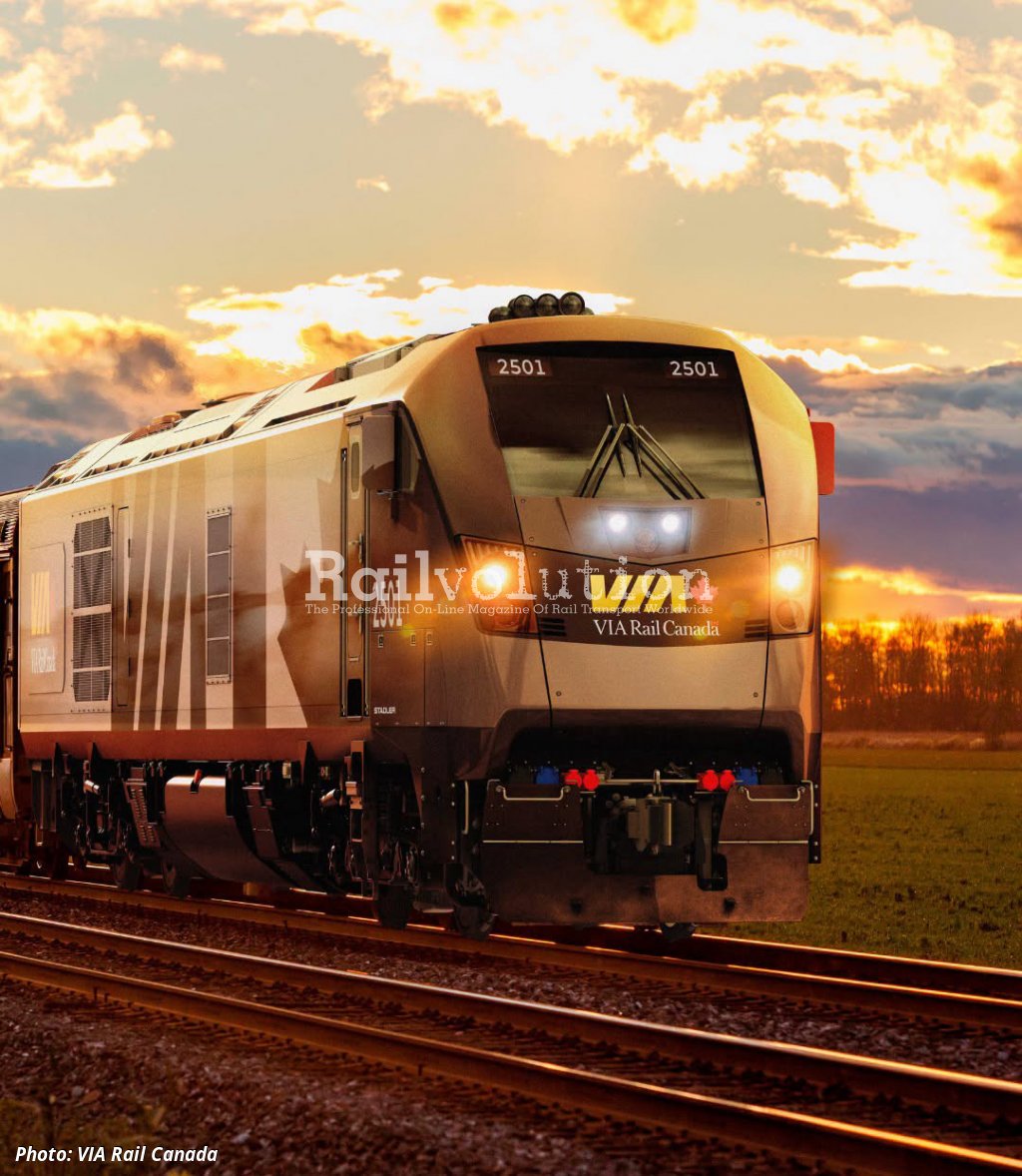
On 29 July 2026, Stadler has signed a contract worth 1.95 billion CAD with VIA Rail Canada to supply 45 single-cab hybrid locomotives, including a 20-year Technical Support and Spare Supply Agreement. The new fleet will support VIA Rail’s Long-Distance, Regional and Remote Rail (LDRR) program and contribute to the modernization and decarbonization of passenger rail services across the country. For Stadler this is the first locomotive order in Canada.
VIA Rail Canada states: "The locomotives will be introduced progressively, with the first expected to enter commercial service in 2029 or 2030. The detailed delivery and deployment schedule will be confirmed as the project advances. They will progressively replace VIA Rail’s GPA-30H fleet, consisting of rebuilt F40PH-2D locomotives, currently operating on routes outside the Québec City - Windsor Corridor. The existing locomotives will be retired gradually as the new fleet is tested, commissioned and placed into service.
The new locomotives are being designed to be fully interoperable with both VIA Rail’s existing equipment and its future passenger cars. They may therefore haul existing passenger cars during the phased fleet transition. A separate competitive procurement process to renew the passenger cars used on VIA Rail’s long-distance, regional and remote services remains ongoing. To maintain a fair process, VIA Rail cannot currently provide further details regarding that procurement."
The 160 km/h Bo‘Bo‘ diesel-electric locomotives will be equipped with traction battery modules that supply energy for onboard auxiliary systems, head-end power requirements, and traction. By combining battery power with the diesel engine, the vehicles can deliver up to 4,000 kW at wheel and a starting tractive effort of 350 kN, ensuring better acceleration, high performance on steep gradients, and reliable operation across VIA Rail’s long-distance network including routes serving remote communities throughout the country.
The hybrid architecture enables the recovery and storage of braking energy in the batteries, significantly improving overall energy efficiency while reducing fuel consumption and maintenance requirements. By combining battery-assisted traction with optimized diesel engine operation, the locomotives help lower greenhouse gas emissions, while delivering enhanced operational performance and reduced lifecycle costs.
At stations and other environmentally sensitive areas, the locomotives can operate in battery mode, significantly reducing noise and exhaust emissions. In addition to supporting peak power demands, the battery system enhances operational resilience by enabling the locomotive to continue operating and reach a safe location in the unlikely event of a diesel power failure.
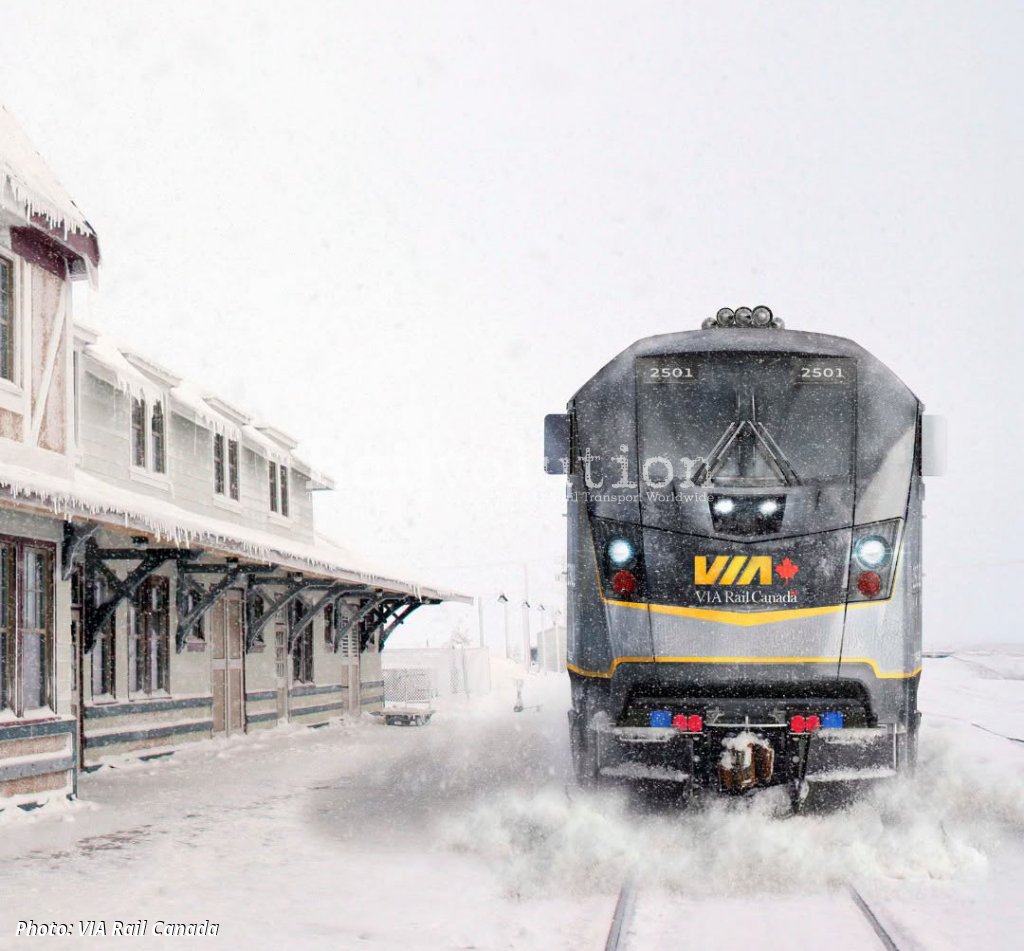
The new fleet has been designed to operate reliably in Canada's demanding climate, including temperatures as low as -50 °C, as well as with sustainability in mind, featuring recyclability rates above 92 % and recoverability rates exceeding 95 %. The battery system is also designed for long service life and second-life applications.
VIA Rail Canada states that the contract will bring passenger locomotive assembly back to Canada, as a new assembly and maintenance facility will be established at the operator's Montréal Maintenance Centre. Stadler Valencia will be responsible for the design, manufacture and delivery of the new fleet. Part of the locomotive assembly, as well as testing and commissioning activities, will be carried out in Canada. The first nine locomotives will be built and assembled in Spain, with the remaining 36 assembled in Canada.
The contract includes a 20-year Technical Support and Spare Supply Agreement (TSSSA). These services will be delivered by Stadler's Service Division through a Canadian subsidiary to be incorporated, with personnel based at VIA Rail's main maintenance facilities in Montreal, Toronto, Winnipeg and Vancouver. The project will contribute to the development of Canada's railway industry by creating skilled jobs in manufacturing, testing and maintenance, while supporting the transfer of expertise and advanced railway technologies.
