

Northern City Line celebrates one year of ETCS with ‘no signals’
posted on 25th May 2026 08:42
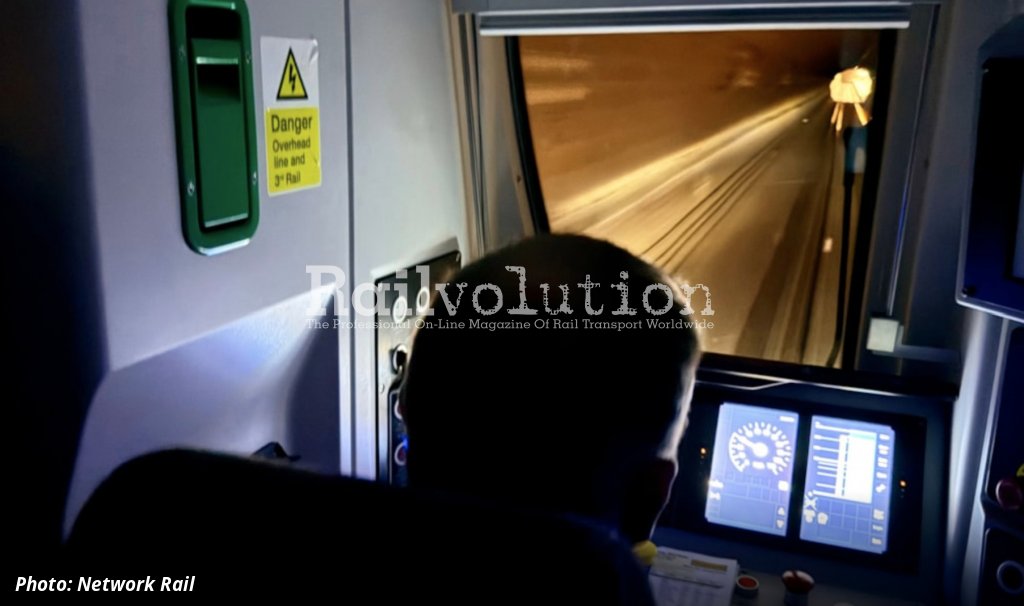
The Northern City Line (NCL) between Finsbury Park and Moorgate in the City of London has in mid-May 2026 celebrated one year since its physical lineside signals were removed. The NCL became Britain’s first ‘no signals’ commuter railway in May 2025, and since then almost 70,000 train services have been operated by Great Northern using on-board ETCS.
The groundbreaking NCL project is a vital ‘pathfinder’ for the introduction (from later this year) of digital signalling to the East Coast Main Line (ECML), enabling a more reliable, more efficient, greener and even safer railway. Part of the Government-funded 1.4 billion GBP East Coast Digital Programme (ECDP), it will be the largest and most complex digital signalling migration undertaken anywhere in the world. The learnings taken from NCL in integrating the ETCS, preparing and supporting drivers and signallers through the changes, and progressing through industry assurance, have all been vital in that regard.
The move from an ‘overlay’ (where trains can be operated either with digital or conventional signalling) to a no-signals railway has seen a steady improvement in the reliability of services. The partners involved (GTR, Network Rail and Siemens Mobility) have worked closely to optimise how colleagues interact with the system, ensuring that learnings have been taken from teething issues encountered in the early stages.
Sarah Jane Crawford, Network Rail’s Industry Partnership Director, ECDP, said: “I’d like to thank all our teams across our partners who have worked hard to embed ‘no signals’ operations on the NCL as part of the regular, day-to-day service pattern. We’ve ‘learned by doing’ on NCL, where we successfully secured the necessary approvals and integrated across track and train. We’re now close to beginning the introduction of digital in-cab signalling on the East Coast Main Line, with significant learnings informing a gradual migration plan aimed at ensuring high performance throughout.”
Richard Cooper, Infrastructure Lead and ECDP Project Director, Siemens Mobility UK&I, said: “This milestone proves digital signalling works reliably and at scale on one of the UK’s most demanding urban routes. Working with GTR and Network Rail, we have delivered a more reliable, connected and sustainable railway, with the Siemens‑built Class 717 fleet and our ETCS technology at its core."
Gadge Grocott, ASLEF’s health and safety representative for Hitchin, said: “I have had the pleasure of welcoming, last year, the introduction of ETCS on the Northern City Line. Updating the antiquated equipment into a modern Class A system is a huge project, involving the retraining of drivers, signallers, and managers. A successful 12 months has seen continued improvement with consultation and cooperation at all levels.”
Dr Linda Wain, engineering and safety director for LNER, said: “The learnings that have been taken from the NCL project have been invaluable for ETCS being introduced to the East Coast Main Line. We’re really looking forward to next year and running our Azuma fleet in ETCS and realising the benefits digital signalling brings for customers and the railway."
