

Thurbo's new FLIRT Evo on the S9 line
updated on 9th Jan 2026 16:38 posted on 7th Jan 2026 09:22
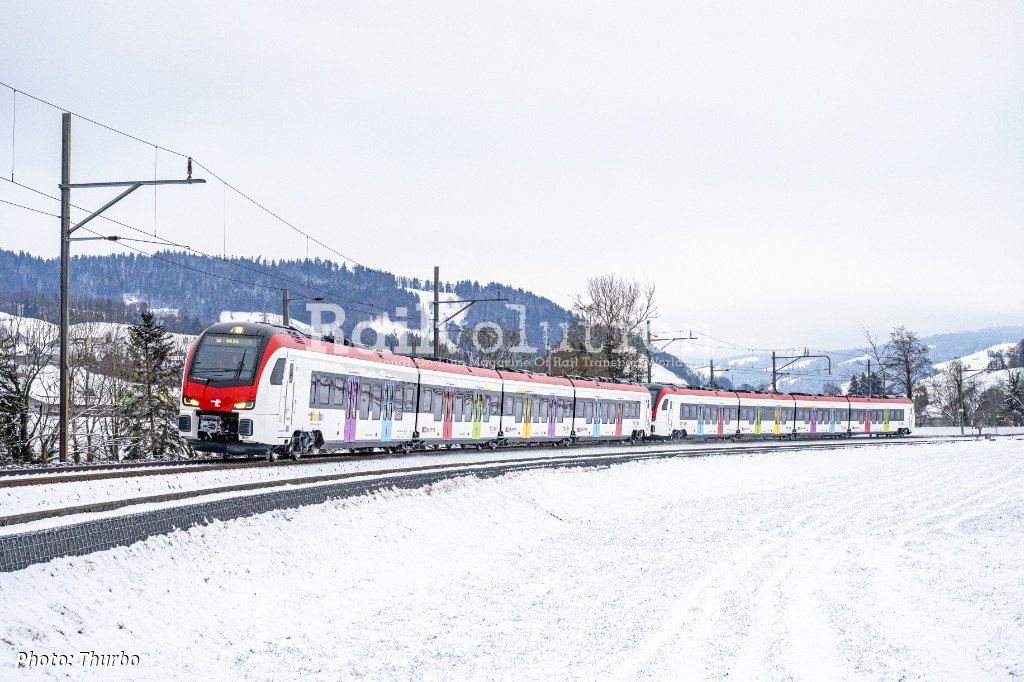
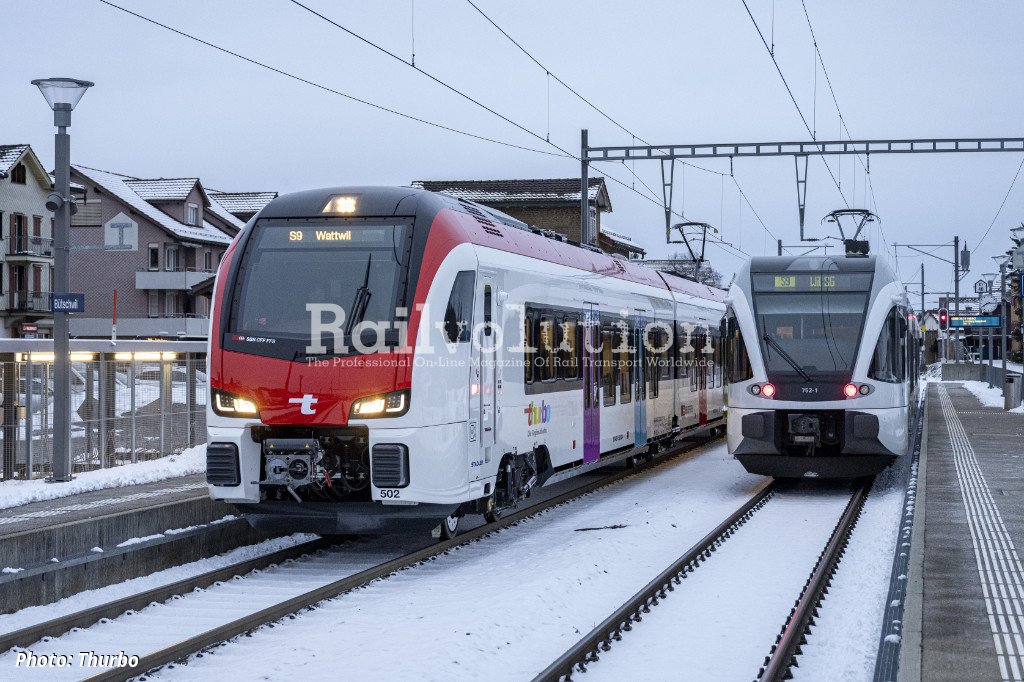
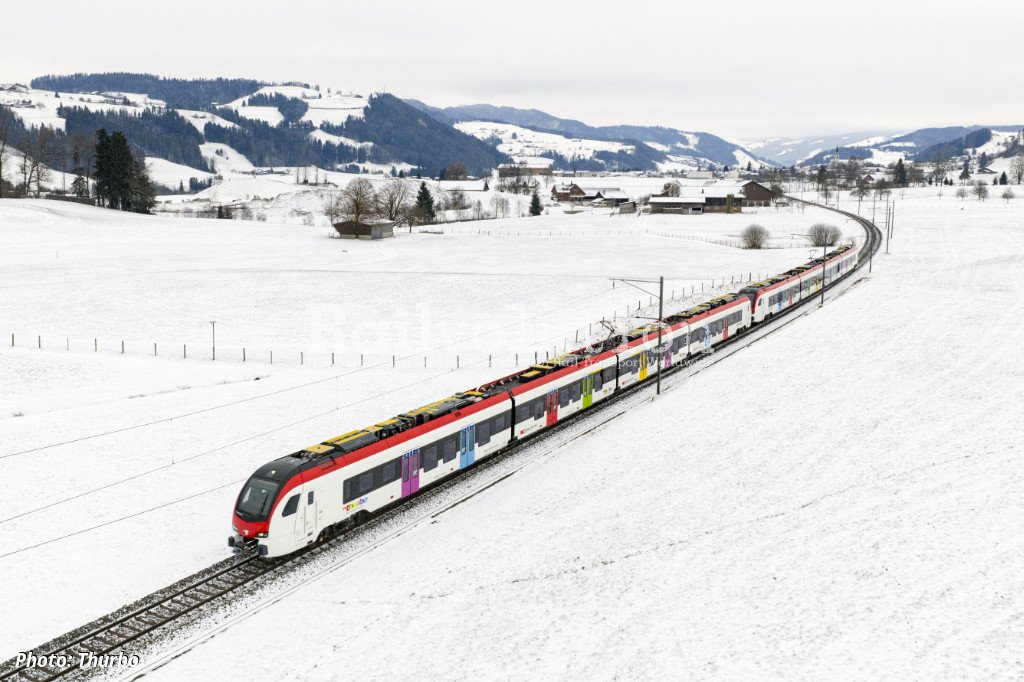
The new Thurbo FLIRT Evo regional trains carried passengers for the first time on Monday of 5 January 2026. With approximately two weeks of operation on the S9 line between Wil and Wattwil (and occasionally on other routes), Thurbo is gathering valuable experience on how the train and its various systems perform in regular service. Thurbo is also interested in any feedback from passengers.
Following intensive testing and test runs, the FLIRT Evo received approval from the BAV on 25 September 2025 for commercial test operation in Switzerland. Thurbo now aims to gain further practical insights by covering as many kilometers as possible in a short period and regularly coupling and uncoupling the units. The S9 line between Wil and Wattwil is ideally suited to these requirements. This initial phase of the train‘s introduction is called controlled operation and is closely monitored by Thurbo to ensure a rapid reaction in case of disruptions.
After the controlled operation phase is complete, the FLIRT Evo will not yet start regular S9 service - there will initially the GTW EMUs remain in operation. Thurbo will use the insights gained from these initial FLIRT Evo runs to prepare for the introduction across the entire service area. The FLIRT Evos will first enter regular service in the Tösstal region between Winterthur and Rüti ZH, likely in the second half of 2026. Thurbo will receive a total of 107 Class 533.5 three-car units.
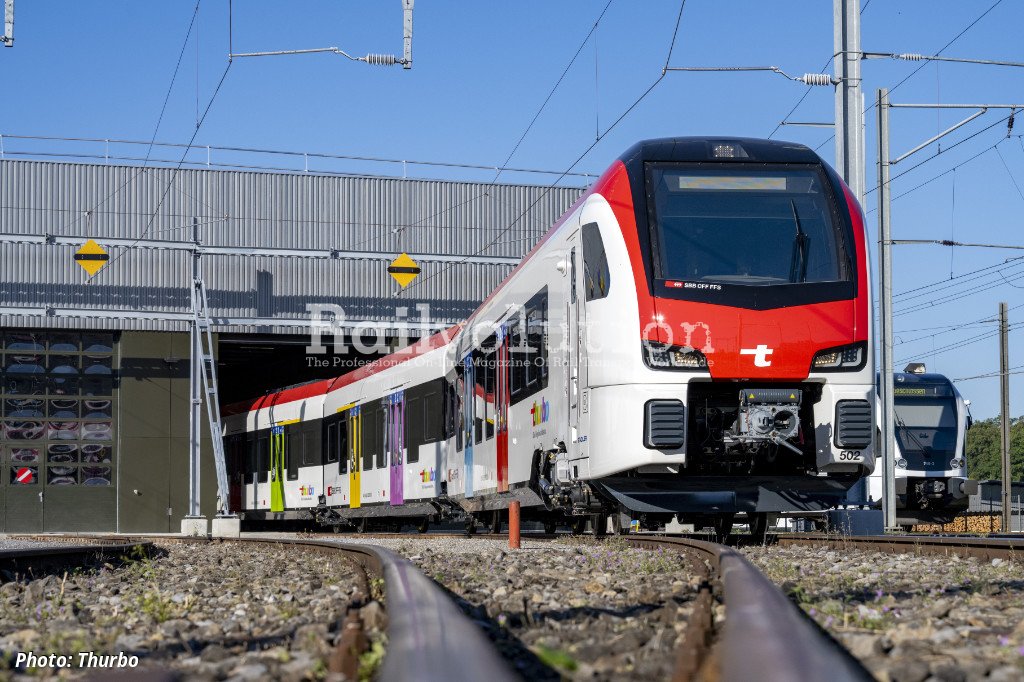
Following our questions, Thurbo has clarified: "The first two units are 94 85 0 533 501-8 and 94 85 0 533 502-6. Unit 94 85 0 533 503-4 has also been delivered and will soon be put into service.
The aim of the supervised operation is to determine whether the vehicles achieve the required properties and reliability in everyday operation so that they can be included in regular diagrams. In addition, the new FLIRTs will also be subjected to intensive testing on various lines in the Thurbo network in the coming months. The focus is laid on the seamless integration of the vehicles into various Thurbo systems, such as customer information, online timetables, passenger counting, electricity consumption measurement. Furthermore, the interaction of the ETCS on-board and stationary parts, the coupling/uncoupling of the FLIRTs (whether they can be carried out at the prescribed times), the setting of the automatic retractable steps at the entrance doors and the vehicle water filling function are being examined.
Initial findings are satisfactory and the vehicles are operating as expected and reliably in the vast majority of cases. After only three days of operation a final assessment is not yet possible. The new FLIRTs will be maintained at the new Weinfelden depot.
Once all FLIRT Evos have been put into service, the existing Thurbo‘s GTWs will be phased out over the next 10 years. In 2027 - 38, they will have been in service for approximately 25 years, which means they will have reached the end of their service life and no longer meet current Swiss standards and technical requirements. The decommissioned trains will either be sold on or scrapped."
Stadler has so far completed 26 FLIRT Evo trains (though not all have been delivered to customers yet). Of these, four are three-car units and 22 are four-car units. The new FLIRTs will have the class designations as follows:
- RABe 533 001 and further for SBB for operation in Switzerland only,
- RABe 533 501 and further for Thurbo for operation in Switzerland only,
- RABe 533 701 and further for RegionAlps,
- RABe 531 001 and further for SBB in DACH version,
- RABe 531 501 and further for Thurbo in DACH version.
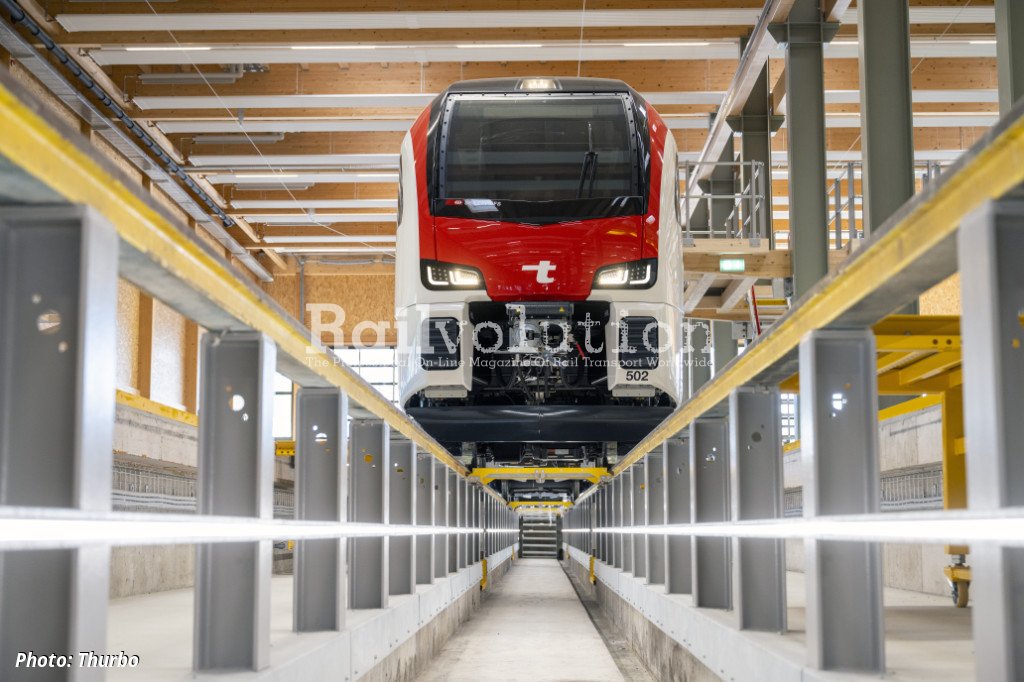
The new FLIRTs will be maintained at the Weinfelden depot, where a new hall has been built, as the existing one was too short for the four-car trains. Thurbo invested approximately 18.4 million CHF in the depot. The new hall, an energy-efficient wooden structure with an extensive photovoltaic system, is 99 m long and has five tracks with a usable length of 80 m. There is no overhead line inside, so the trains are handled using a two-way shunter. There is office space for up to ten employees and changing rooms for up to 40 employees. The hall was completed in September 2025 and officially opened on 31 November 2025.
