

Arriva Nederland ordered five FLIRTs
updated on 13th Jan 2026 18:30 posted on 5th Jan 2026 12:21
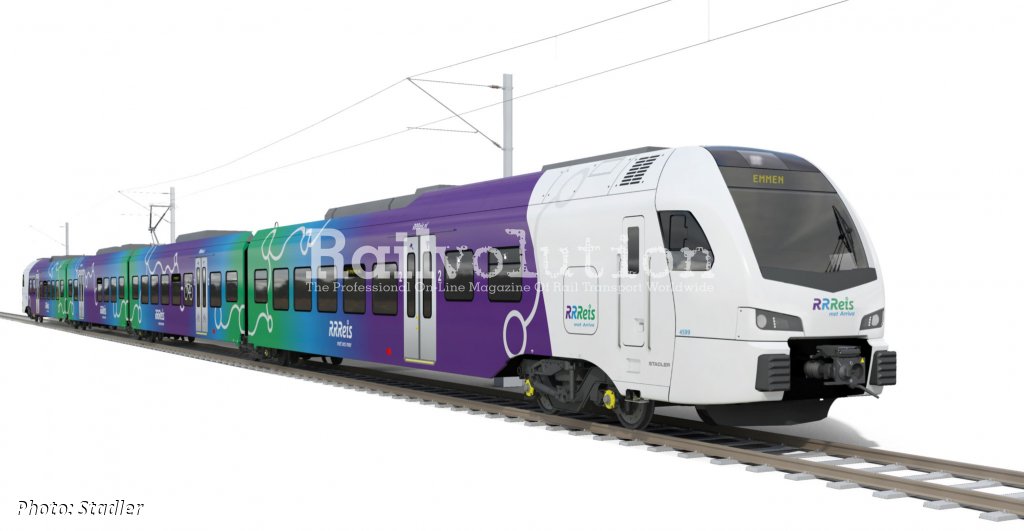
On 5 January 2026, Stadler and Arriva Nederland have signed a contract for the delivery of five four-car FLIRT EMUs. They will be deployed on the Vechtdallijnen in the Dutch provinces of Overijssel and Drenthe from December 2028.
Annemarie Hoogeveen, regional director at Arriva Nederland, said: “Since 2012, Arriva has been operating rail services between Zwolle and Emmen, as well as Almelo and Hardenberg. During this time, passenger numbers and customer satisfaction have grown steadily thanks to timetable improvements and the introduction of modern rolling stock. The five new FLIRTs will support these capacity increases between Zwolle and Emmen and further strengthen regional rail connectivity.”
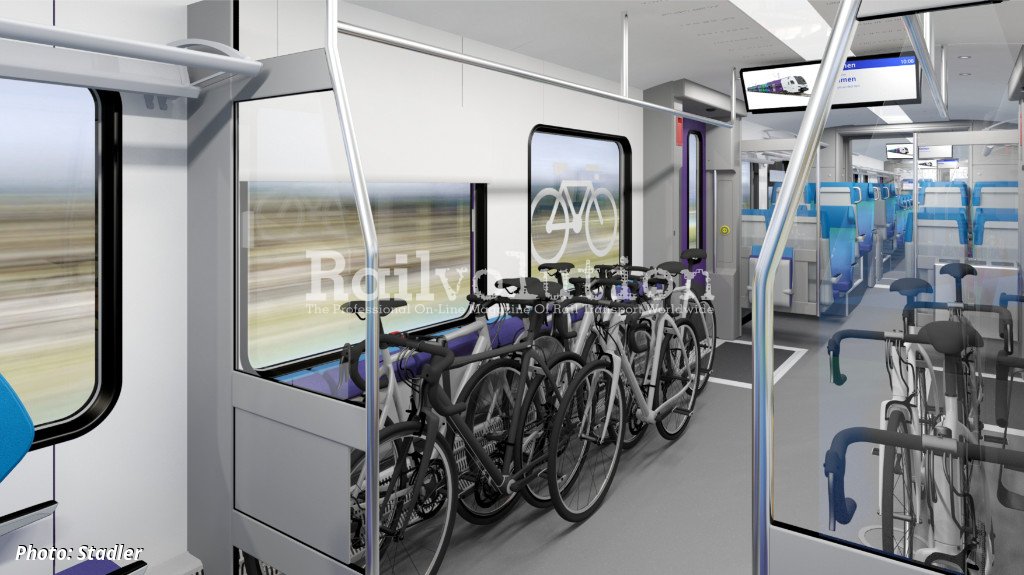
The five 1.5 kV DC FLIRTs with a maximum speed of 140 km/h are a four-car version of the FLIRT 3 trains for Arriva Limburg and will expand Arriva’s existing Stadler fleet, which already includes 165 units in service across the Netherlands. In parallel, the Almelo – Mariënberg line will be electrified, enabling the replacement of current diesel operations with EMUs. Each unit will provide 248 seats, including 12 in first class, and accommodates a total of 457 passengers. Passengers will enjoy spacious interiors and multifunctional areas adaptable to seasonal needs, offering flexibility between bicycle storage and additional seating.
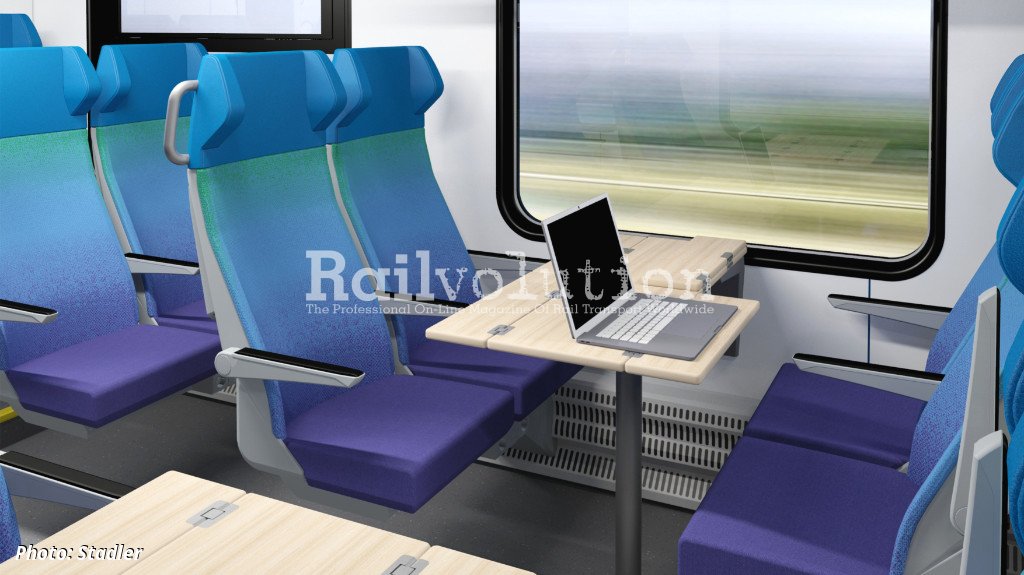
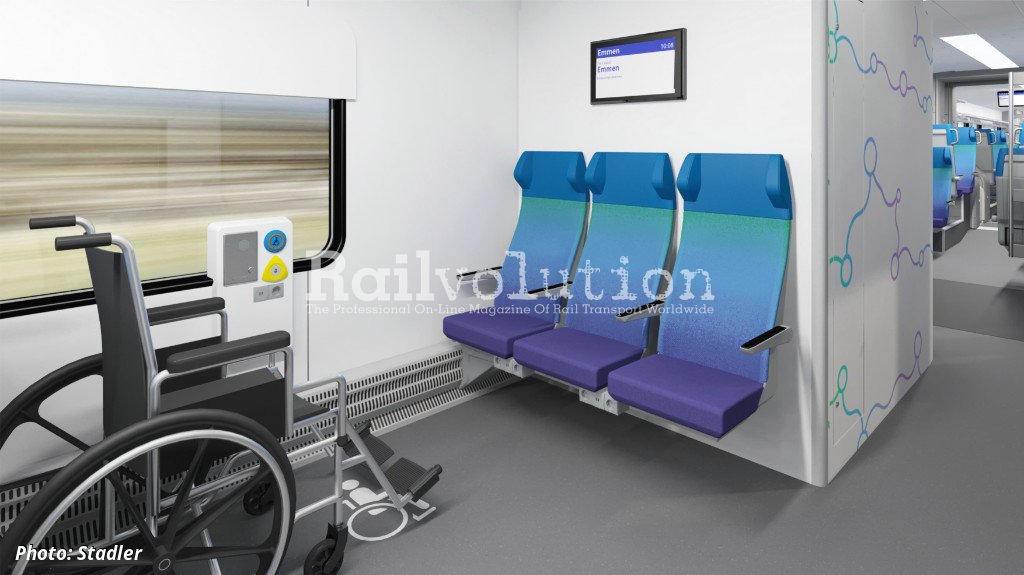
The trains will also feature modern PRM-compliant restrooms, power sockets, real-time passenger information displays and clear signage to aid navigation. The new FLIRTs will carry the RRReis livery, combining shades of purple, blue and green. Inside, refreshed seat upholstery and updated colour schemes will create a bright, welcoming environment designed for both comfort and functionality. The new batch will be built at the Siedlce factory and will be maintained by Stadler. It is a second order for the Netherlands in two months after that awarded by NS.
Stadler and Arriva share a partnership spanning almost two decades. Their cooperation began in 2006 with the first delivery of GTWs to the Netherlands. Between 2006 and 2012, Stadler supplied 122 GTW units, followed by 18 WINKs delivered between 2021 and 2022. From 2016 to 2024, Stadler produced 34 FLIRTs for Arriva’s operations in the Limburg region.
Remembering the situation described in this article, we asked the Province of Overijssel:
1) When was it decided that the Almelo - Mariënberg line will be electrified?
"The decision was taken in 2023. After several studies a project group by the provinces of Overijssel and Gelderland, the national government and ProRail (national rail infrastructure manager) concluded that electrification was the most suitable and future‑proof solution for decarbonising this route."
2) Who did provide the finance?
"The electrification of the Almelo - Mariënberg line is financed jointly by the Province of Overijssel and the Dutch Ministry of Transport. Roughly two‑thirds of the funding is provided by Overijssel and one‑third by the national government."
3) How much will the electrification cost?
"The total investment for the electrification of the Almelo - Mariënberg line is approximately 75 million EUR."
4) Is any comparison available between the use of BEMUs and EMUs after electrification?
"At this stage, no official comparison has been published regarding the use of BEMUs versus EMUs on the Almelo - Mariënberg line. The electrification project has been engineerd based on EMUs, rather than BEMUs."
5) Are other electrifications announced or planned?
"At the moment, we are conducting studies into the electrification of two more lines: Zutphen - Oldenzaal and Enschede - Gronau (- Münster). The ambition to electrify these routes is included in our provincial coalition agreement. Formal decision‑making on implementation can take place once these studies have been completed."
6) Will the WINKs operate on batteries in the future? And under 1.5 kV DC?
"The Province of Overijssel is not involved in the further rollout of WINK trains in the Netherlands. The Province of Friesland (Fryslân), however, is progressing with the implementation of WINKs in their regional services. The test with the WINK operating as a battery train on Almelo - Mariënberg, conducted in February 2022, was primarily a showcase to demonstrate that a battery‑powered train can operate under 1.5 kV DC. Despite this demonstration was successful, Overijssel has opted for full electrification due to cost considerations (mainly, but costs were not the only factor in this decision) and decided not to proceed with BEMUs."
7) Is the use of hydrogen trains envisaged?
"No. The use of hydrogen trains is not foreseen in Overijssel. Current policy focuses on electrification."
