

Structural innovations of a TGV M
posted on 29th May 2026 15:01
When developing the TGV M, the designers sought to give the train a touch of exclusivity. The design of the TGV M is therefore intended to be reminiscent of the Class BB 9200 locomotives that hauled the “Le Capitole” Paris - Toulouse trains, while retaining the “fierce” aspect of the first TGVs. It is also a continuation of the French tradition of these first European high-speed trains, which achieved several world speed records.
Design
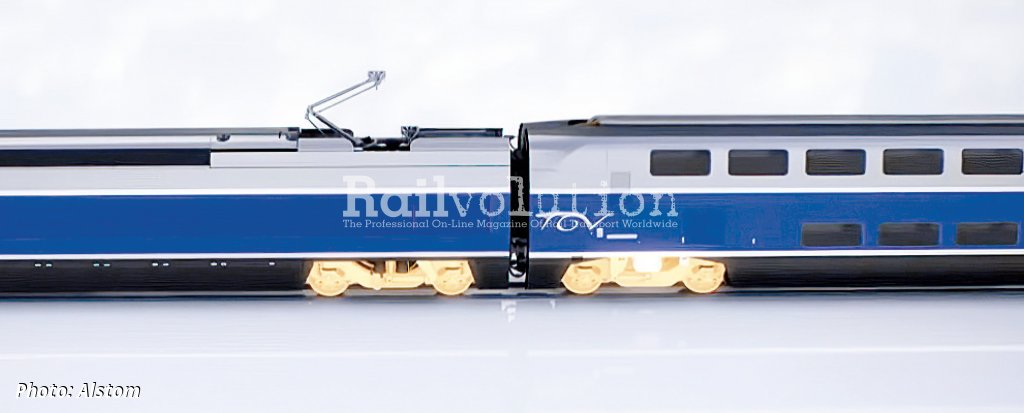
In addition, the intention was to differentiate the TGV M even more visually from the Duplex units, so their “nose” is 1.5 m longer than the older TGVs (which also reduces air resistance) and to create “shoulders” on the sides of the cab, below the side windows, which emphasize the feeling of (controlled) power. The recesses known from the Duplexes have been removed on the slope of the front, so that the front window is smoothly set into the surface of the body. Another “expressive” feature for the train’s memorability is the shape of the headlights.
These and other design elements affect the train’s aerodynamic resistance. The outer bogies, which strongly affect air resistance at high speeds, have side covers, which is a fundamental innovation compared to previous TGVs. This had previously appeared on AGV units with a maximum speed of 360 km/h, but with the exception of a single order for Italo (originally NTV), which did not spread to other customers. In a certain way, the design of the TGV M reflects the appearance of the AGV.
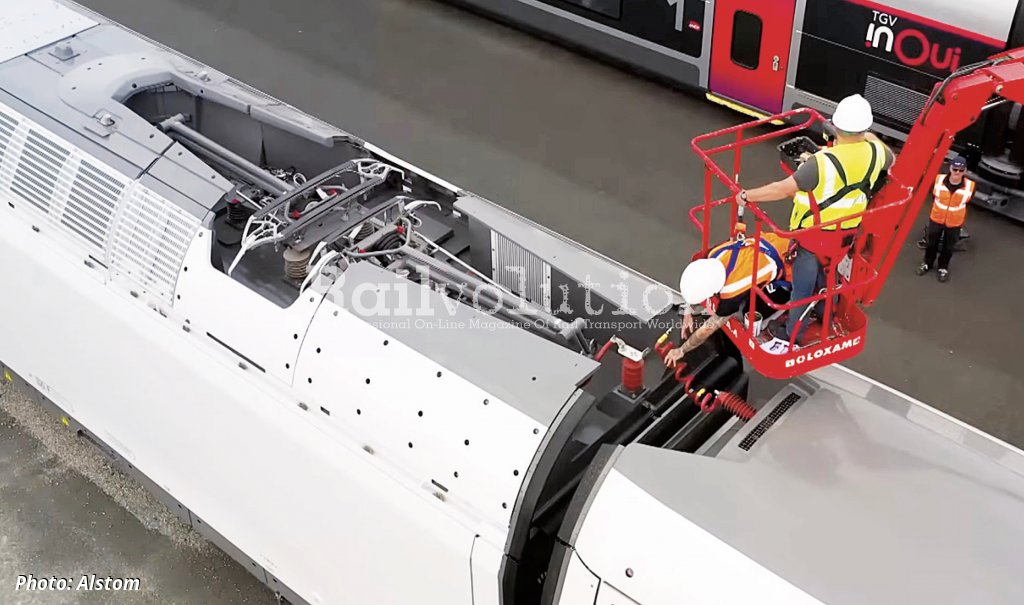
The skirts on the outer bogies also reduce aerodynamic noise from the train. A very important element in terms of aerodynamic resistance is to cover the pantographs as much as possible, remove the maximum number of components from the roof and move them to the engine rooms, which, together with creating the smoothest possible surface of the roof of the cars, reduces air turbulence.
These elements are the initial steps for the designers' efforts to reduce all costs of the new type of train - procurement, operating and maintenance. The basic aspects of the TGV concept, i.e. front power cars and non-powered intermediate cars with Jakobs bogies, have been retained; in the case of Jakobs bogies due to the overall stability of the trainset. The letter M in the name of the train is primarily intended to express Modularité and this is associated with new design solutions.
Structural innovations
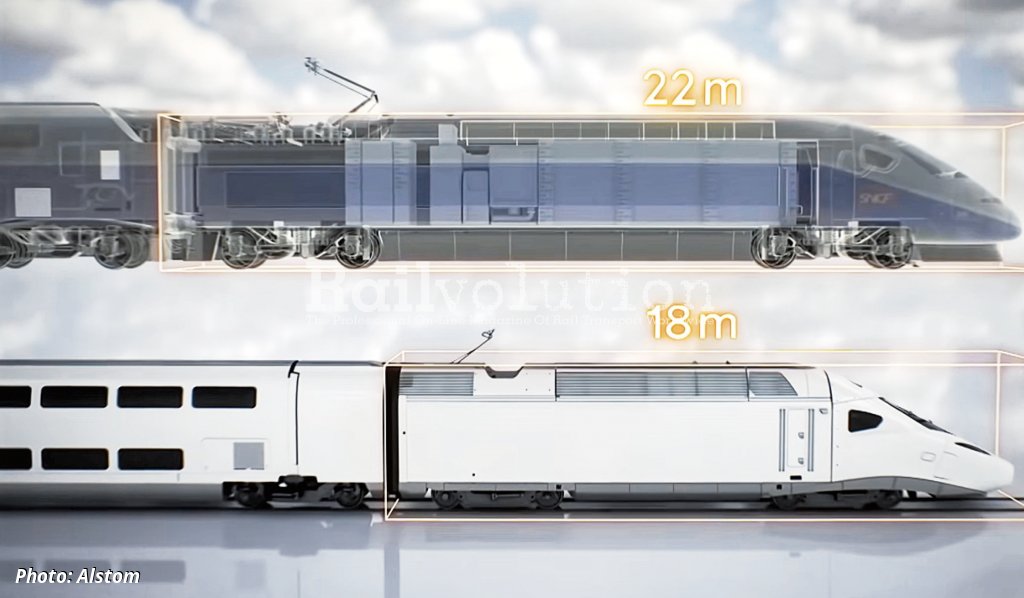
The TGV M power car is shorter than that of the Duplex, not only thanks to the progressive miniaturization of components, but also as a result of several steps. Some components, such as the electrical switchboards, have been removed from the power car, reducing its length from 22 m to 18 m. This also means that 8 m are saved on the train length, which can be used elsewhere.
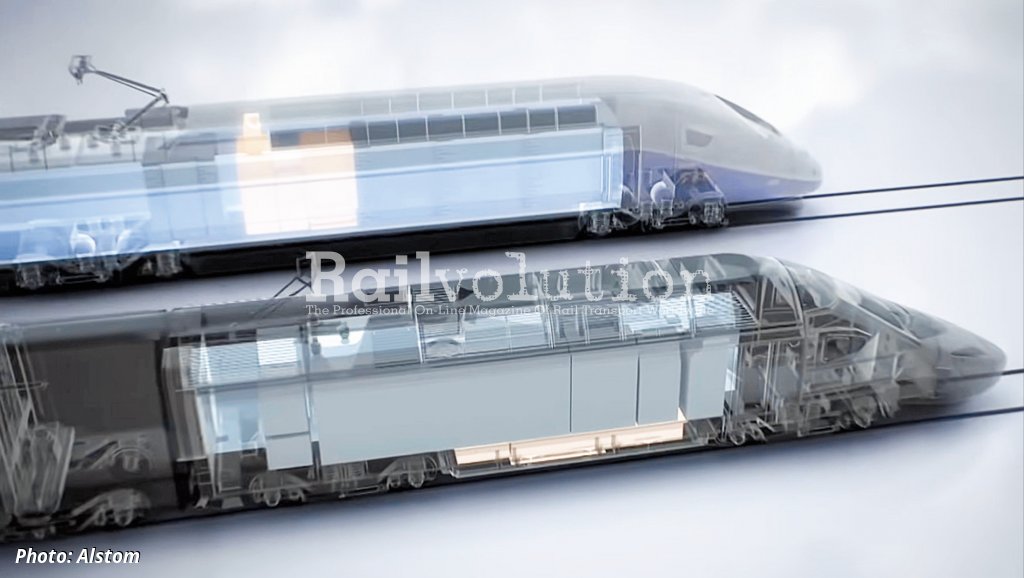
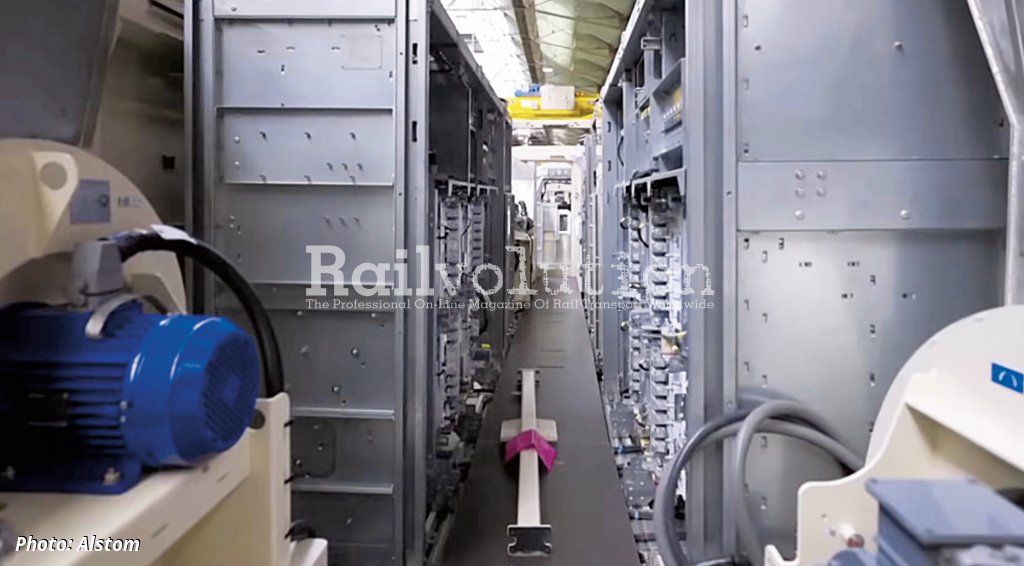
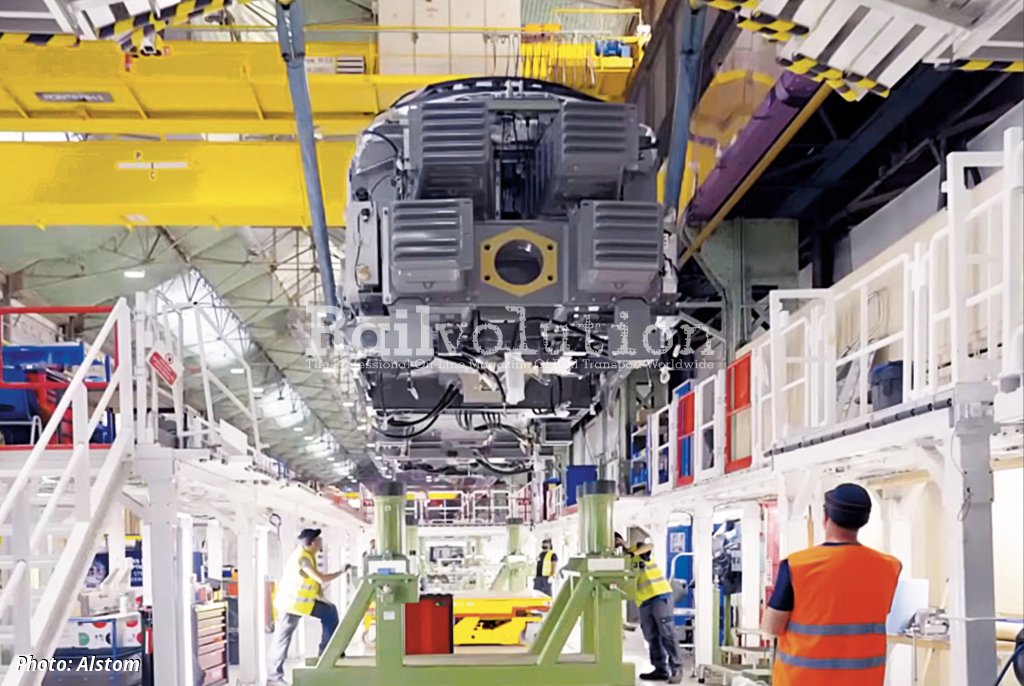
Another major change is that the TGV Duplex power cars have a side corridor in the engine room and the traction transformer situated in the middle of the latter. In the TGV M power cars, the traction transformer, which reduces the voltage from 25 kV (or 15 kV) to 1 kV, is located under the floor of the power car and there is a central corridor in the engine room.
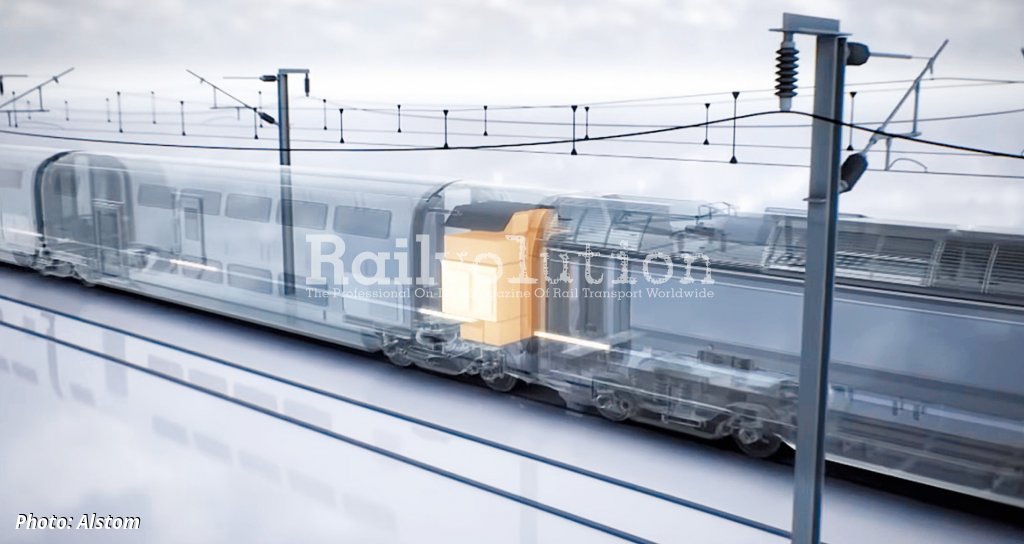
A completely new element of the TGV M trains is a separate module, which is called graft. The latter has the same body profile as the other cars, is 3 m long and houses part of the equipment that was previously located in the engine rooms of the power cars or in the lower deck of the bar car. Each graft contains two battery blocks for supplying the on-board network with 110 V. There are therefore four of these battery blocks on each TGV M unit, while there are six ones on the Duplex unit.
One of the objectives of the development of the TGV M was also to standardize as much as possible and therefore reduce the cost of producing the intermediate cars. Until now, three types of the latter were required for Duplexes: one (the most numerous) for the inner part of the set, a second type for the bar car and a third type for the outer intermediate cars adjacent to the power cars. This arrangement means three production lines and additional components for production, maintenance and storage.
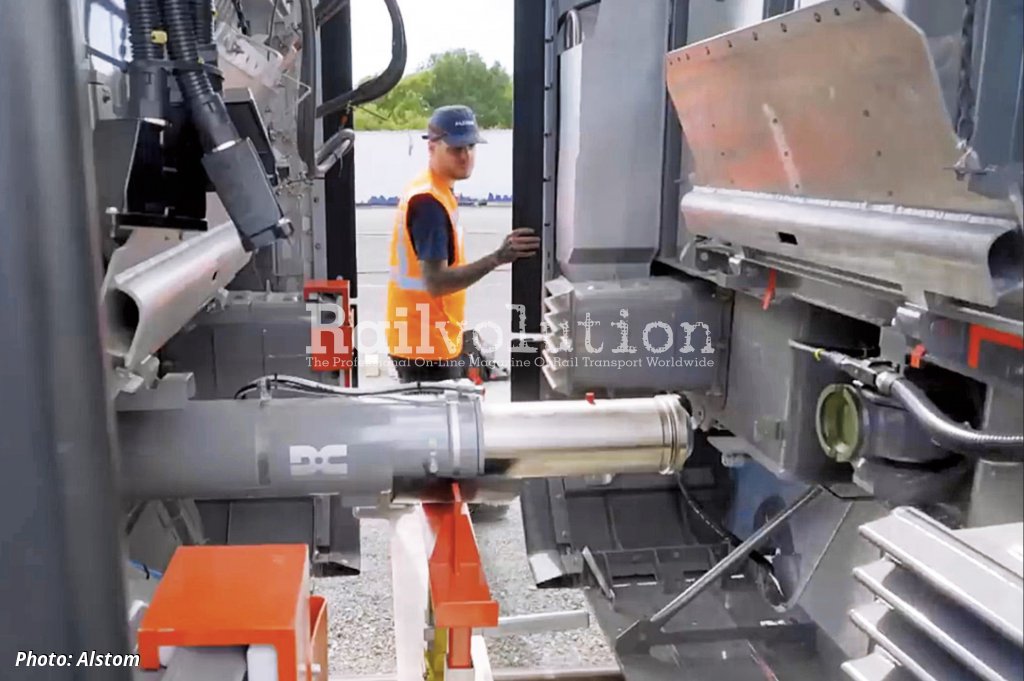
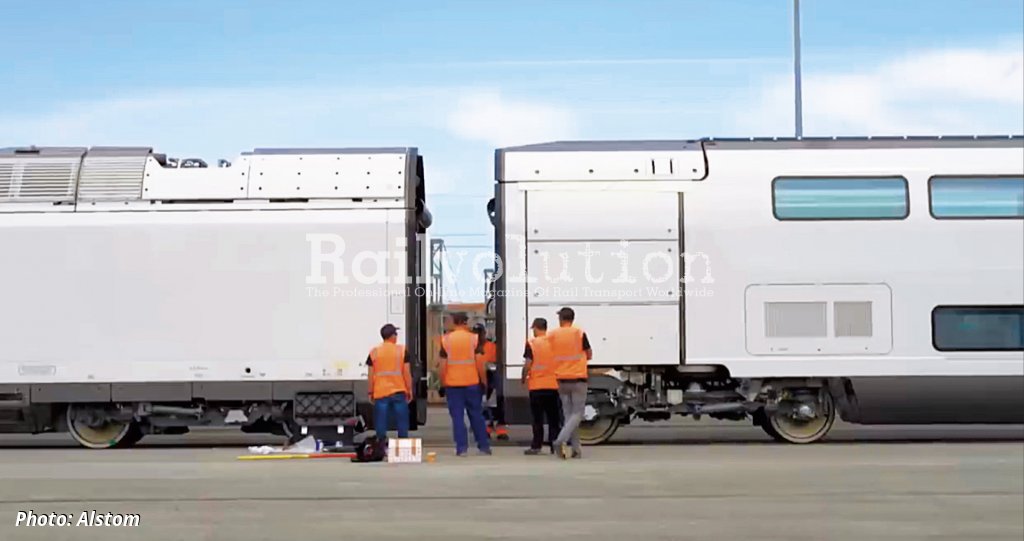
Thanks to the use of the graft, a specific outer intermediate car for coupling to the power car is no longer required, as at the end of the production process the graft is inserted between the power car and the first intermediate car. As a result, only two production lines are required for the TGV M units: one for the bistro car, which is always different, and one for the other intermediate cars, which are all the same.
The graft
In addition to two battery blocks for supplying the on-board network with 110 V, the graft houses 700 V batteries for storing electrical energy, which is a complete novelty in the TGV family. These batteries allow the train to be supplied with electrical energy in the event of a power failure from the catenary, thus ensuring the comfort of passengers.
In current TGVs, in the event of a power failure from the catenary, the air conditioning is switched off after 30 minutes, the lighting goes into emergency mode and the toilets are locked. Thanks to the power supply from the graft, these functions can continue for 2 - 3 hours, which is usually sufficient to solve power problems.
Another advantage of this solution is that, thanks to the backup power supply from the graft, the train can continue to travel for several kilometers at a speed of 30 - 60 km/h and eventually reach a more suitable location.
And if necessary, this technology can temporarily reduce the train's consumption for up to one hour, thus relieving the energy network during peak hours when it is overloaded, which sometimes happens in France. For example: using this function on 200 trains, this is the consumption equivalent to a city with 50,000 inhabitants for one hour.
The Duplex cars always have eight intermediate cars, while the advantage of the TGV M is that its arrangement can be changed to seven, eight or nine intermediate cars. This is possible thanks to both the shorter power cars (18 m instead of 22 m) and the shortening of the technical spaces of the intermediate cars by 1 m, which in total allows the ninth intermediate car to be included while maintaining the original overall length of the Duplex unit. Conversely, thanks to the presence of grafts carrying the necessary technical equipment, one intermediate car can be removed from the train without missing any technical equipment.
The windows in the TGV M cars are slightly lower than those in the Duplex cars, but slightly longer to achieve the greatest possible horizontal view for passengers. As a result, the glazing of the TGV M cars has a 25 % larger area than that of the Duplex cars. This is also achieved thanks to the fact that the windows in the spaces above the bogies have been enlarged.
Production
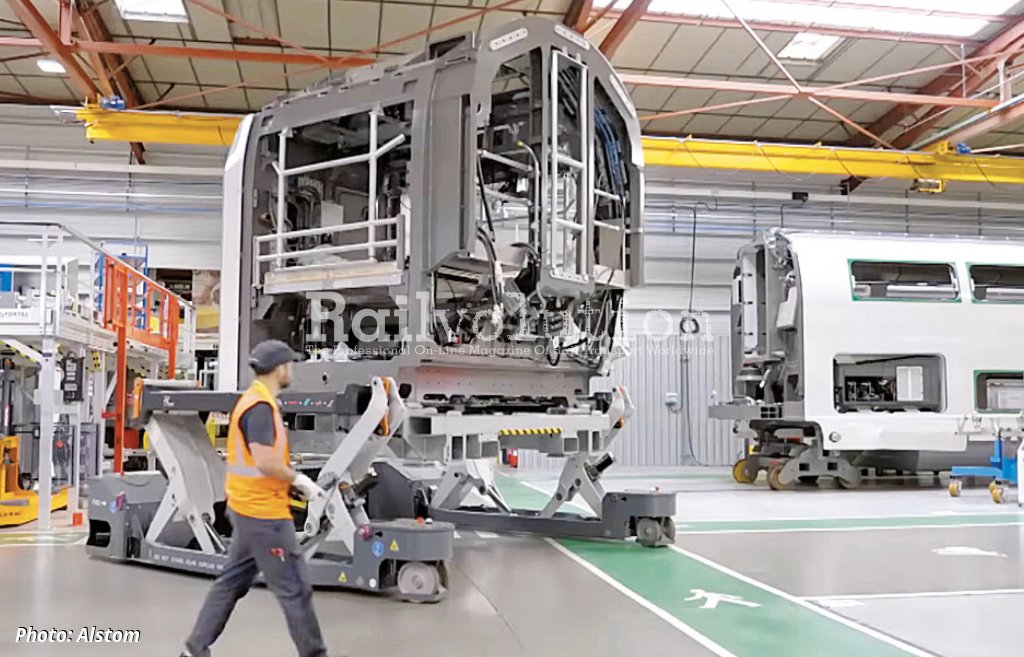
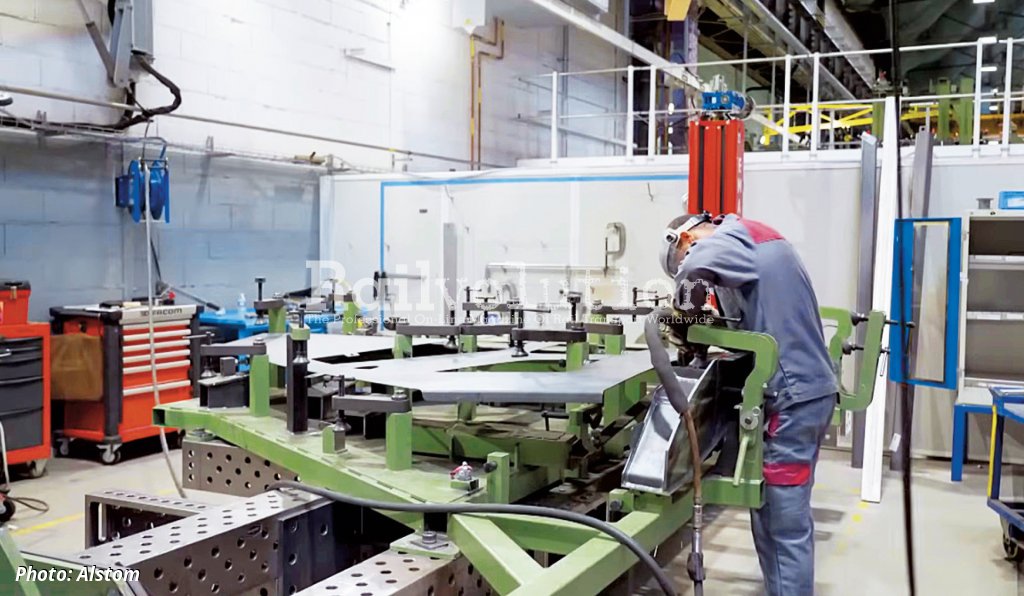
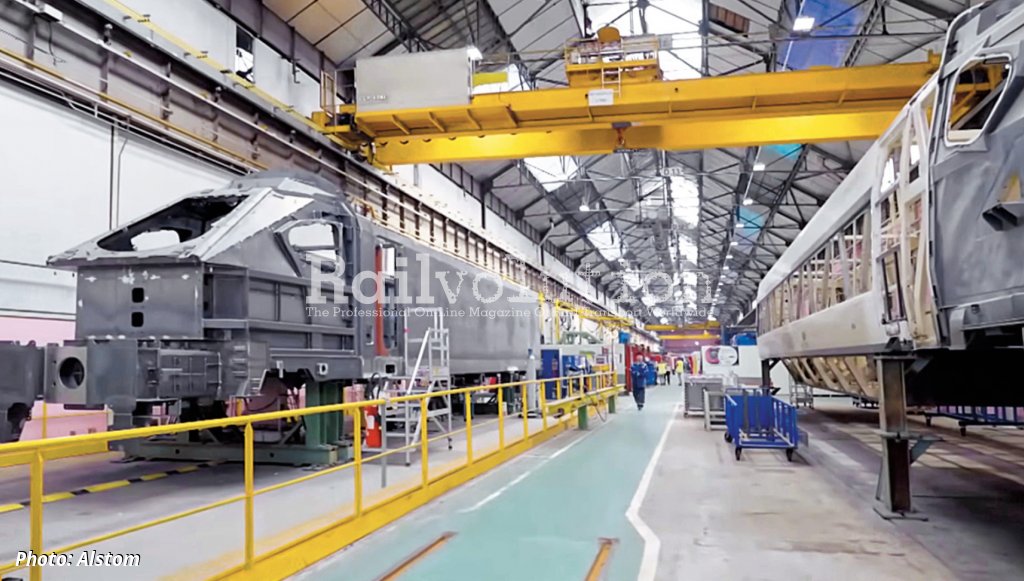
The power cars are built at the Belfort works. The cars have steel bodyshells. Approximately 4,700 welds are made on the components during the production of each bodyshell, 95 % of which are done manually.
After completion, each weld and dimension are checked at the bodyshell and various additional activities are carried out, such as smoothing out welding irregularities, etc. The body is then sent to the paint shop. Ten days after being sent to the paint shop, the bodyshell is sent for final assembly. After final assembly, the power car, without bogies, weighs approximately 50 tons.
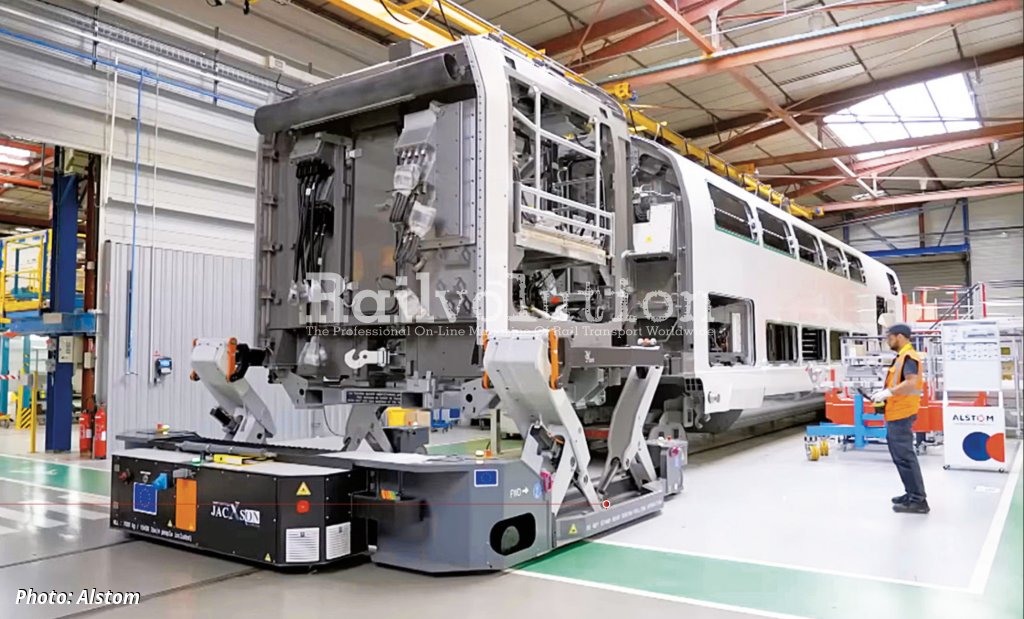
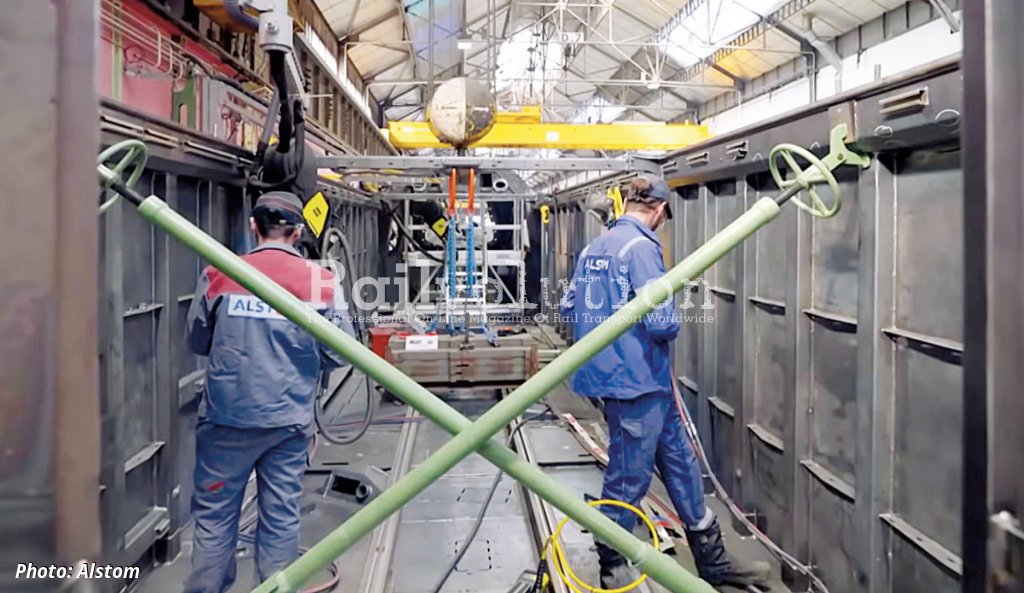
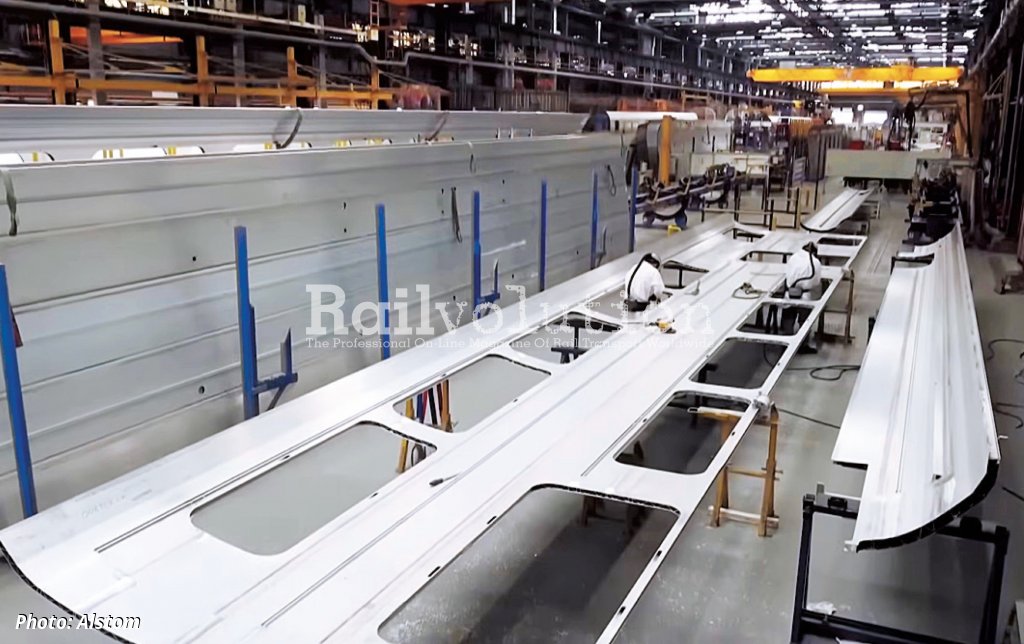
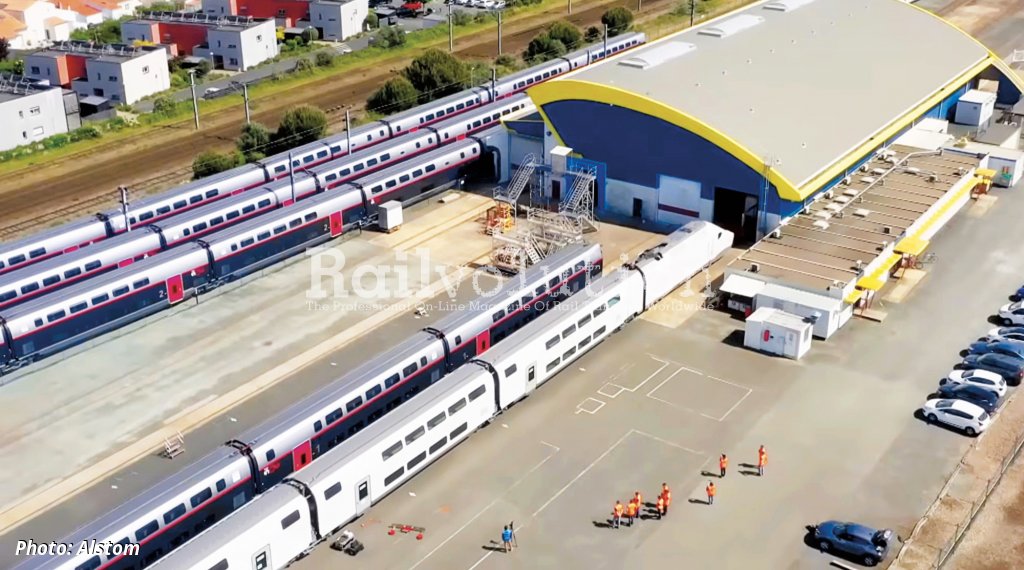
The intermediate cars have aluminum bodyshells. The aluminum profiles are welded using robots, but for the welding of complicated parts, around 80 welders work at the Aytré plant, who perform these operations manually. Each bodyshell has approximately 2 - 2.5 km of welds, after each bodyshell is completed, all welds and dimensions are checked again. The bodyshell is then sent to the paint shop, where it stays for 12 days. Then the final assembly of the interior begins.
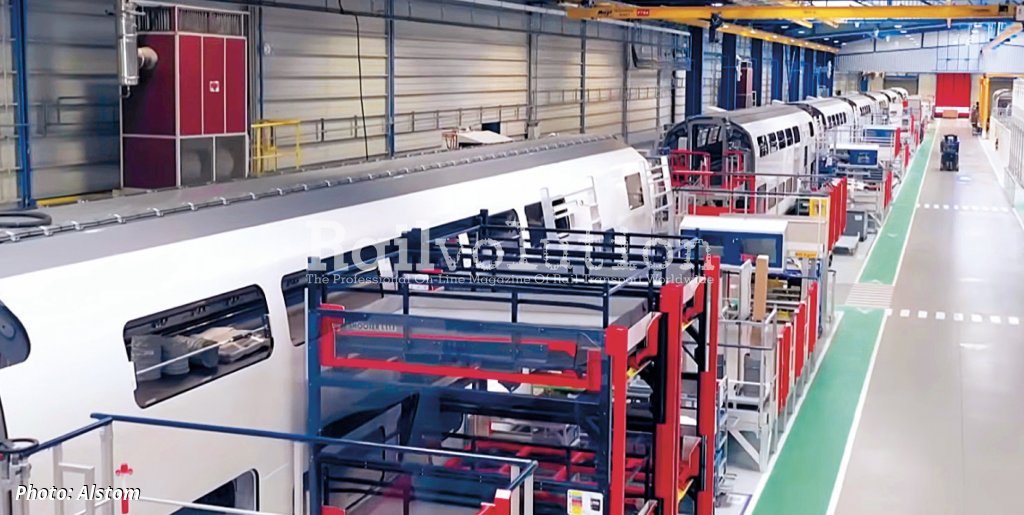
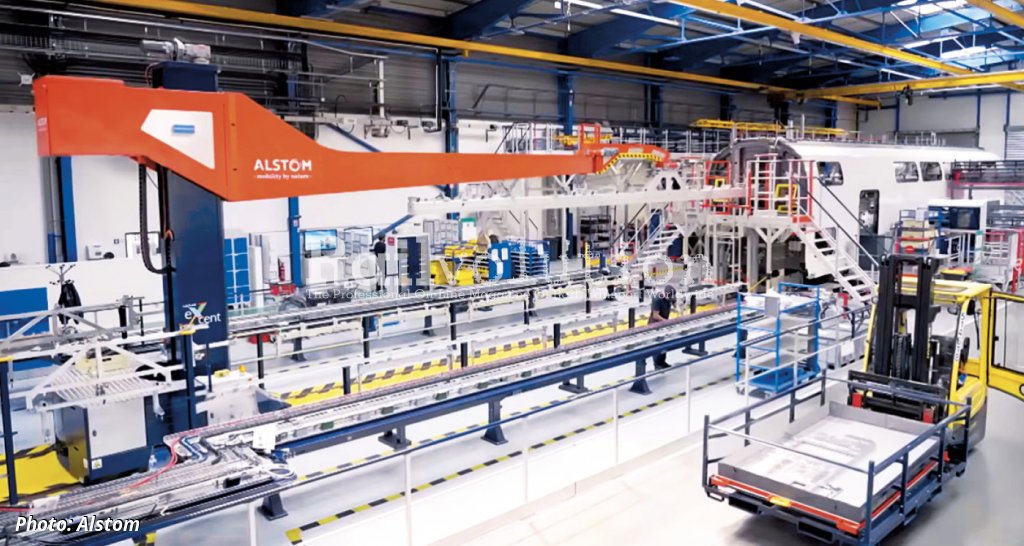
In each intermediate car, there are approximately 1 km of electrical wires and cables per one running meter of length, so in each 17-meter car there are approximately 17 km of cables. To facilitate the installation of the wiring, the maximum number of wires is placed in longitudinal frames, which are inserted as a whole inside the car. For this purpose, a special arm is used, which inserts the frame with the cable harnesses into the car over its fronts, because unlike the power car, the roof is closed.
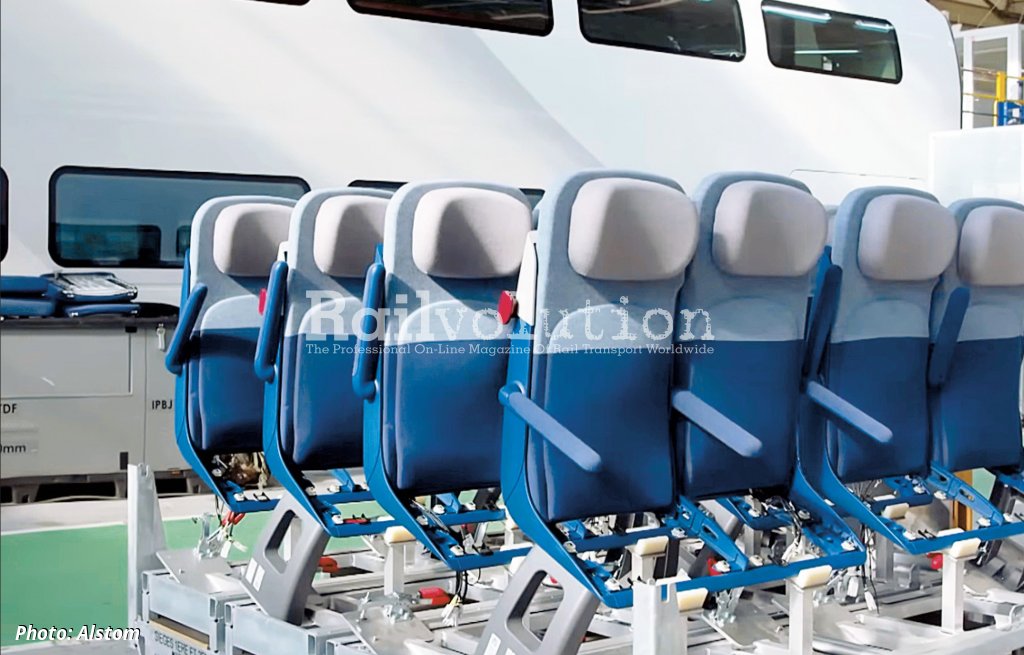
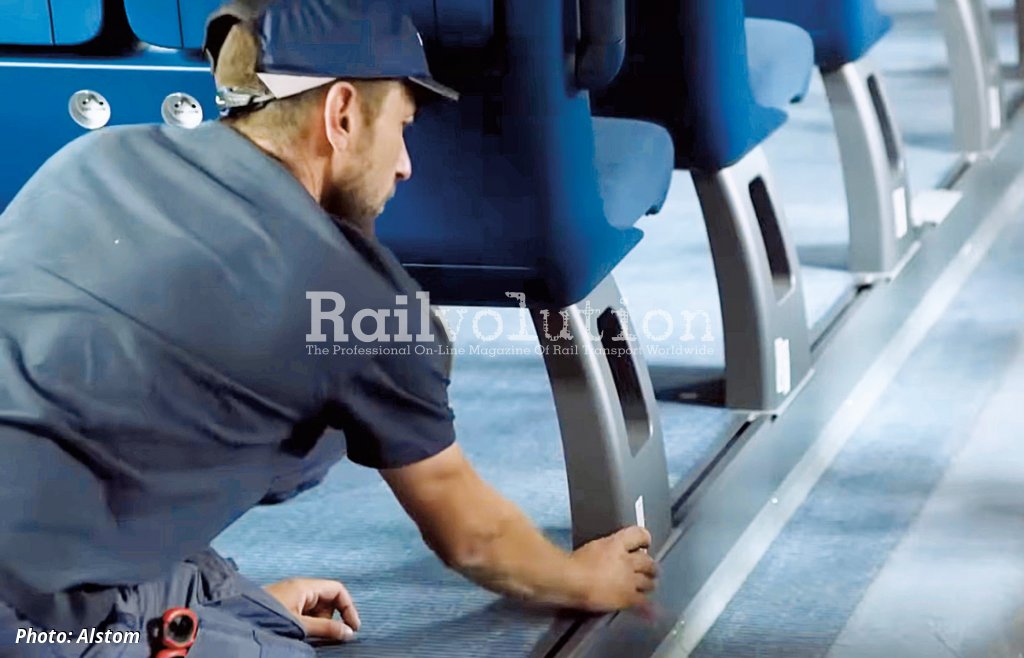
There are approximately 5,000 items in the interior of the intermediate cars of each TGV M unit. Completely new seats are used, the interior design was presented in March 2025. The Modularité in the construction also includes the possibility that, depending on the season or type of train use, a first class car can be changed to a second class one and vice versa, it is easy (easier) to change the seat configuration, add or remove luggage shelves, which is done using grooves in the floor.
Alstom states that, in total, all the measures described, the carbon footprint per passenger in the TGV M is 35 - 37 % lower than in the Duplex and 50 % lower than in the single-deck TGV. This is due to the lower aerodynamic drag achieved also by the smooth bottom of the trains and the fact that the air conditioning in the cars responds to the actual number of passengers and adjusts the electricity consumption accordingly.
Last but not least, the higher capacity of the train contributes to these savings: while the TGV Duplex in the standard INOUI version has 550 seats, the TGV M in the same category offers 600 seats, the TGV Duplex in the low-cost OUIGO version has 630 seats, the TGV M in the same version provides 740 seats.
