

TGV M has been granted type authorisation
posted on 29th May 2026 09:54
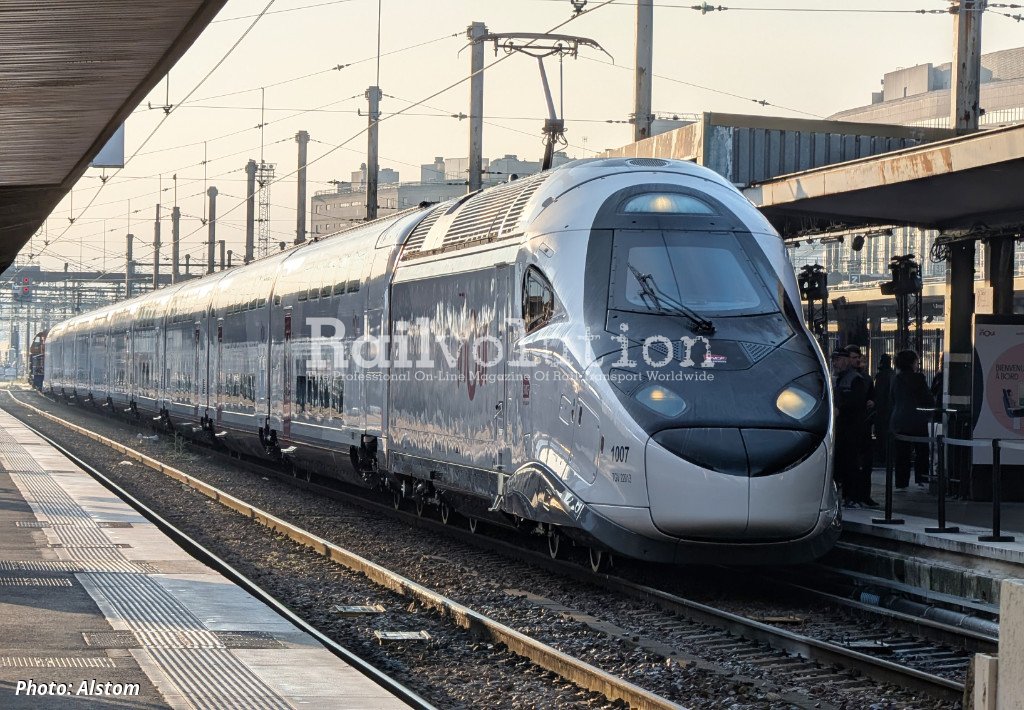
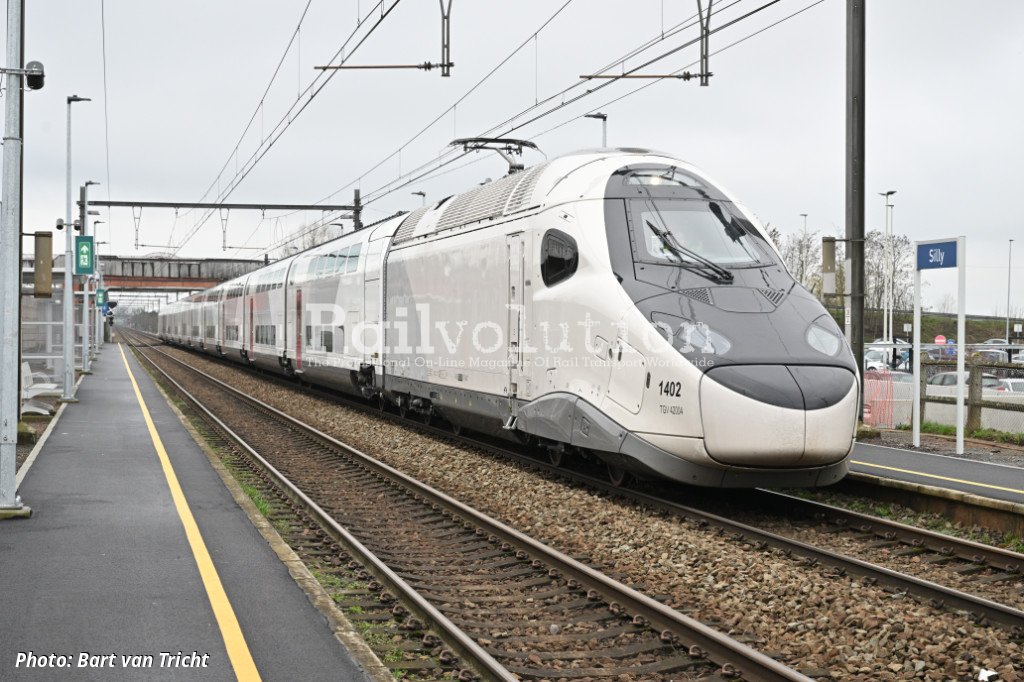
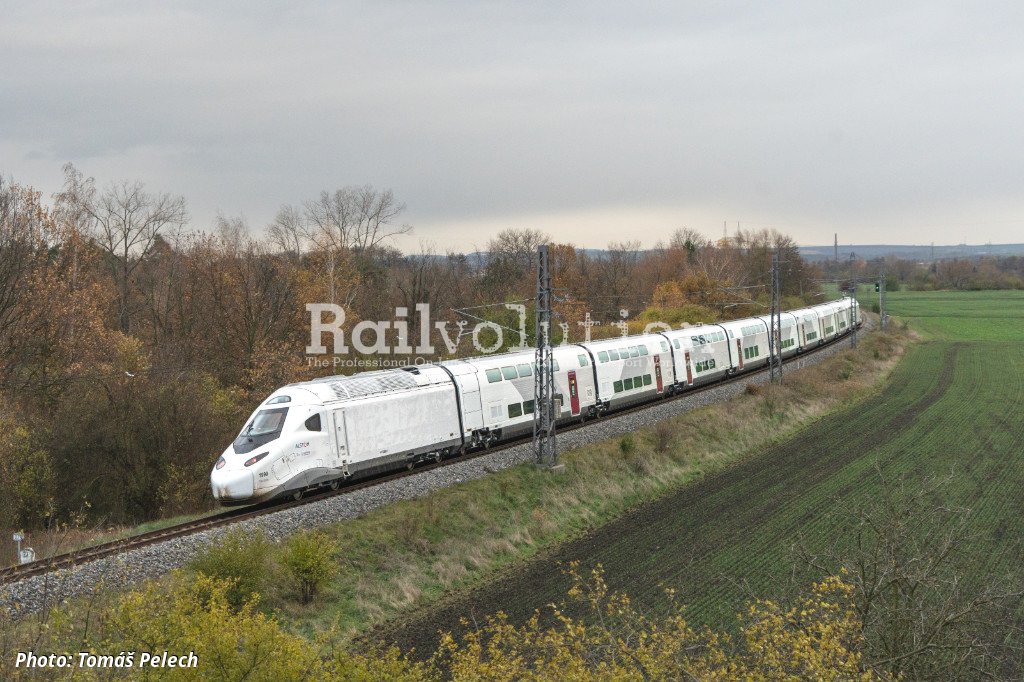
On 22 May 2026, TGV M has obtained type authorisation from ERA as TGV 22000. By this was finished the approval testing programme in France, which has been underway since 2023, achieving nearly 1 million km of runs, enabling to submit a complete application in December 2025. Over 1,000 documents made up the type-certification dossier (test reports, expert opinions, drawings, etc.).
Let us recall that the earlier plans called for the start of operations in mid-2025, previous plans for 2024 before the Paris Olympics, and originally it was supposed to start passenger operation with TGV Ms in France in 2022.
Conditions of a type authorisation
The type authorisation is valid for operation in single and double traction of two identical TGV M units (unité simple - US, unité multiple - UM). The maximum speed of the train depends on the ATP used:
- under ETCS and the French TVM superviosn, the maximum speed is 320 km/h,
- when running with the KVB, the maximum speed is 220 km/h,
- on conventional lines with the Crocodile system, the speed is limited to a maximum of 160 km/h.
This authorisation is valid for the Type TGV 22000, if the number of passengers on board does not exceed the total number of seats on the train (which is not normally a problem, since seat reservations are mandatory in TGVs). According to the requirements of the French EPSF (Établissement public de sécurité ferroviaire), if the number of standing passengers exceeds 35 per car, the train speed must be limited:
- to 160 km/h on conventional lines with track-side signals,
- to 220 km/h on high-speed lines with signals transmitted to the driver's cab.
In order for SNCF to be able to operate a train with up to 35 standing passengers per car without the above restrictions, it must provide additional evidence concerning the dynamic stability of the train. In order to be able to lift this restriction, the applicant must provide proof of compliance with the LOC&PAS TSI requirements for this load case (more than 35 standing passengers per car).
The deadline for submitting this information is 12 months from the date of issue of the ERA type authorisation. Once this has been done and the evidence has been positively assessed, the restriction in question will be lifted. Until then, the alternative is for SNCF to demonstrate how it will prevent each car from carrying more than 35 standing passengers.
For electric energy storage systems (in the graft), there is a basic limitation that sets a maximum state of charge of 50 %.
Start of operation
The production schedule drawn up jointly by SNCF Voyageurs and Alstom provides for the delivery of first Class 22000 (Avelia Horizon) trains intended for service from the start of summer, with a gradual ramp-up in the second half of 2026: delivery of the first two 1.5 kV DC/25 kV 50 Hz units from June, rising to six TGV Ms by the end of August, and 13 trains by the end of 2026.
SNCF Voyageurs and Alstom have decided to strengthen the commissioning process by scheduling several weeks of pre-commercial running of the first trains on the French network. This phase will involve hundreds of team members from both companies to verify every detail of the on-board experience, support the operational teams in familiarising themselves with the train, and finalise all last adjustments before welcoming the first passengers.
The passenger service of this new TGV INOUI units will start in early September. The pre-commercial trial phase prior to commercial service will enable the first six TGV INOUI trainsets to be integrated into the timeline during a suitable operational window.
We asked Alstom and SNCF:
- When is the quadruple-voltage Type TGV 42000 expected to be approved?
Alstom answered us: "This is something SNCF is best placed to comment on, as they are in charge of the entry-into-service timeline and related approvals. We are, of course, working very closely with them as the project progresses."
- What will happen to the pre-series units TGV 21000 (996 - 999) and TGV 41000 (1999)? Will they be recertified and renumbered as TGV 22000 and 42000?
Alstom answered us: "The pre-series TGV M trainsets are currently being finalised and will be brought up to the full technical standard required for commercial service. They will then be delivered to SNCF and used in passenger operations. Regarding numbering or specific designation, especially for the TGV 41000 series, this is handled directly by SNCF."
- How many Type TGV 42000 units have been built until end of May?
Alstom answered us: "We do not share detailed production figures at this stage. What we can say is that the programme is progressing well, with production ramping up in line with the overall schedule."
- How many Type TGV 22000 units will be built in 2027?
Alstom answered us: "For the same reasons, we do not communicate on future production volumes a our priority focus is to deliver 13 units by the end of this year."
- Why is there a 50% maximum charge limit for electrical energy storage systems?
Alstom answered us: "The onboard energy storage system is being introduced step by step. In the first phase, it is operated at around 50 % of its capacity, which allows for a gradual and fully validated rollout. In a second phase, and following a dedicated software upgrade and additional validation, it will be able to operate at full capacity. This progressive approach helps ensure optimal safety, reliability and performance."
Orders
In total 130 trains were ordered by SNCF Voyageurs. In July 2018, SNCF placed an order for 100 dual-voltage TGV M units. In August 2022, SNCF ordered 15 quadruple-voltage Class 42000 TGV Ms for international services, now planned to be used for SNCF's expansion in italy. In January 2026, SNCF exercised a further option for 15 quadruple-voltage units, expected to be used on the Brussels direction. Another 30 trains named Celestia (plus 20 optional ones) were ordered by SNCF subsidiary Eurostar.
Other customers include the Moroccan state railways ONCF with 18 units and the private operator Proxima with 12 units.
Alstom states that the TGV Ms will have 30 % lower maintenance costs compared to TGV Duplexes, as well as 20 % energy savings thanks to its more aerodynamic shape. 90 drivers were involved in the design of the new driver’s cab. Seats were tested by 125 customers of different body types. Passenger seats are 90 % recyclable thanks to their materials.
