

Class 555 fleet reaches the halfway stage
posted on 19th Dec 2025 15:50
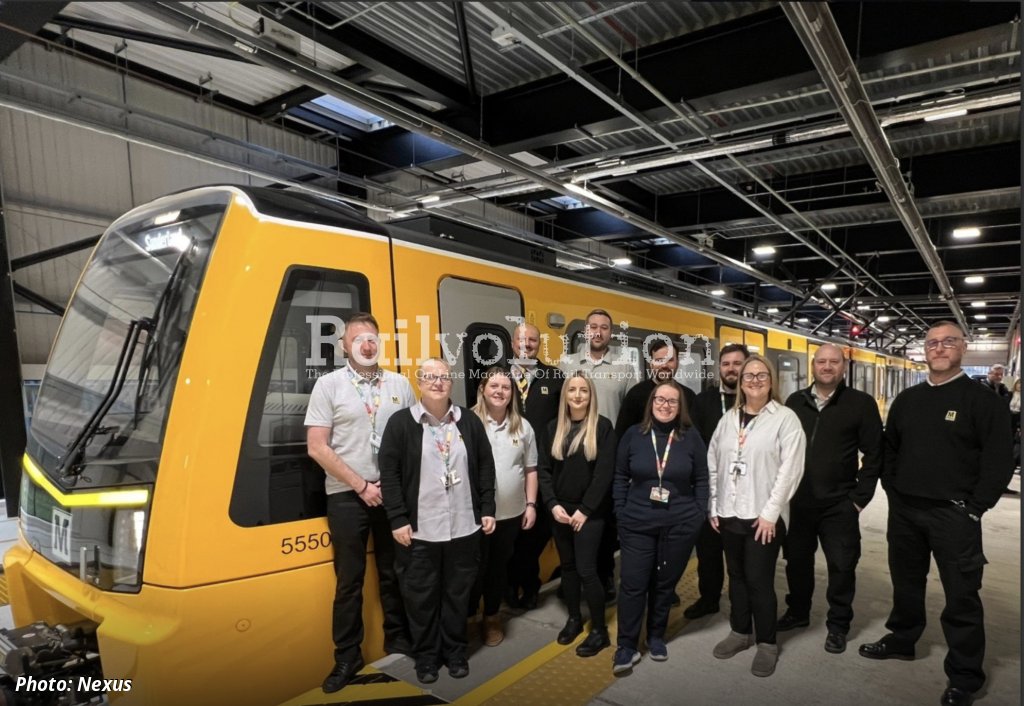
One year on from the first new Tyne and Wear Metro Class 555 train entering service, the target of having half of the fleet operating before the end of the year has now been achieved with 23 new Metro trains available for customer service. This is half of the 46 which Metro operator Nexus has on order from Stadler. Nexus plans to have all the new fleet available for service by the end of 2026. With current availability of 23 units it gets closer to a typical weekday Metro service of 28 trains.
North East Mayor Kim McGuinness, said: “I know Metro passengers want every train they catch to be a new one, and so do I. I want Metro to provide local people with a world-class service once again, and we’re investing millions to make that happen. Today is another step forward. The teams at Nexus and Stadler are pulling out all the stops to make this a reality but I have asked them to accelerate this programme so that by this summer you won’t see old trains at your station.”
Cathy Massarella, Managing Director at Nexus, said: “We put the first Stadler Metro train into service in the same week in December last year, and now, one year on, we have delivered on our aim of reaching 23 out of the 46 new trains on our order available for service. A huge amount of work has gone into the roll out programme. That hard work will continue from here so that we can get all the new trains in service next year."
Lucius Gerig, Head of Division Switzerland at Stadler, said: “We’re proud that half of the fleet is in service and that we’re right on schedule. So far, 40 trains have been delivered to the UK. Production of the final train was completed in December, and by spring next year, the entire fleet will be in North East England. This achievement reflects the dedication of our team and partners to delivering a modern, reliable Metro system.”
When each new train arrives it requires detailed testing before it gets made available for customer service. Nexus is also halfway through the process of decommissioning the old Metro fleet, which is 45 years-old and is being gradually phased out.
Driver training completed
On 16 December 2025, driver training on the has been successfully completed - more than 200 members of Metro train crew, including drivers and operations managers, have undertaken the intensive training programme. It means that the main cohort of Metro drivers are now signed off as fully competent on the new Stadler trains.
Cathy Massarella, Managing Director of Nexus, said: “I’m delighted to confirm that we’ve completed the driver training programme on the new Metro fleet. It’s been a fantastic effort to get everyone through this essential training course in just 14 months. My thanks go to all the drivers for their hard work in passing the course – which has been a critical part of the fleet transition process. A huge amount of work has also been put in by our driver trainers, who have mentored their colleagues on the new trains and helped them to pass all of the required assessments. The switch from the old Metro fleet to this one is a big step for our drivers, but they’ve really embraced that change and they can be rightly proud of all their efforts."
The driver training programme, which has been implemented on a rolling basis, involved classroom based learning and practical sessions. It was developed in conjunction with the drivers and their trade union colleagues. This course included the use of a driving simulator at the Nexus Learning Centre in South Shields, as well as driving the new trains for real on the Metro system under the watchful eye of an instructor.
Each three-week course had an assessment at the end. The driver training programme has been delivered by a dedicated group of Metro drivers who have been trained to specialise in the new trains. The course saw four drivers at a time converted to the new trains. It started with basic familiarisation, which involved learning every single button, pedal and lever. Areas they have had to cover include train layout and general overview, driver’s cab layout including buttons, functions and display screens, the Train Control Management System (TCMS), the interface between the driver and the Stadler trains, and how to operate the cab radio system.
A module on train preparation covered the procedure for preparing the new train for the start of a shift. There were also modules on the operation of the doors, the automatic sliding steps, customer information systems, automatic train stop, emergency braking and evacuation procedures, customer intercom, the electrical systems, signal sighting, battery operation, fault finding, and how to couple two trains together if required.
Drivers had to complete four and a half hours in the simulator and pass an assessment in it before starting to drive the new trains for real. They were split into groups of two and were allocated an instructor. They had to undertake six hours of Metro driving under supervision before being eligible to take the final assessment.
Related news
