

InnoTrans 2026 report (8)
posted on 27th Oct 2026 10:36
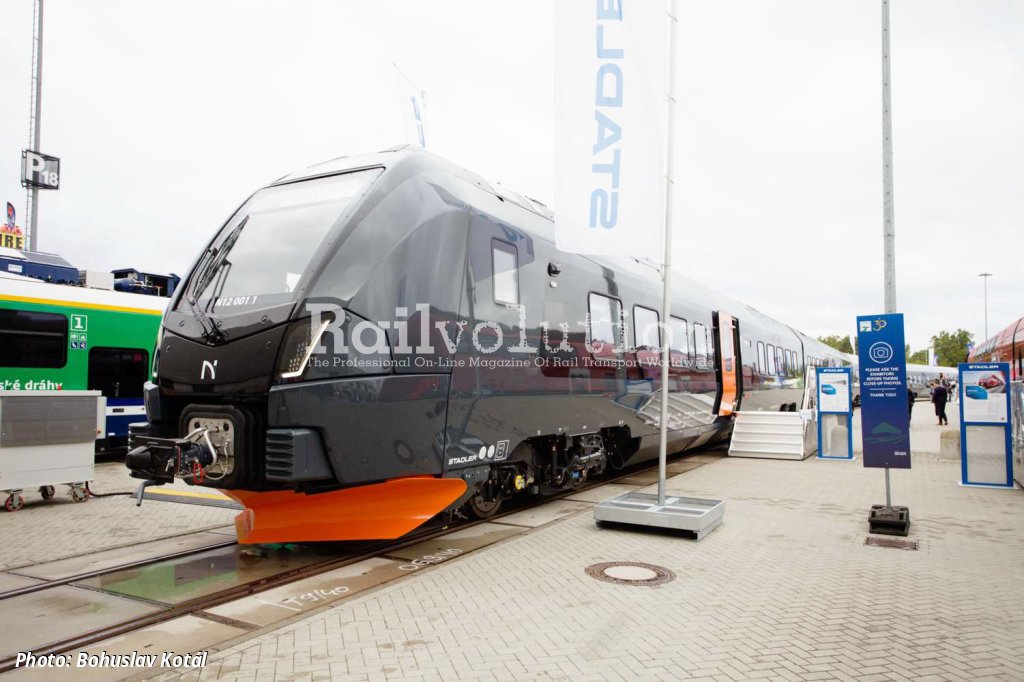
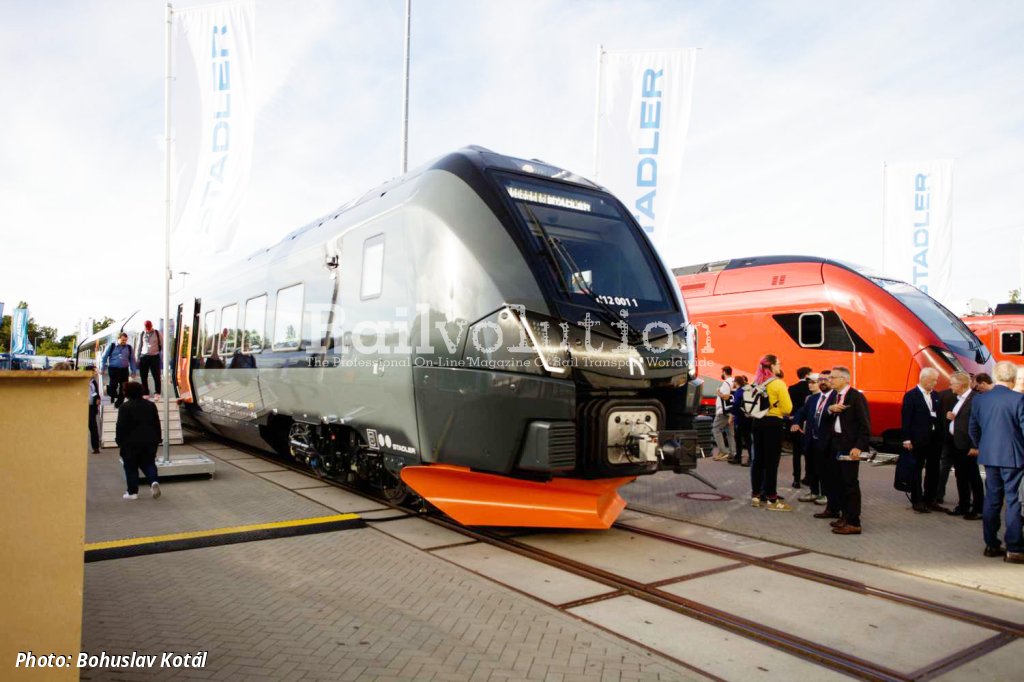
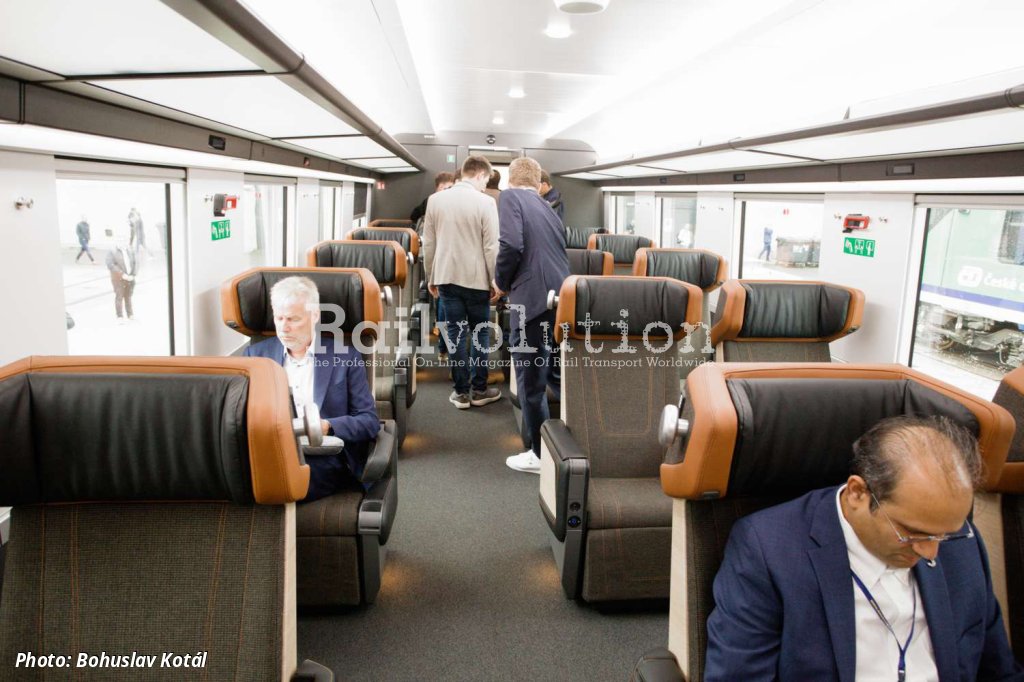
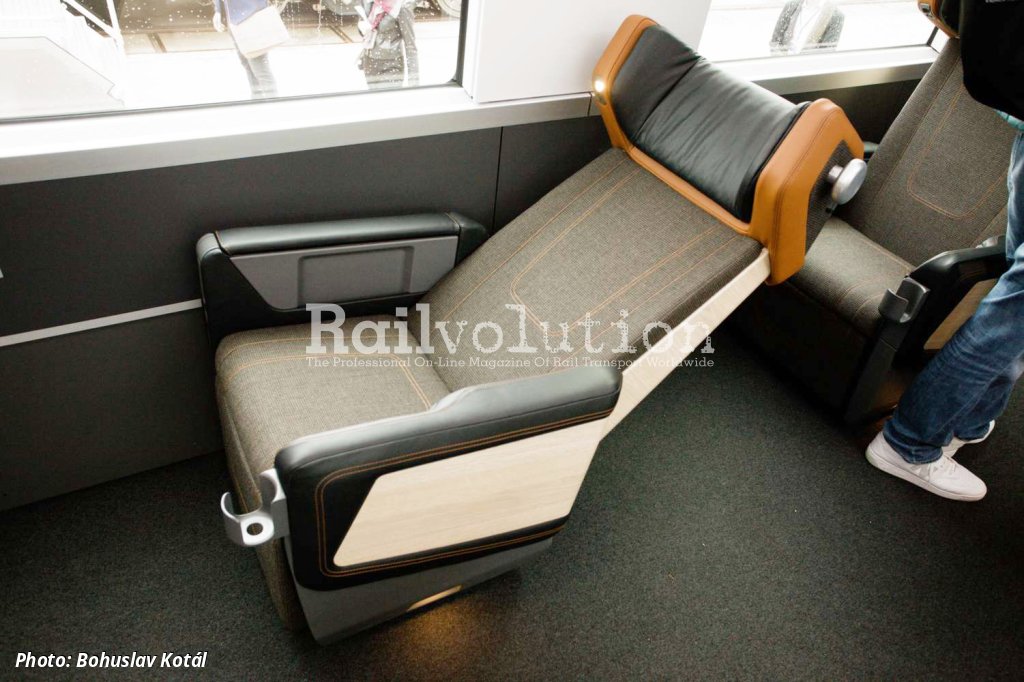
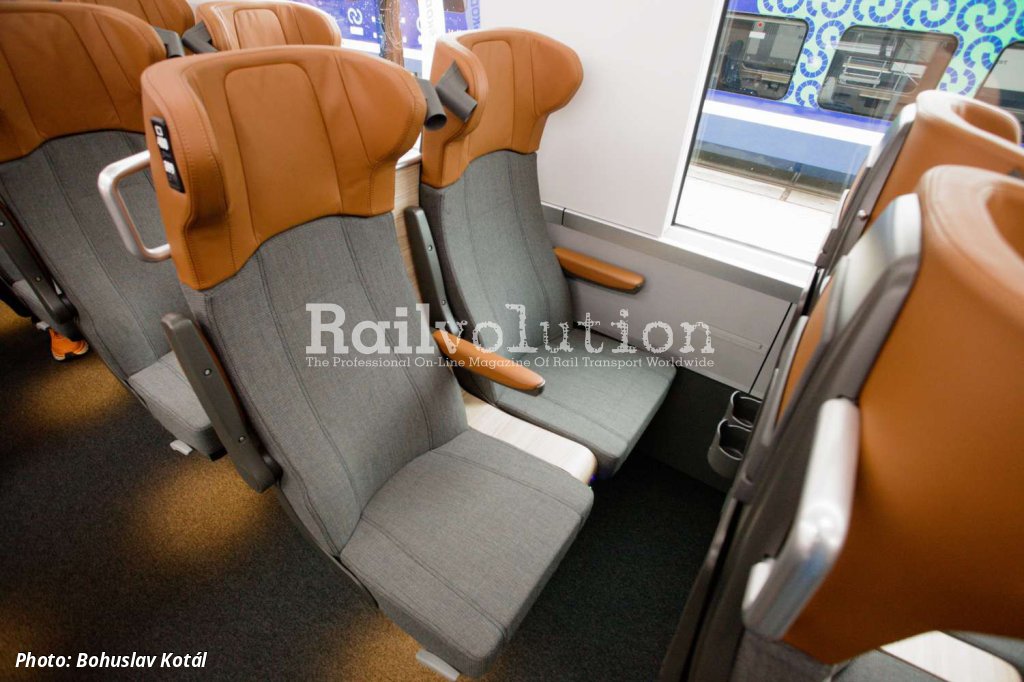
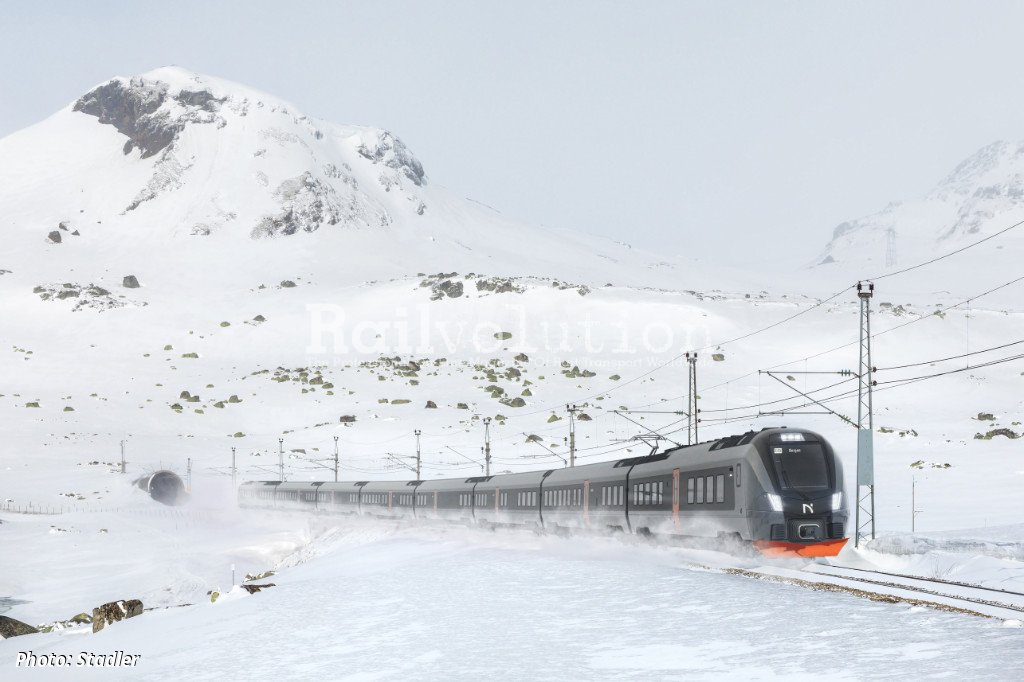
Let’s have detailed look into the N12 001 FLIRT Nordic Express (NEX) EMU for Norske Tog, because although there were many vehicles with attractive interiors on display in the open-air exhibition area, this train was the clear winner amongst them in terms of comfort (only the luxury compartments in the FS‘s Class ETR 410 high-speed train might also have shared the symbolic top spot with it).
The shortened four-car train on display attracted constant interest from visitors, so there was always a long queue of people waiting to take a closer look; even on Friday, when the exhibition is usually less crowded, the train was still quite full. And although Scandinavian long-distance trains are generally characterised by a high standard of interior comfort - something that has been evident at previous InnoTrans events - it was hard to find anyone who wasn’t impressed by this train.
This is in line with the statement made by Øystein Risan, CEO of Norske tog: “Our aim was to develop a train that people trust and enjoy travelling on. The journey itself should become part of the experience. The journey itself should become part of the experience, which is why the interior is elegant and designed for journeys of up to nine hours, offering space for working, sleeping, eating and spending time with family.”
The order
Norske Tog, the state-owned rolling stock lessor, issued a tender, which was won by Stadler on 17 February 2023. The contract for the supply of 17 units was signed on 8 March 2023 and includes an option which, if fully utilised, could bring the order up to 50 eight-car units. It is worth noting here that there is sometimes talk of a total of up to 100 trains, which could be achieved through an option for up to 66 units.
This stems from the fact that Norske tog bases its calculation for the option on four-car units (half-trains) 110 m long, which are combined to form eight-car units. Thus, the 17 eight-car FLIRT NEXes ordered to date are treated as 34 four-car units. When the 66 four-car units under the option are included, this brings the total up to 100 trains.
The new fleet will offer a range of concepts for both day and night train services, including sleeping compartments, reclining seats for night journeys, dedicated areas for business travellers, family areas equipped for children, and restaurant areas.
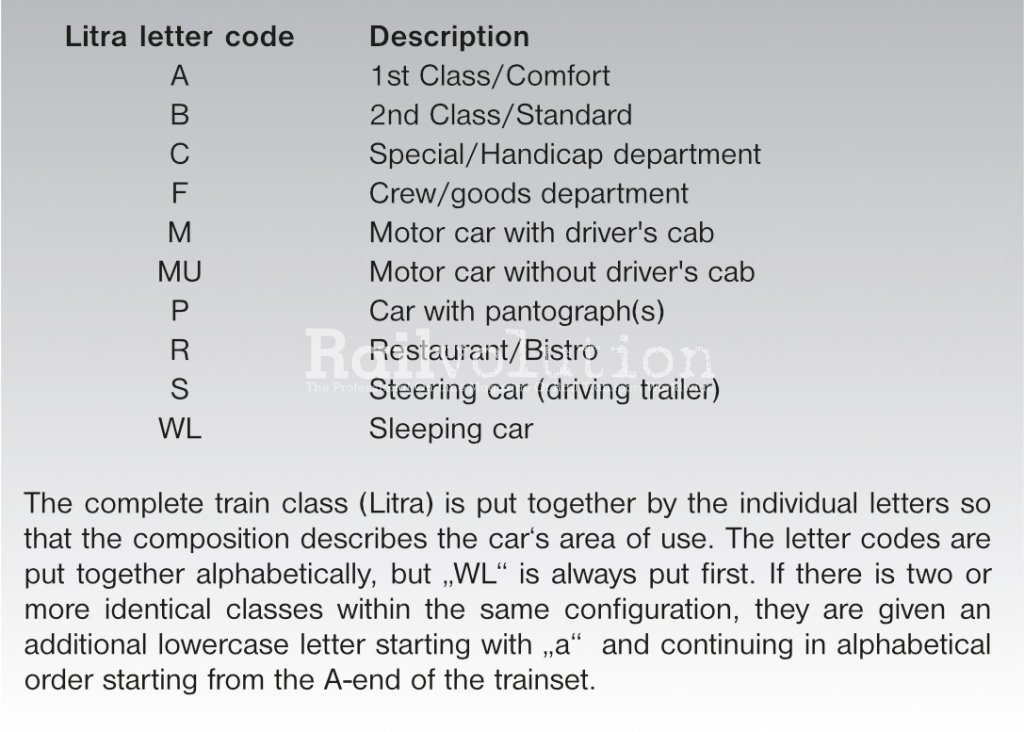
Train classes/types
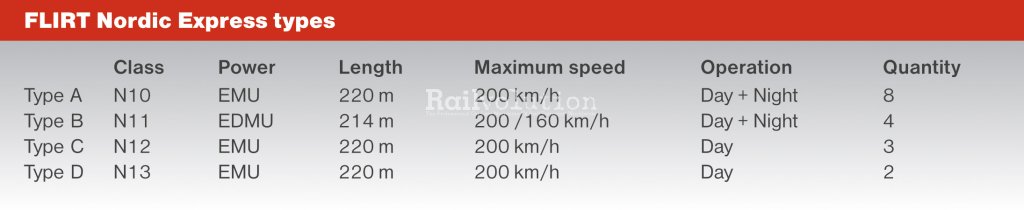
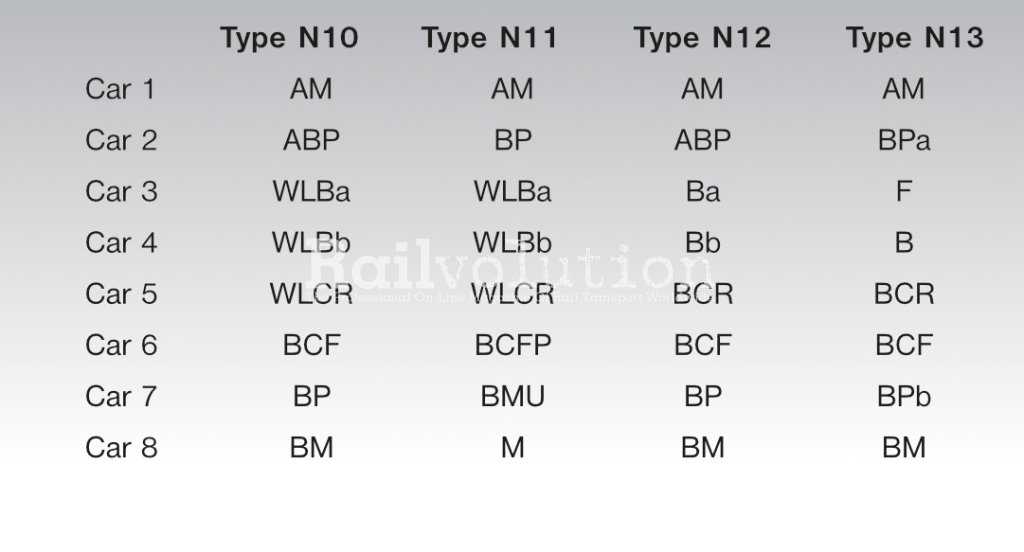
The contract provides for four different classes (N10, N11, N12, N13) and interior configurations (Types A, B, C, D, see table 1). One of them will be designed as a dual-power train, electro-diesel multiple unit (EDMU), by Stadler called bi-mode multiple unit (BMU).
In the EDMUs, a Powerhead will be included - an end car with two diesel gensets. To comply with axle load limits, the Powerhead will have non-powered bogies. Its two diesel gensets will power the traction inverters and motors in the adjacent intermediate passenger car and in the opposite end car, resulting in an Bo‘Bo‘ + 2‘2‘ + 2‘2‘ + 2‘2‘ + 2‘2‘ + 2‘2‘ + Bo‘Bo‘ +2‘2‘ axle arrangement. The diesel gensets may be replaced in future with a more environmentally friendly propulsion system. The propulsion principle described was also applied to recent order for multi-power FLIRTs for the island of Ireland.
The EDMUs will be intended for operation on the ‘polar’ Nordlandsbanen (Trondheim - Bodø, 729 km). According to current plans, the EMUs are to be introduced on the Bergensbanen (Oslo - Bergen, 371 km), Dovrebanen (Oslo - Trondheim, 485 km) and Sørlandsbanen (Oslo - Stavanger, 549 km).
FLIRT NEX on Sørlandsbanen
It is also worth mentioning the circumstances surrounding the future operation of the Class N10 on the Sørlandsbanen line, where four-car Class 73 EMUs, supplied in 1999 - 2000 by the former company Adtranz to the then NSB, are currently used on long-distance services. These trains, with a top speed of 210 km/h, are equipped with active bodyshell tilting, a system which the FLIRT NEX trains do not have (nor was it required by the tender specifications).
Consequently, simulations were carried out in collaboration with Stadler, which revealed that the current journey times on the Sørlandsbanen are at the very limit for the FLIRTs, so they will likely need to be extended slightly. However, the difference is not expected to be as significant, as some of the time lost due to slower passage through curves compared to the Class 73 trains can be offset by the FLIRTs’ higher acceleration.
Furthermore, NSB has had to cope with periods without tilting in the past, as following the derailment of one train in June 2000, the Class 73 was initially taken out of service for a month whilst the cause was investigated. However, upon its return to service, the tilting system was taken out of operation and was only reactivated in 2004, following technical modifications by the manufacturer. In addition to these difficulties, another reason why Norske Tog did not insist on this technology is the current limited offer of trains with tilting capability.
Technical description
The FLIRT Nordic Express is an eight-car unit with a maximum speed of 200 km/h, designed for 15 kV 16.7 Hz and 25 kV 50 Hz voltages. Both bogies of the two end-cars in EMUs are powered; the intermediate cars are non-powered and each has two its own bogies.
The traction equipment is designed to be highly redundant, utilising four pantographs and four traction converters. The rated power of the EMUs is 4,000 kW, with a maximum power of 6,400 kW.
This also applies to the EDMUs in electric mode, which have a power output of 2,800 kW in diesel mode. However, the power can be increased to as much as 4,000 kW by utilising energy from the ESS (Energy Storage System). The starting tractive force is 330 kN, and the starting acceleration is 0.6 m/s². The braking system is supplied by Knorr-Bremse.
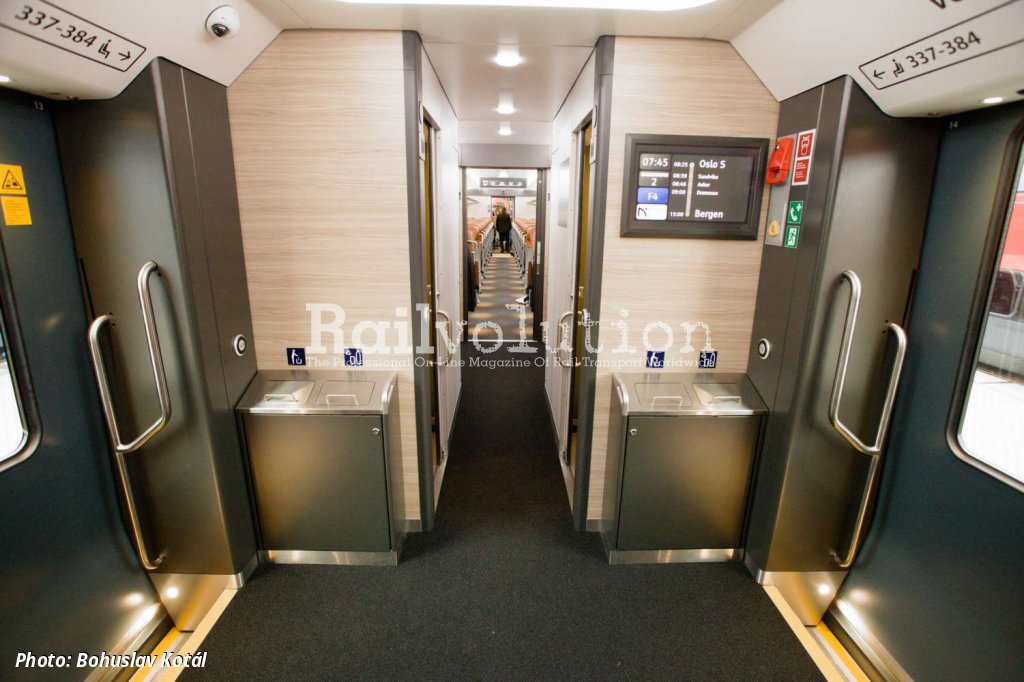
The automatic couplings in the middle of the train allows each train to be easily split into two independent parts, which helps with maintenance. The train’s length is exactly 220 m over couplings; the cars are 3,200 mm wide and 4,385 mm high above TOR. The interior of each end car is divided into two halves by the entrance area, and interior of each intermediate car into approximately one-third and two-thirds of its length; the entrance doors are of a single-leaf sliding type.
Accessibility for people with disabilities
As with all new trains, the accessibility on wheelchairs - specifically their boarding, alighting and movement within the train - was addressed here as well. During the preparation phase for this procurement, Norske tog was in close dialogue with organisations representing passengers with disabilities.
Step-free boarding was included in the tender in order to investigate what the market could offer, but none of the suppliers offered a solution combining step-free boarding with a flat floor throughout the train. The selected design therefore used wheelchair lifts while providing a flat floor without internal steps and access to important onboard facilities.
Following concerns regarding accessibility raised during the design phase, Jernbanedirektoratet (the Norwegian Railway Directorate), together with Norske tog and Bane NOR, carried out a further assessment of possible improvements. Based on this work and continued dialogue with disability organisations, the design was subsequently adapted to improve accessibility further.
The changes give wheelchair users access to a larger part of the train, including the bistro, family area and sleeping compartments, make it easier to travel together with other passengers, and provide additional wheelchair spaces.
The assessment concluded that these improvements represented the best overall solution for the different user groups, while step-free boarding and wheelchair passage through the entire train were not recommended, among other reasons because of the resulting internal ramps or steps, reduced available space, and the considerable variation in platform heights on Norwegian long-distance routes.
Thanks to good cooperation with the disability organisations, Norske tog was able to announce at the end of 2023 that they had responded positively to the proposal and accepted it. The result was a train design with a floor height of 1,200 mm above TOR and entrance areas at 1,100 mm above TOR, in other words not a low-floor entrances, in which wheelchair users have access to self-operated lifts.
The floor of the entire train is level, however, unobstructed passage for a wheelchair, in terms of sufficient aisle width, is only possible within two cars, which are positioned in such a way that wheelchair users have access to the bistro car and the family section with a play area.
Other parameters of the trains
From a technical perspective, the bodyshells are designed for a longitudinal compression force of 1,500 kN. The wheelbase of the powered bogies is 2,700 mm and that of the non-powered bogies 2,500 mm, the diameter of the new wheelsets is 920 mm (for both type of bogies), and the maximum axle load is 20.5 t. The empty weight of Class N12 trains is 453 t, whilst the laden weight is 476 t.
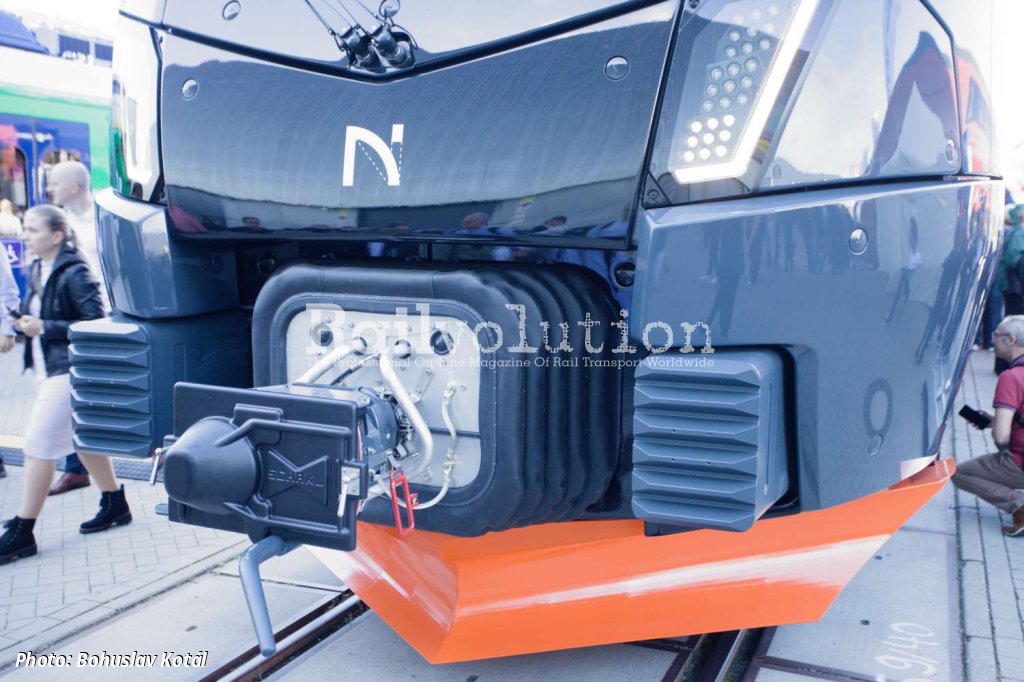
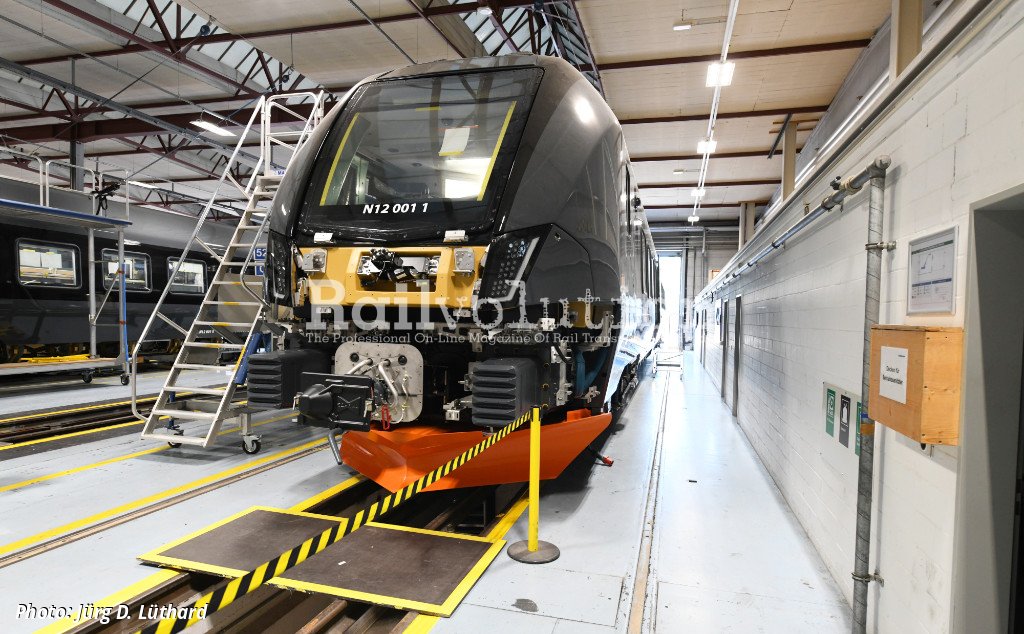
The design of the FLIRT NEXes is adapted to the harsh Nordic conditions and is therefore suitable for operating temperatures ranging from -40 to +35 ⁰C. The front ends are fitted with robust snow ploughs, and the area around the automatic couplings is sealed with FrontAdd corrugated bellows from Hübner, which was unveiled as a new product at InnoTrans 2024.
The electrical equipment cabinets offer enhanced protection against snow ingress, and in addition to a sufficiently powerful air-conditioning and heating system, floor heating is also installed throughout the interiors. Liebherr-Transportation Systems is providing HVAC systems using the refrigerant R290, i. e. propane.
Cars exhibited at InnoTrans
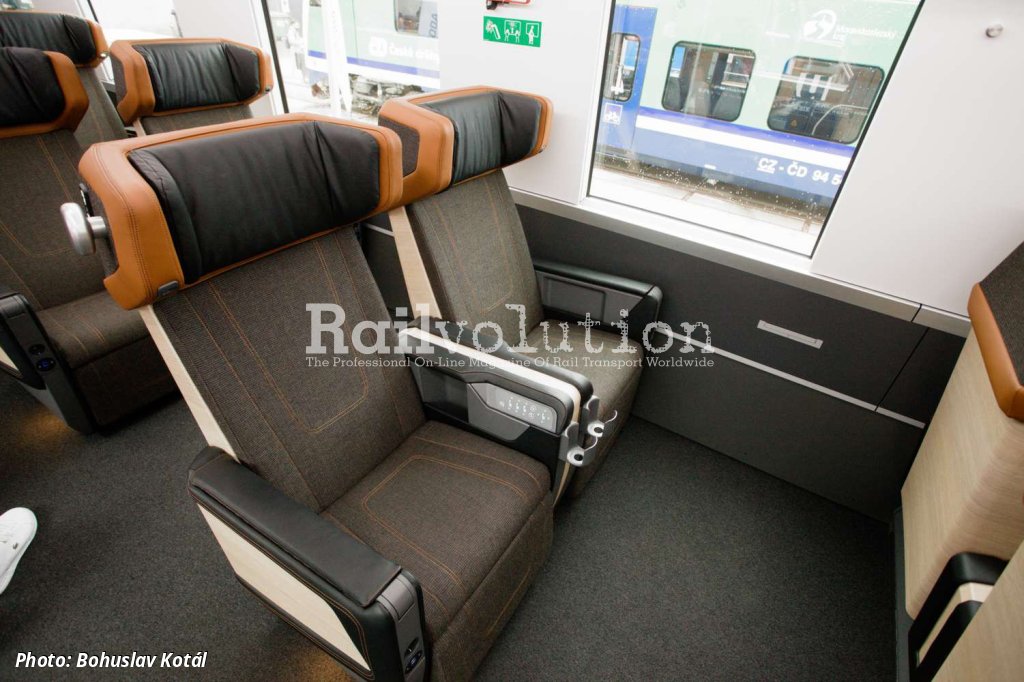
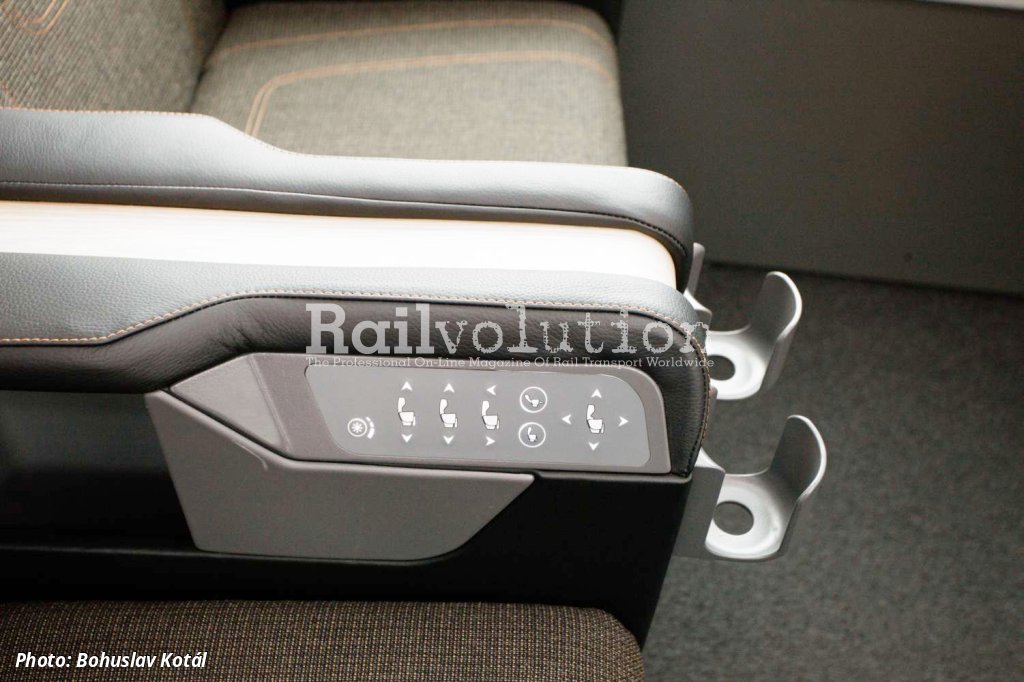
The train on display at InnoTrans belong to the Type C unit, i. e. EMU for daytime operation. The end-car, AM N12 001, has first-class compartments on both sides of the entrance area, featuring electrically adjustable seats that can be reclined to an almost horizontal position. The Excellent NG seats represent the highest level of specification and comfort currently offered by BORCAD.
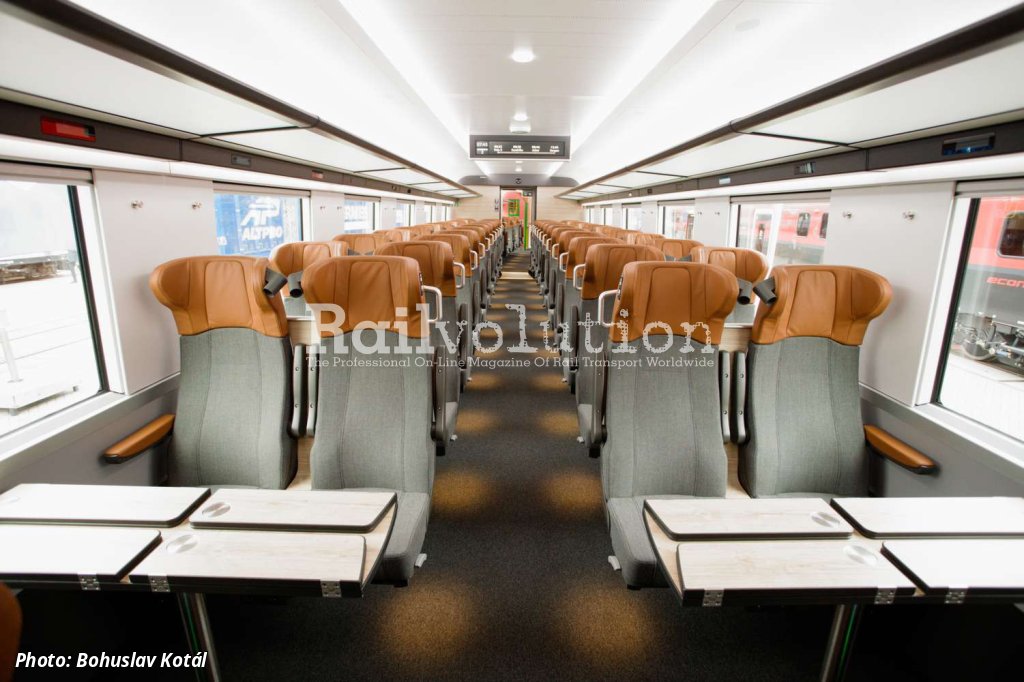
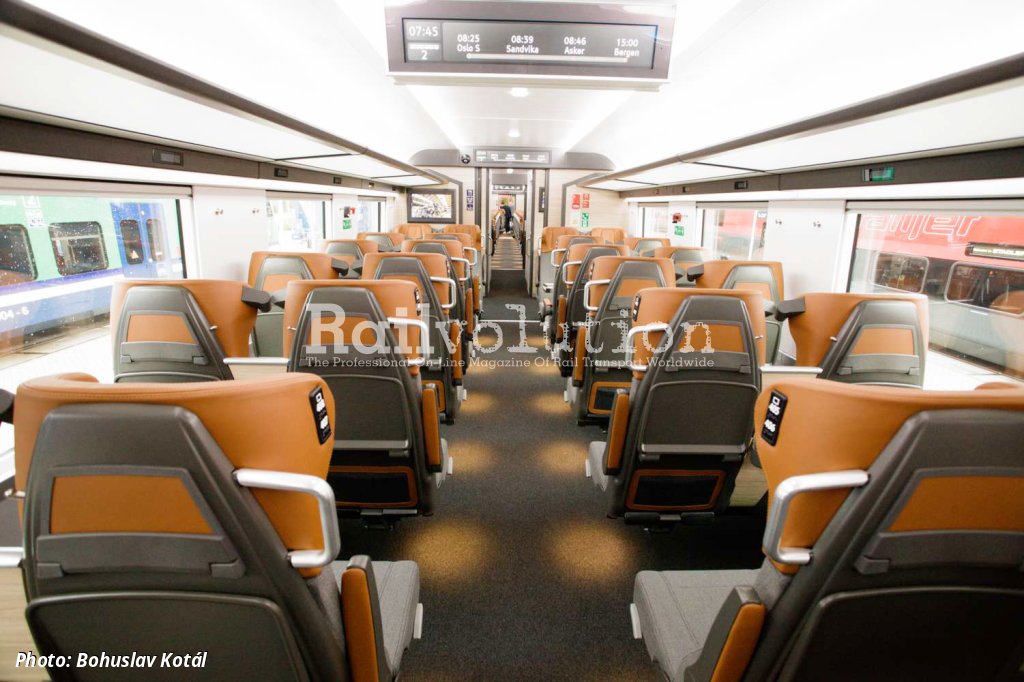
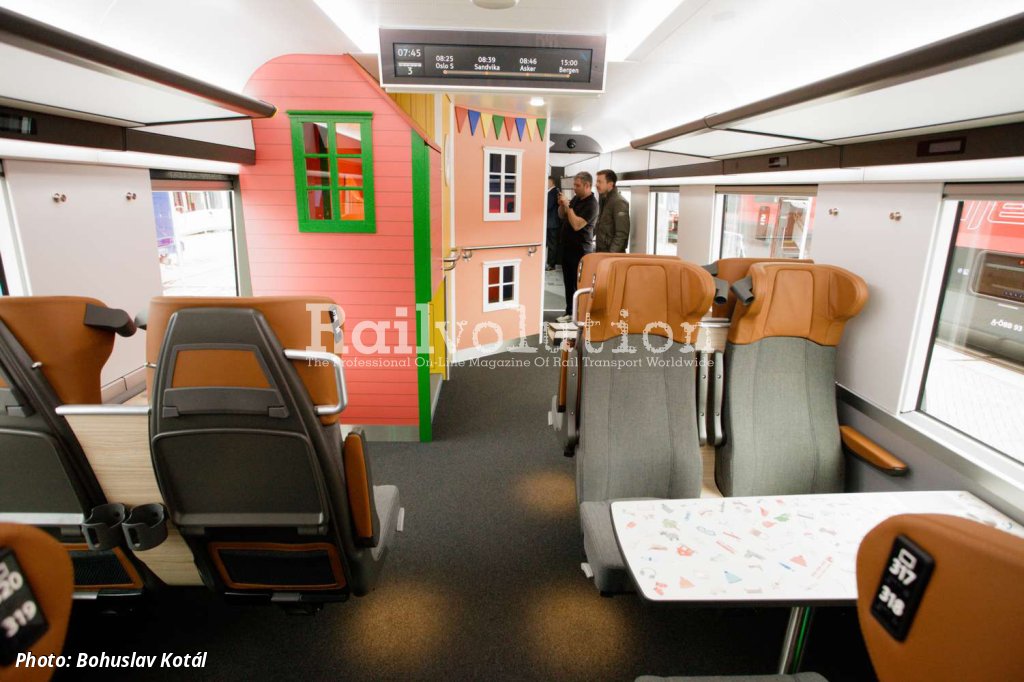
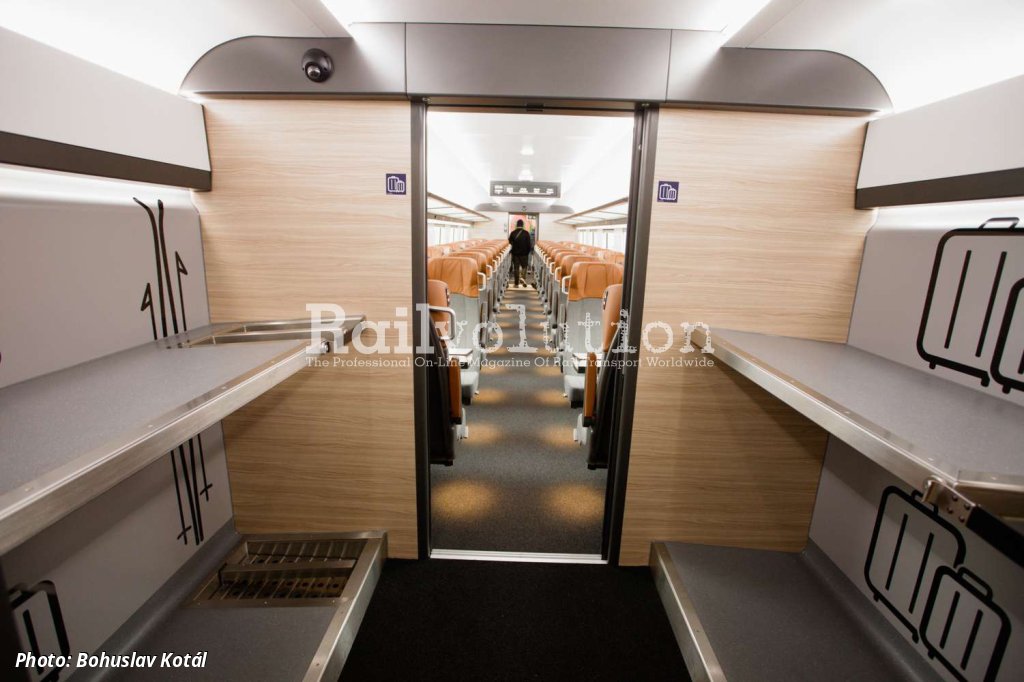
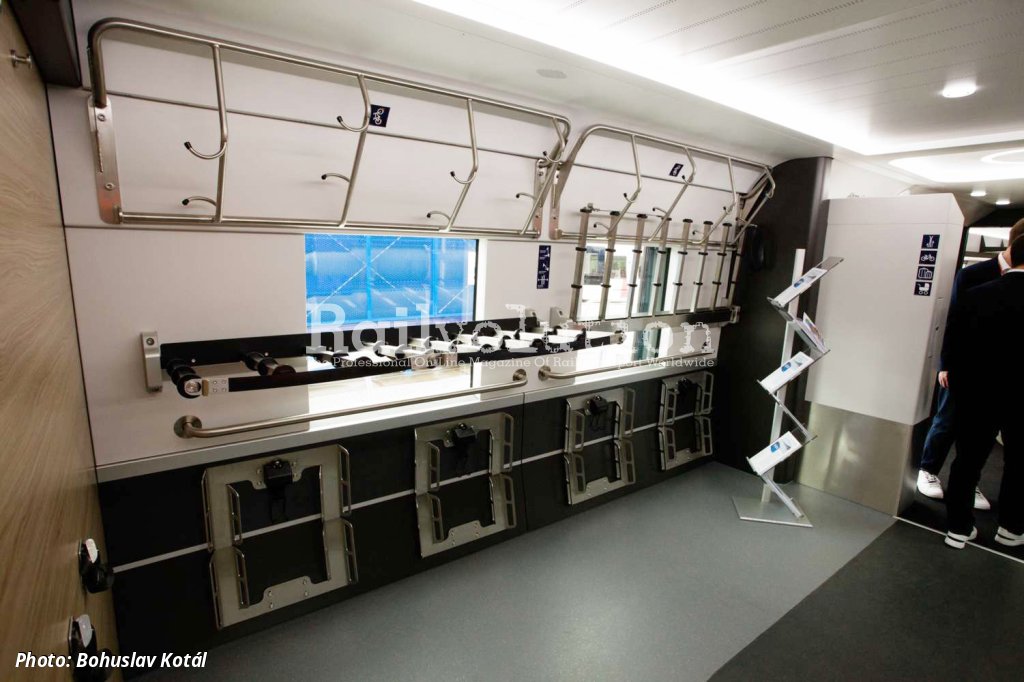
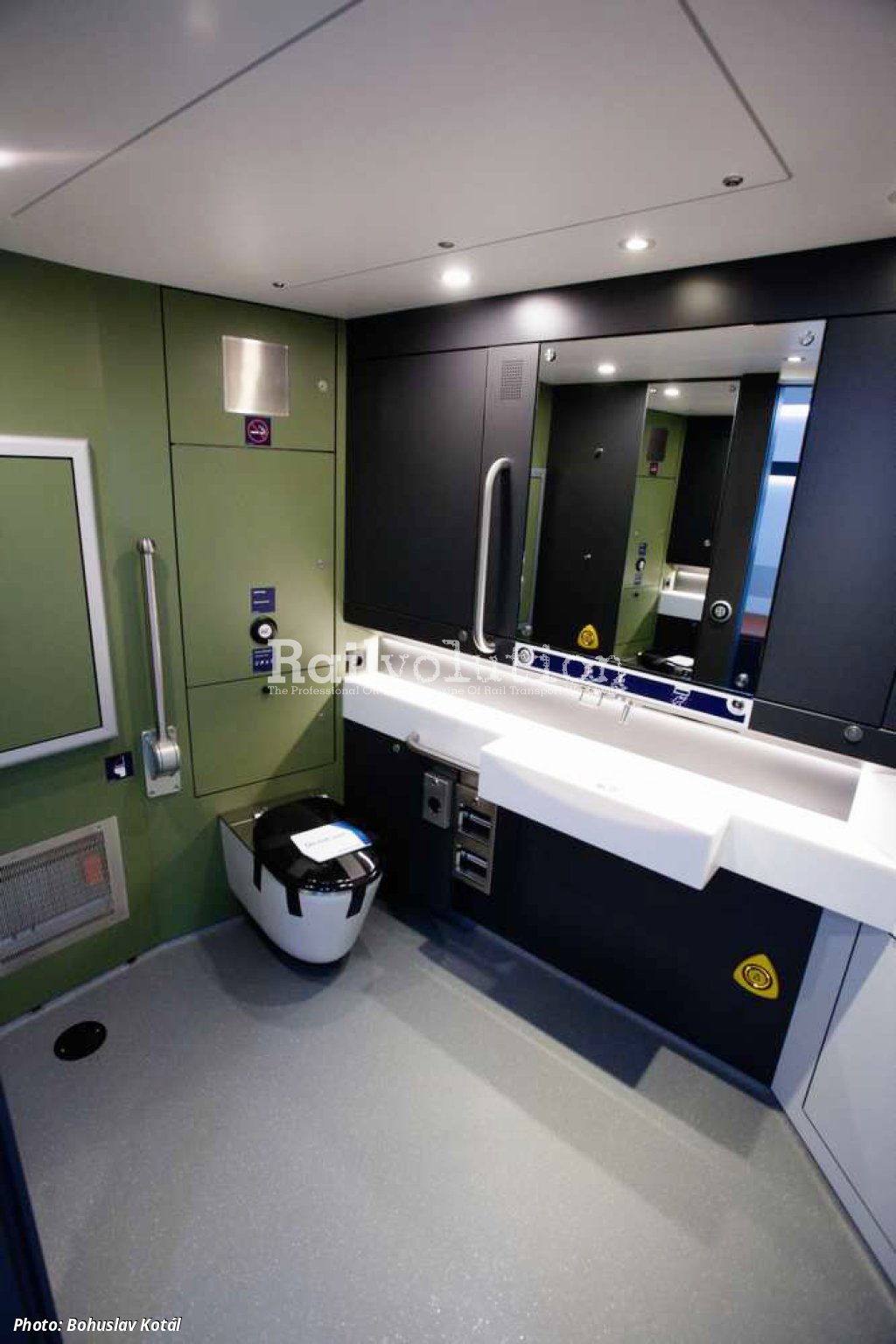
The other cars exhibited were BP N12 001 and BCF N12 001. The latter, by means of self-operated lifts, enables passengers on wheelchairs to board the train. In addition to three dedicated spaces for wheelchairs and wheelchair-accessible toilet cubicles, the BCF car also features a spacious storage area for bicycles, ski equipment, etc., a staff compartment and a second-class compartment with a family zone, equipped with a playhouse for children. The second-class compartments are fitted with Grammer seats, and here too passengers are treated to a touch of luxury, as each seat has its own armrests.
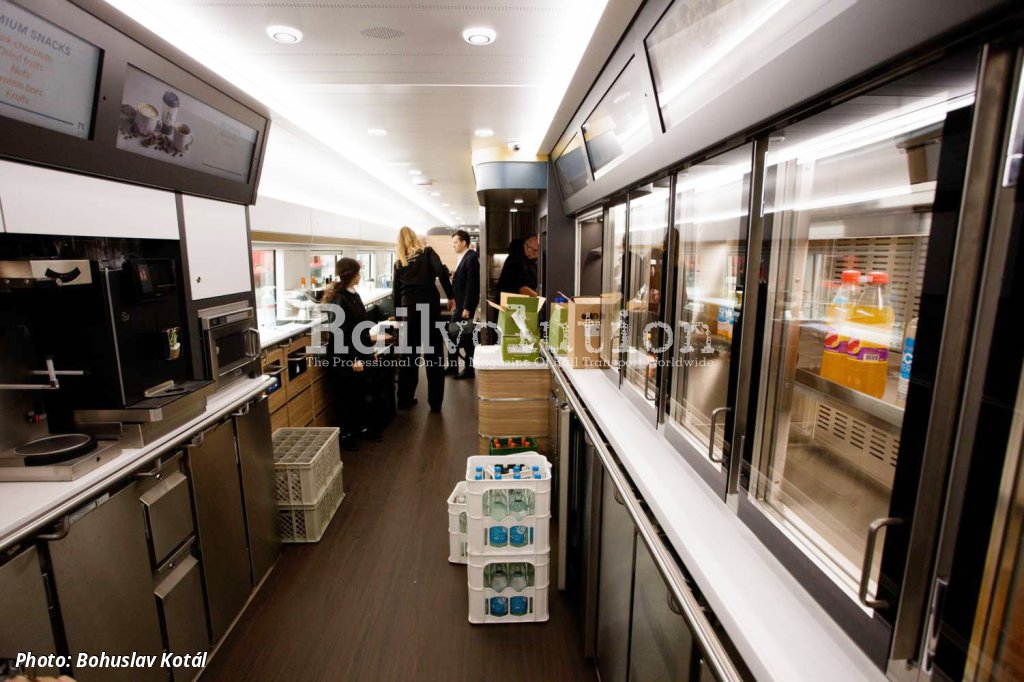
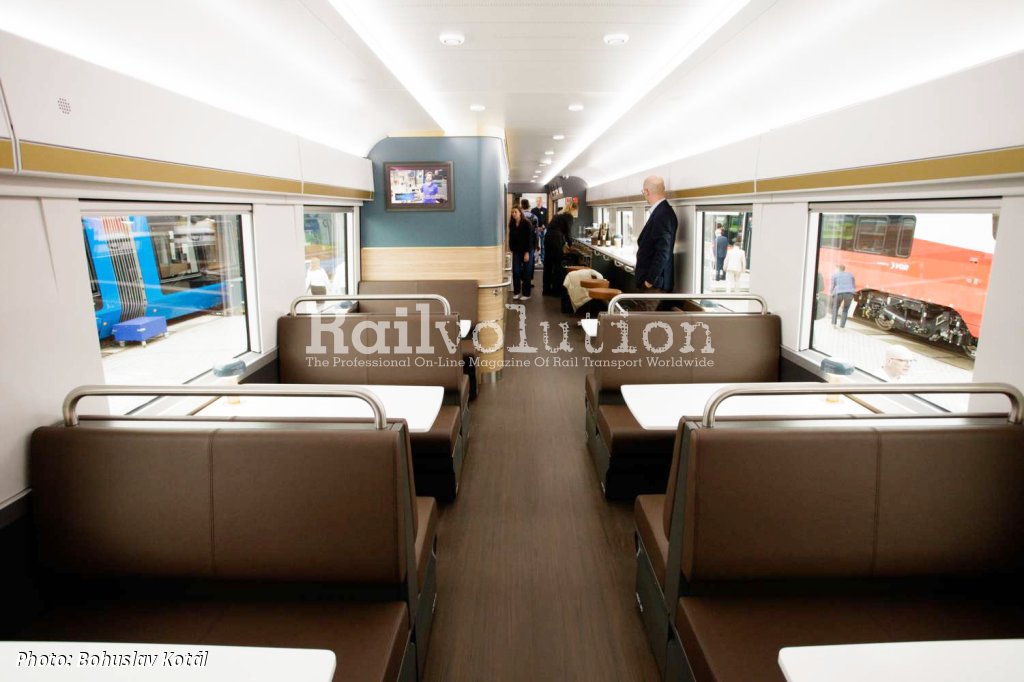
The last car on display was the BCR N12 001 bistro car. One-third of its floor space is taken up by a second-class compartment with 22 seats plus a wheelchair-accessible toilet, whilst two-thirds of the floor space is reserved for a self-service area with display cabinets (fridges) plus a bistro with a kitchen and tables with two-seater benches, both offering a total of 27 seats.
Train compositions
The eight-car Class N12 EMU, which offers 44 seats in first class and 423 in second class, consists of Class AM + ABP + Ba + Bb + BCR + BCF + BP + BM cars. The Class ABP and BP cars each have two pantographs (for redundancy) situated above the outer bogie; each pantograph serves both voltage systems.
Driver‘s cabs
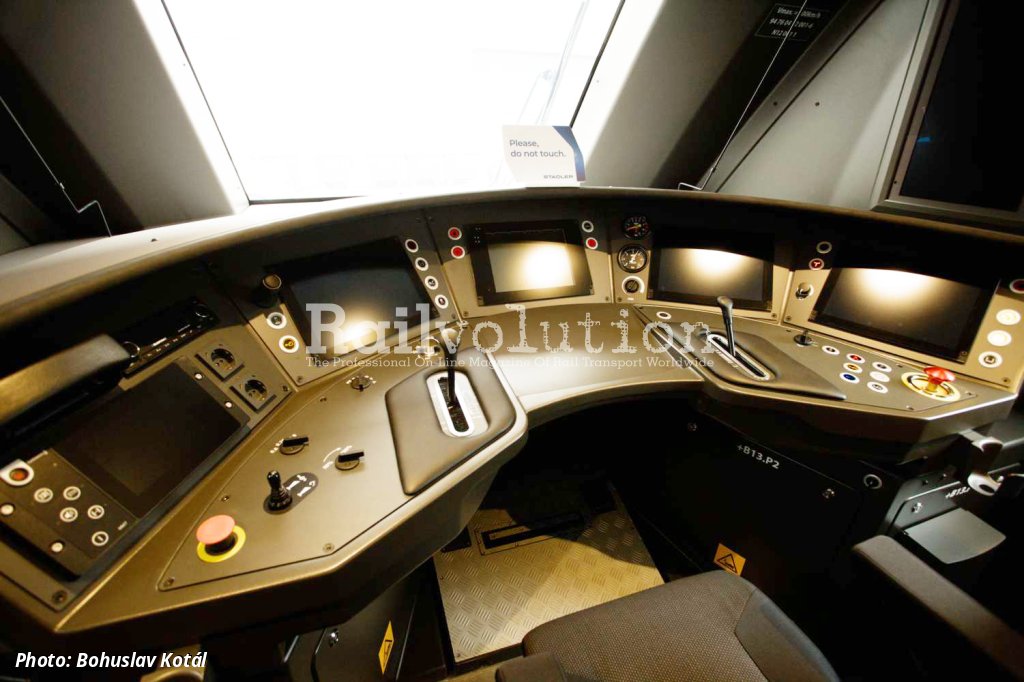
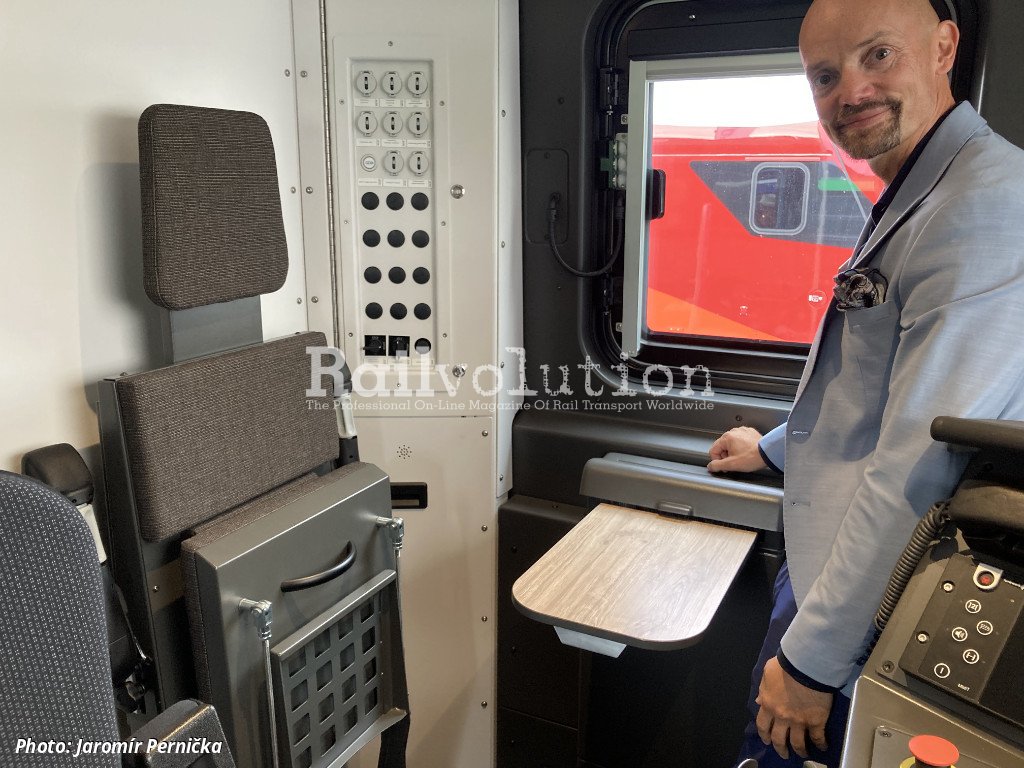
The driver’s cab is in keeping with the high quality of the FLIRT NEX interior and the comfort. The control desk is offset slightly to the right of the longitudinal axis of the train to create more space on the driver’s left hand for the driver-instructor’s seat, which is mounted on the rear wall of the cab and can be folded down.
Thanks to this layout, the driver-instructor has a good view of the track whilst also enjoying a high level of working comfort. Not only due to the increased space, but also thanks to a comfortable tip-up seat with armrests and a headrest; in addition, there is a fold-out table beneath the window.
The driver’s cab features several other handy features. For example, the vigilance switches are located not only on the control desk, but one is also on a console attached to the left-hand side of the desk via a flexible spiral cable.
Due the extendable nature of this cable, the driver can move freely around the cab even whilst the train is in motion, whilst still being able to confirm their alertness at any time. The driver can thus not only stand up whilst the train is moving, but also do a bit of exercise and perhaps even listen to music.
The latter whilst driving is permitted on Norwegian railways, so the driver also has a music player at disposal (visible on the far left of the driver’s desk, above the two electrical sockets). The player has a function that automatically lowers the volume when the train telephone rings, the radio transmission is on, or when other safety-critical information is received.
Special solutions
The FLIRT NEX is based on the existing FLIRT platform and can therefore draw on the experience gained from the operation of 150 units in this family, in both EMUs and EDMUs, supplied under a contract signed in August 2008 with then NSB (the last one, a dual-power Class 76 FLIRT, was delivered in November 2021). Nevertheless the Class N10, N11, N12 and N13 units represent specialised designs, and not only in terms of the interios described above.
The bodyshells are 26.7 m long, making them the longest bodyshells produced in Altenrhein to date. Moreover, the Class F cars are more challenging to paint (a process carried out by hand), as their bodyshell has an almost uninterrupted surface along its length, making it more difficult to maintain the correct distance between the spray gun and the surface being painted consistently in a single pass.
The F car is known as a ‘cargo car’ and will be used in the N13 units in place of the Class Ba passenger car, offering ample space for bicycles, skis, suitcases and other bulky luggage. This is because the N13 FLIRT NEXes will operate on the Bergensbanen, where there is significant seasonal demand for the transport of skis and bicycles to the mountains, which requires additional capacity for this type of ,cargo‘.
Deliveries
According to the original plan, the first FLIRT NEX trains were supposed to enter service in December 2026.However, there was a six-month delay due to a design change requested by the Norwegian government to ensure that a larger proportion of the trains were accessible to wheelchair users, which meant the deadline was pushed to July 2027.
In February 2025, Norske tog announced a further eight-month delay. In this instance, the is due to difficulties following the floods in Switzerland in June 2024, when the Constellium factory in Sierre, which supplies aluminium profiles for the manufacture of bodyshells, was flooded.
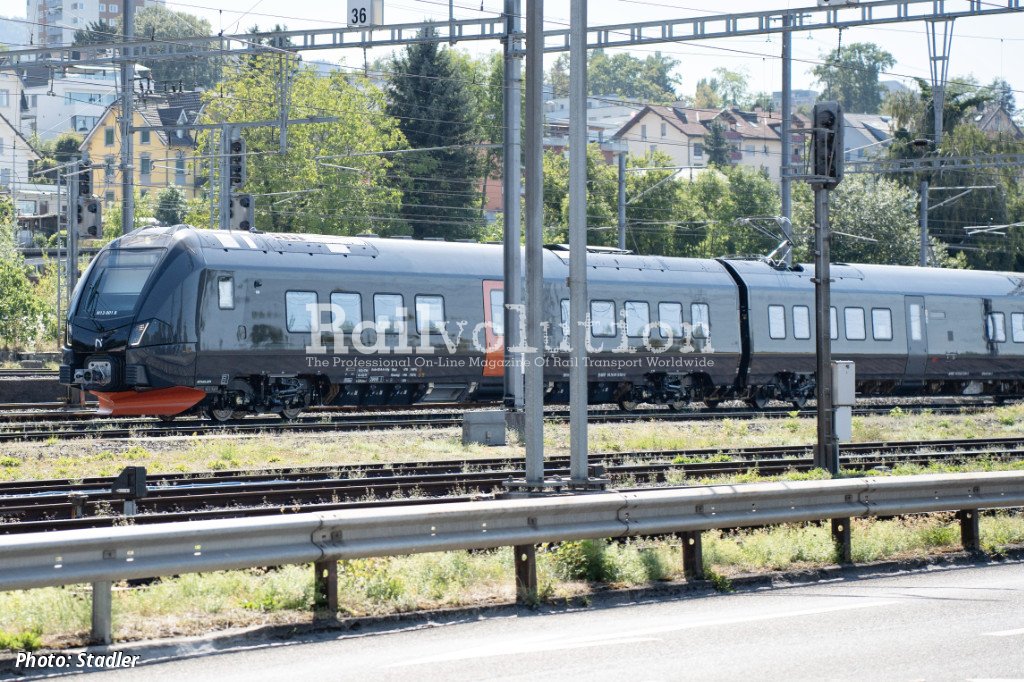
It is currently anticipated that N12 001, which has been undergoing commissioning activities in Switzerland since the summer, will be transported to Norway for testing in the first quarter of 2027. All three N12s are expected to start passenger service in 2028 on the Bergensbanen. Also N13 001 has been tested on the Swiss network.
Neither Stadler nor Norske tog provided further details at this stage regarding the production progress of the other units or further dates for their entry into service.
Related news
- First ESD162 in Żmigród
- The whole fleet of new Tyne and Wear Metro trains officially in service
- Stadler delivers the complete electric FLIRT fleet for the Aosta Valley Region
- Liebherr supplies propane-based HVACs for FLIRT NEX
- InnoTrans 2026 report (7)
- Ingeteam‘s traction converters for SAR Desert trains
